Workshop epoxy flooring for service bays and maintenance.
Australian-manufactured ALKA resin flooring systems for mechanical workshops, service bays and maintenance facilities—specified for chemical exposure, oils, slip resistance, hot tyres, abrasion, impact and operational downtime.
Send the floor area, workshop use, substrate condition and photos. ALKA can recommend a system pathway and provide technical documentation for the selected products.
AI-generated application illustration
A workshop floor is more than a coloured coating.
Forklifts, vehicle lifts, tool trolleys, hot tyres, oils, fuels, brake fluids, coolants, cleaners and point loads create a different specification from a domestic garage. The concrete condition and available shutdown window matter just as much as the finish.
Resistance matched to real workshop fluids
Engine oil, grease, fuel, coolant, brake fluid, battery-related chemicals, degreasers and cleaners must be reviewed by substance, concentration, temperature and contact time. Prompt spill removal remains essential.
Grip where floors become wet or contaminated
Selected aggregate or textured products can improve slip resistance in service bays, wash zones and access routes. Texture is specified by zone because more grip normally requires more cleaning effort.
Reduce the risk of hot-tyre pickup
Correct mechanical preparation, a compatible primer, adequate film build and full cure are critical where hot tyres, turning wheels, vehicle traffic and point loads can stress the coating.
Built around how the workshop actually operates.
- Seamless surfaces that are easier to sweep and wash than uncoated concrete.
- System thickness and aggregate selected for the expected duty.
- Optional slip-resistant texture for wet or contamination-prone zones.
- Light-reflective colours and safety zoning for a more organised workplace.
- Primer or moisture-control approach selected after substrate assessment.
- Rapid-cure options where reducing operational shutdown is critical.
Slip resistance and cleanability trade off against each other. The required texture should be nominated for each area rather than applied uniformly without review.
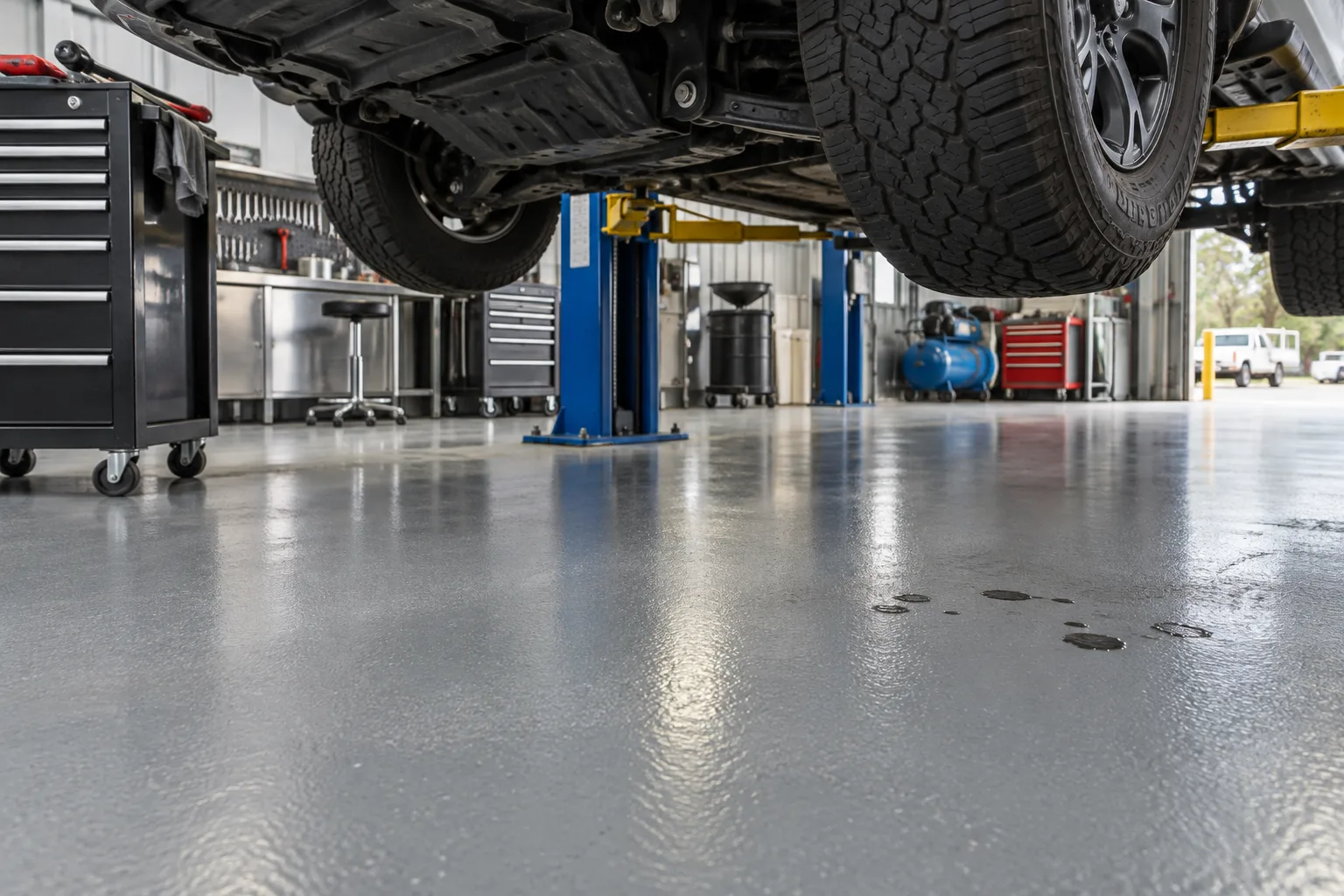
Specify the floor around exposure—not decoration.
Service bays, wash areas, traffic aisles and customer-facing zones can require different texture and resin chemistry. Colours remain selectable, but performance requirements come first.
Chemical-resistant service bays
The system is selected after reviewing oils, grease, fuels, coolants, brake fluids, degreasers and cleaners. Higher chemical exposure may require a different epoxy chemistry or protective finish than a general workshop aisle.

Slip-resistant texture and zoning
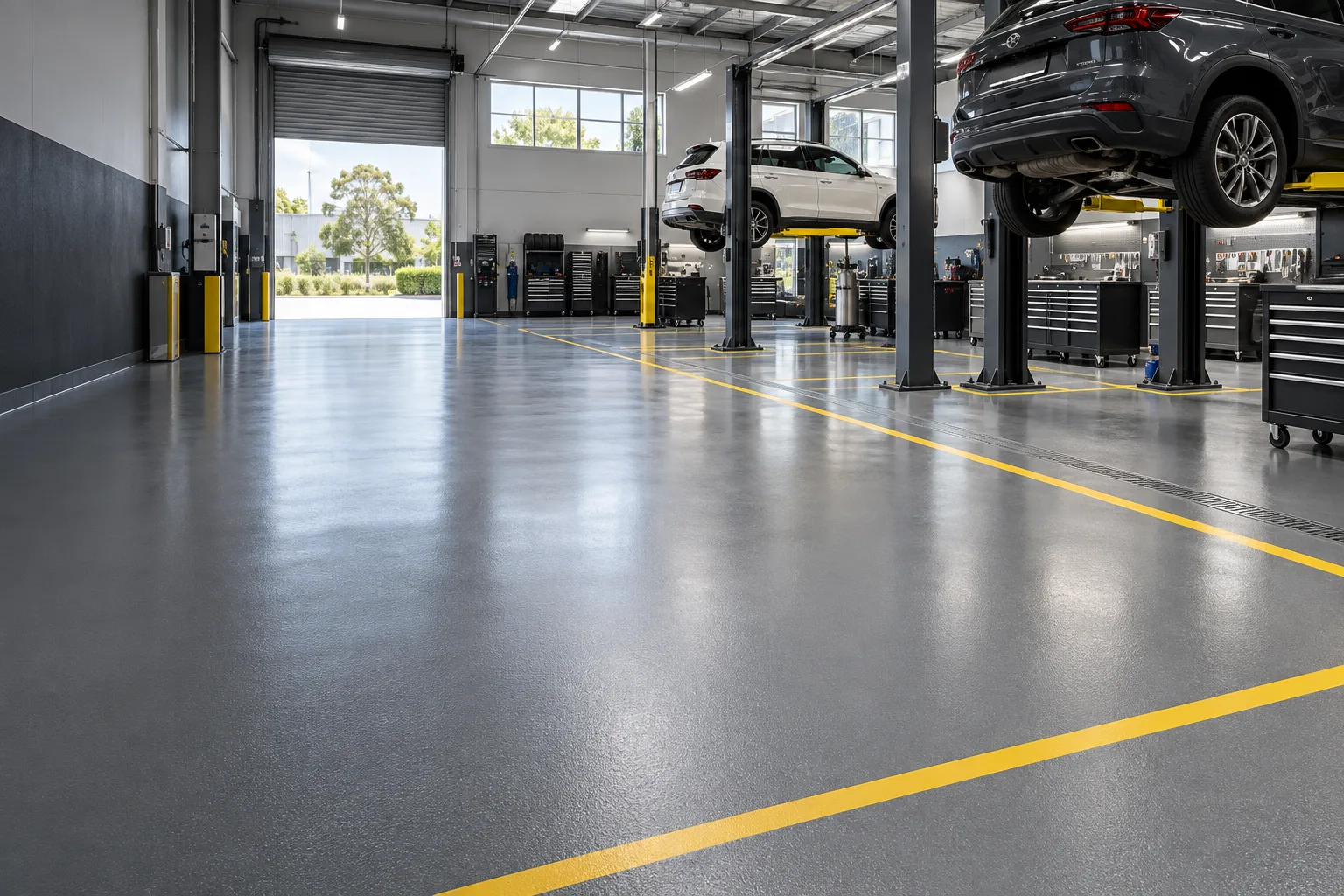
Aggregate size and broadcast rate are selected for the required grip and cleaning regime. Pedestrian routes, work bays and hazard zones can also be identified with contrasting colours and line marking.
Adhesion and cure against tyre stress
Hot-tyre pickup risk is reduced through sound concrete, thorough mechanical preparation, the correct primer, compatible body and finish coats, adequate thickness and full cure before service.
Images are AI-generated application illustrations, not completed ALKA projects or exact colour samples. Confirm chemical exposure, texture and colour during project specification.
Compare finishes before the specification is locked in.
Visit the ALKA showroom to review colours, flake blends, gloss levels and surface textures. Samples are available to take away for comparison with lighting, equipment and branding.
Review physical samples
Compare the actual visual effect and texture instead of relying on a screen or a printed chart.
Discuss zoning
Plan work bays, pedestrian routes, exclusion areas and line-marking colours as part of the overall floor system.
Take samples away
Use take-home samples to review the proposed finish with stakeholders before the final decision.
Four decisions before products are selected.
Define the duty
Vehicles, lifts, trolleys, impact, heat, chemicals and cleaning regime.
Assess the concrete
Strength, cracks, laitance, contamination, old coatings, profile and moisture.
Select the system
Primer, body coat, texture, finish, thickness and colour are set as a complete build.
Plan installation
Area staging, cure window, access and return-to-service requirements are coordinated.
A typical heavy-duty workshop system pathway.
The diagram explains the system logic. It is not a universal specification: the actual ALKA products, thickness, aggregate and number of coats depend on the substrate and service environment.
Layer order is shown from top to bottom. Confirm the project specification and current product data before installation.
Start with a defined flooring system—not a loose list of products.
These ALKA Flooring Systems are the most relevant starting points for mechanical workshops. Open each system page for its complete build-up, technical positioning and typical applications. Final selection still depends on the actual slab, duty and operational constraints.
ALKA-908 Heavy-Duty Workshop Floor System
The purpose-designed pathway for vehicle workshops, service bays, engineering areas and demanding maintenance facilities exposed to traffic, impact, oils and mechanical wear.
Prepared concrete → ALKA-113 or ALKA-112 primer → ALKA-210 pigmented body coat → selected ALKA-110S or ALKA-200 protective finish
Typical thickness: 1.0–2.0 mm
ALKA-902 Standard Epoxy Floor System
A practical solid-colour epoxy pathway for lighter-duty workshop zones, maintenance rooms and service areas that do not require the heavier ALKA-908 build.
Prepared concrete → ALKA-100 primer → ALKA-110 epoxy body coat → ALKA-110 finish coat
Typical thickness: 0.5–1.5 mm
ALKA-910 Rapid-Cure Polyaspartic Floor System
A rapid-curing, UV-stable pathway for operational workshops where reducing installation and return-to-service time is a major project requirement.
Prepared concrete → ALKA-113 primer → ALKA-200 polyaspartic body coat → ALKA-200 polyaspartic topcoat
Typical thickness: 1.0–2.0 mm
For customer-facing workshops requiring a decorative finish, the ALKA flake pathway shown above can also be considered. Product compatibility, preparation, consumption, film thickness, cure and recoat windows must follow the current ALKA technical data and approved project specification.
What changes the recommendation?
| Project condition | Specification response | Why it matters |
|---|---|---|
| Vehicle lifts and concentrated loads | Review concrete integrity, repairs, film build and local detailing. | A coating cannot compensate for unsound or moving concrete. |
| Oil, fuel and workshop fluids | Confirm actual chemicals, concentration, temperature and contact time. | Resistance varies by chemistry and service conditions. |
| Wet wash or contamination | Select appropriate texture and drainage strategy. | More texture can improve grip but requires more cleaning effort. |
| Short shutdown window | Consider staged work or a rapid-cure pathway. | Cure conditions and return-to-service timing affect operations. |
| Sunlight at open doors | Review UV-stable colour or clear finish options. | Conventional epoxies can change colour under UV exposure. |
What ALKA can provide.
System recommendation
Review of the substrate, duty, exposure, operational constraints and required finish.
Technical documentation
Relevant product data, safety information and project-specific system guidance for the nominated pathway.
Applicator coordination
Suitable projects can be connected with selected applicators while ALKA remains the manufacturer and technical reference point.
Key questions before specifying the floor.
What floor coating is suitable for a mechanical workshop?
The correct system depends on concrete condition, vehicle and trolley traffic, point loads, expected chemicals, hot tyres, slip requirement, UV exposure and downtime. ALKA-908 is the primary workshop pathway, while ALKA-902 or ALKA-910 may suit different duty or programme requirements.
Will it resist oil, fuel, coolant and brake fluid?
Resistance must be checked against each actual fluid, its concentration, temperature and contact time. Engine oils and grease are different exposures from fuels, brake fluids, battery-related chemicals, degreasers and strong cleaners. Spills should be removed promptly and the chemical list reviewed before specification.
What is hot-tyre pickup and how is it reduced?
Hot-tyre pickup occurs when heat and tyre stress contribute to local loss of coating adhesion or marking. The risk is reduced through sound concrete, removal of contamination, suitable mechanical preparation, the correct primer and resin build, adequate film thickness and full cure before vehicles return.
Can an existing painted workshop floor be recoated?
Sometimes, but the existing coating must be identified and checked for adhesion and compatibility. Oil-contaminated, weak or incompatible coatings may need full removal and the concrete may require additional treatment.
Can you add slip resistance?
Yes. Texture can be incorporated through selected aggregate, broadcast systems or a textured coating. The required level should be selected by zone because aggressive textures can improve grip but are harder to clean.
Can workshop areas be colour-zoned?
Yes. Work bays, pedestrian routes, exclusion zones and safety lines can be incorporated. View the colour chart and confirm final colours with physical samples.
Can I visit the showroom and take samples?
Yes. Visit the ALKA showroom to compare colours, gloss and surface textures. Decorative flake samples are also available where appearance is relevant to a customer-facing workshop.
Does ALKA install workshop floors?
ALKA manufactures the coating system and provides technical support. Suitable projects may be connected with selected applicators; installation responsibility is confirmed for each project.
Technical detail · products · practical answers
Specify the details that determine performance.
Separate the different loads
Vehicle tyres, steel trolley wheels, jack feet, axle stands and dropped components load a floor differently. Record point loads and impact locations as well as vehicle weight. Local protection or slab repairs may be needed around lifting and service equipment.
Investigate oil before grinding
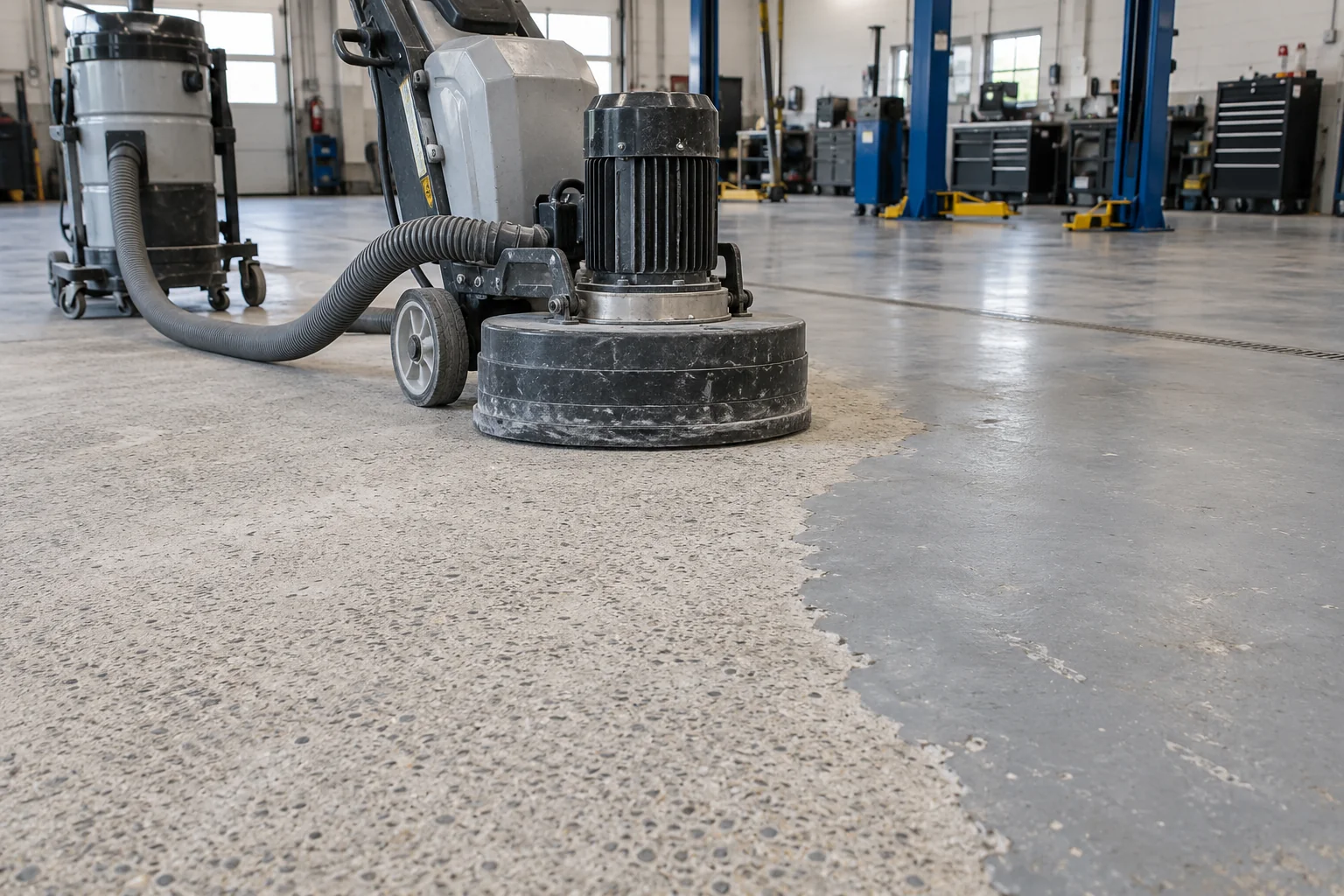
Map oil-soaked bays, brake-fluid spills and previous sealers. Clean and investigate the depth of contamination before the final mechanical preparation. Where adhesion remains uncertain, a trial area and adhesion assessment are more useful than simply adding another coat.
Plan working-bay boundaries
Arrange preparation dust control, vehicle access and isolation from occupied bays. Put staged-work boundaries in practical locations and coordinate joints, line marking and curing before moving heavy equipment back.
ALKA products and technical data sheets
The products below relate to the pathways discussed on this page. Select one approved coating schedule for the project: alternative primers, binders and finishes are not a list of layers to combine automatically.
Use the current TDS and safety data for the exact product and supplied kit. Confirm substrate preparation, moisture limits, mixing, coverage, coat thickness, recoat intervals and full-service cure. Where a direct PDF is not listed, request the product-specific document from ALKA technical support before proceeding.
More answers for your project
Will brake fluid or battery acid damage the floor?
Potentially. Provide the actual fluid names, concentrations, temperatures and expected contact times. A floor suitable for routine oils is not automatically resistant to brake fluid, concentrated acid or solvents. Prompt spill removal remains part of maintenance even with a chemically suitable coating.
Can welding or grinding take place directly over the finish?
Hot sparks, slag and sharp swarf can damage resin finishes. Use suitable work-area protection and housekeeping, and discuss heat-producing operations during selection. A heavy-duty label does not make a decorative coating immune to thermal damage.
Can worn service bays be recoated individually?
Often, after checking adhesion, contamination and compatibility. Stop at an agreed joint or bay boundary where possible; texture and colour differences may remain visible. The repair schedule must include the preparation and recoat requirements of both old and new materials.
How should jacks and stands be used?
Check the slab capacity and the concentrated loading at the contact points. Use suitable protective or load-spreading arrangements where required and avoid dragging stands. Coating hardness does not replace structural assessment of the floor.
Make the quote a complete scope
Ask the proposal to identify preparation and repairs, the selected ALKA products, coating stages, finish sample, joint and edge details, installation stages and the permitted return to service. Include cleaning instructions and the technical documents in the handover so future maintenance follows the installed system.
Specify the workshop floor before you price the coating.
Send the floor area, photos, concrete condition, workshop activities, expected fluids and available shutdown window. ALKA will help identify the system pathway that deserves detailed review.
Tell us about your project
Leave your contact details and tell us about your mechanical workshop flooring project. Include the location, approximate floor area, current surface condition and preferred timing. ALKA can help recommend a suitable system and discuss an applicator referral for your project.
Workshop epoxy flooring — Sydney, Brisbane and Melbourne
Mechanical workshops need a floor coating selected around oils, service chemicals, wheeled traffic and maintenance access. ALKA supports product selection and complete system planning for new workshops and refurbishment.
Workshop epoxy flooring in Sydney
Provide a bay layout, vehicle lift positions and contamination photos for your Sydney workshop. Agree how turning areas and pedestrian routes will be prepared, coated and reopened.
Workshop epoxy flooring in Brisbane
For Brisbane service bays, identify open-door weather exposure, wash areas and cleaning routines. Review slip-resistant texture, moisture assessment and a UV-stable finish where the selected system needs one.
Workshop epoxy flooring in Melbourne
For Melbourne workshop upgrades, confirm overnight temperatures and the available shutdown. Include preparation, repairs and full cure before vehicle loading in the installation programme.
ALKA-908 workshop system · ALKA 210 · ALKA 110S · Resin flooring products
Send your project location, area and photos for a system recommendation. Ask about product supply, current technical data and an applicator referral for your location. Installation availability and the final coating schedule are confirmed for each project.