AVIATION INFRASTRUCTURE
Airports & Aviation Facilities
Corrosion protection for terminal steelwork, hangar structures and service assets, with systems selected around exposure and maintenance access.
ALKA PROTECTIVE COATINGS
Protecting the structures that keep aviation moving.
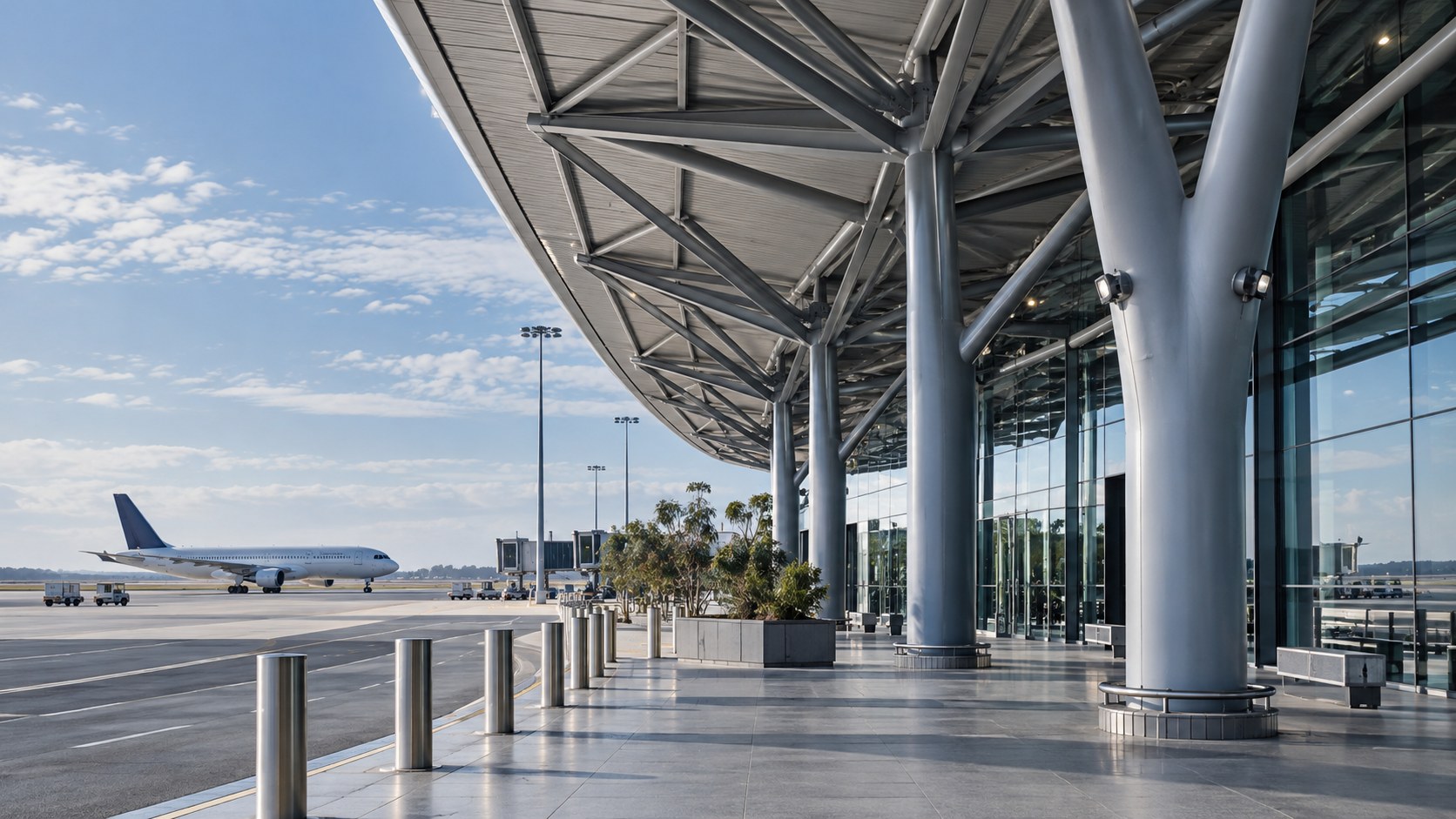
From exposed terminal canopies to hangar frames and ground-service structures, airport assets need coating systems matched to their environment. ALKA manufactures primers, epoxy barrier coats and polyurethane finishes for new steelwork and maintenance programs.
Exposed structural steel
Terminal canopies, hangar frames, walkways and external equipment supports. Consider UV, coastal salts and access for future maintenance.
Service and plant areas
Prepared steel frames, machinery supports and plant-room assets in moderate atmospheric exposure.
Maintenance programs
Existing steelwork where shutdown duration, surface preparation and compatibility with the retained coating govern the specification.
UNDERSTAND THE SERVICE
Plan protection around exposure and airport operations.
Weather-facing structures
Terminal canopies and hangar frames may combine direct sunlight, rain and coastal salt deposition. Separate these exposed members from sheltered service steel so the protective build reflects the location of each asset.
Access and staged maintenance
Work around operating terminals requires a defined preparation area, ventilation and a realistic cure window. Agree how adjacent equipment and public areas will be isolated before selecting an application sequence.
Fluids and operational surfaces
Fuel, hydraulic fluids and cleaning chemicals create a different selection problem from ordinary atmospheric corrosion. Identify the fluid and contact duration; aircraft movement surfaces and hangar floors need their own specification.
ALKYD PRIMERS · ENAMELS · SINGLE-PACK FINISHING
Enamel finishes for airport service and support assets
Prepared doors, service frames, equipment covers and workshop components in suitable atmospheric locations may be considered for single-pack primers and enamels. These practical finishes complement the separate systems used for exposed terminal structures, hangar floors and demanding aviation service areas.
Products to assess for the job
- ALKA 401 · Alkyd zinc phosphate primer
Prepared carbon steel; a corrosion-inhibiting primer for compatible alkyd and enamel finishing routes.
- ALKA 402 · Single-pack acrylic etch primer
A substrate-specific adhesion option for steel and suitable galvanised or aluminium components. This is a thermoplastic acrylic primer, not an alkyd.
- ALKA 403 · Red oxide anti-corrosive primer
A primer option for prepared ferrous metal, fabricated steel and general maintenance; confirm the selected finish compatibility.
- ALKA 410 · Rapid-cure protective enamel
A gloss finishing option for machinery, fabricated components and maintenance work over a compatible prepared and primed surface.
Select a complete, compatible primer and finish. The products above are options by role, not a blanket approval to combine every primer and topcoat.
What the applicator or specifier needs
Separate landside building metalwork, hangar service equipment and airside assets. Record fuels, hydraulic fluids, cleaning and coastal exposure where they affect the component.
Identify bare, galvanised and previously coated metal before preparation. Check retained-paint compatibility and detail spot priming at exposed edges and repairs.
Plan odour, ventilation, access and cure around occupied areas and operational windows. Agree appearance and handling criteria before handover.
Write a usable coating schedule
Specify the substrate and preparation, exact primer and finish, individual-coat dry-film thickness, application method, thinning limits, recoat interval and service-cure requirement from current product data. For repainting, document the retained coating and a representative compatibility trial before full application.
Choose the coating for the exposure
Aircraft movement surfaces, aviation fuel contact and specialist floor duties require their own specifications and operator requirements.
A single-pack route can simplify small batches and routine repainting because it does not require mixing a separate hardener. It still depends on sound preparation, suitable film build and the correct recoat window. Where exposure or the required maintenance interval is more demanding, assess the relevant two-pack epoxy, polyurethane or specialist lining system.
Does fast drying mean the part is ready for service?
No. Touch-dry, recoatable, handleable and fully cured describe different stages. Use the selected product data and actual application conditions to plan each stage. Excessive film build, early overcoating or premature handling can compromise the finish; adding extra thinner or a hardener is not a substitute for the specified application procedure.
SYSTEM SELECTION
ALKA systems to consider.
Start with the service conditions, then confirm the complete build for your asset.
| System | Coating build | Nominal DFT | Selection note |
|---|---|---|---|
| ALKA-9930 Premium External | Alka 404 zinc-rich epoxy primer → Alka 413 high-build epoxy → Alka 421 polyurethane finish | 250–300 µm | Preferred where long-term durability and appearance are both important. Not an immersion system unless separately approved. |
| ALKA-9931 General Industrial | Alka 416 single-pack epoxy coating → Alka 413 high-build epoxy → Alka 421 polyurethane finish | 225–275 µm | For moderate atmospheric service. Confirm exposure severity before replacing a zinc-rich system. |
| ALKA-9932 Maintenance / Refurbishment | Alka 412 surface-tolerant epoxy × 2 coats → optional Alka 421 polyurethane finish | 200–400 µm plus optional 50–75 µm finish | Existing coatings require compatibility and adhesion assessment. UV finish is optional where colour retention is required. |
DFT = dry-film thickness. Values are nominal selection-guide totals, not wet-film thicknesses or individual-coat application instructions. Use current TDS and written project-specific recommendations.
FROM EXPOSURE TO SYSTEM
Why these systems are considered.
Use the application and preparation requirements to narrow the options, then confirm the complete specification.
Exposed external steel
The zinc-rich primer, epoxy barrier and polyurethane finish provide a coordinated starting point where corrosion protection and external appearance are both priorities. Confirm the preparation achievable on the steel.
General service infrastructure
An epoxy zinc-phosphate primer, high-build epoxy and polyurethane finish form an alternative for general industrial atmospheric assets. Select it for the assessed exposure rather than applying one build across the entire airport.
Refurbishment of existing steel
The surface-tolerant epoxy build is a maintenance option where retained coatings and preparation constraints govern the work. Soundness, adhesion and compatibility still need assessment before overcoating.
SPECIFICATION CHECKPOINTS
Get the details right before coating.
- 01Location and coastal exposure of each asset
- 02Steel condition, access and preparation method
- 03Fuel or hydraulic-fluid contact, where relevant
- 04Shutdown period, cure window and handover requirements
THE SYSTEM APPROACH
ALKA-9930 example. Nominal total dry-film thickness: 250–300 µm. Diagram is not to scale. Confirm individual coat thicknesses in the approved specification.
Confirm surface preparation, stripe coating, application conditions, recoat intervals and cure. Record inspection results against the approved coating schedule.
APPLICATION & QUALITY PLANNING
Build inspection into the specification.
Agree the acceptance criteria before work starts, with the current product data and project coating schedule as the reference.
01 · Accept the substrate
Record substrate condition, cleanliness and the specified surface preparation. Resolve contamination, unsound existing coatings and detailing before the first coat.
02 · Control application
Confirm environmental limits, mixing, usable application time and recoat windows from the current product data. Record coating batches and the conditions during each stage.
03 · Verify the complete build
Check coverage at edges and details, specified individual-coat thickness and total dry-film thickness. Define how defects will be repaired and re-inspected.
04 · Release to service
Agree the handover condition for each stage, including cure, finish, inspection records and restrictions on early cleaning or fluid exposure.
TECHNICAL QUESTIONS
Details that change the specification.
Can the same system cover structural steel and a hangar floor?
No. Structural steel protection and floor performance have different requirements. For floors, review concrete moisture, wheel traffic, fluid exposure and slip resistance; use the linked hangar flooring system as a separate selection route.
How should a short shutdown be specified?
State the available preparation, application and curing periods separately, together with expected substrate temperatures. A surface that is dry to touch is not necessarily ready for traffic or fluid exposure; the approved product data must set the return-to-service requirement.
What should be supplied for an airport coating review?
Provide asset drawings or photographs, location, substrate, existing coating details, access restrictions, required finish and any fluid exposure. Include operator requirements that affect work areas, application or handover.
TECHNICAL RESOURCES
Move from selection to specification.
Coating system library
Compare ALKA system builds for atmospheric, maintenance and lining applications.
Browse systems →Product information
Explore product information and request current technical and safety data sheets.
Technical information →Specification support
Confirm preparation, products, film thickness and service conditions with ALKA.
Contact technical team →SPEAK WITH THE MANUFACTURER
Specify the right protection.
Send the substrate, exposure, existing coating condition and required finish. Our technical team can help identify a suitable ALKA system and the information needed for your specification.