ALKA-9932
Maintenance & Refurbishment Protective Coating System
Surface-tolerant high-build epoxy maintenance system designed for existing and corroded steel where full abrasive blasting is restricted, providing practical long-term protection with minimal disruption to operating facilities.
Available Colours
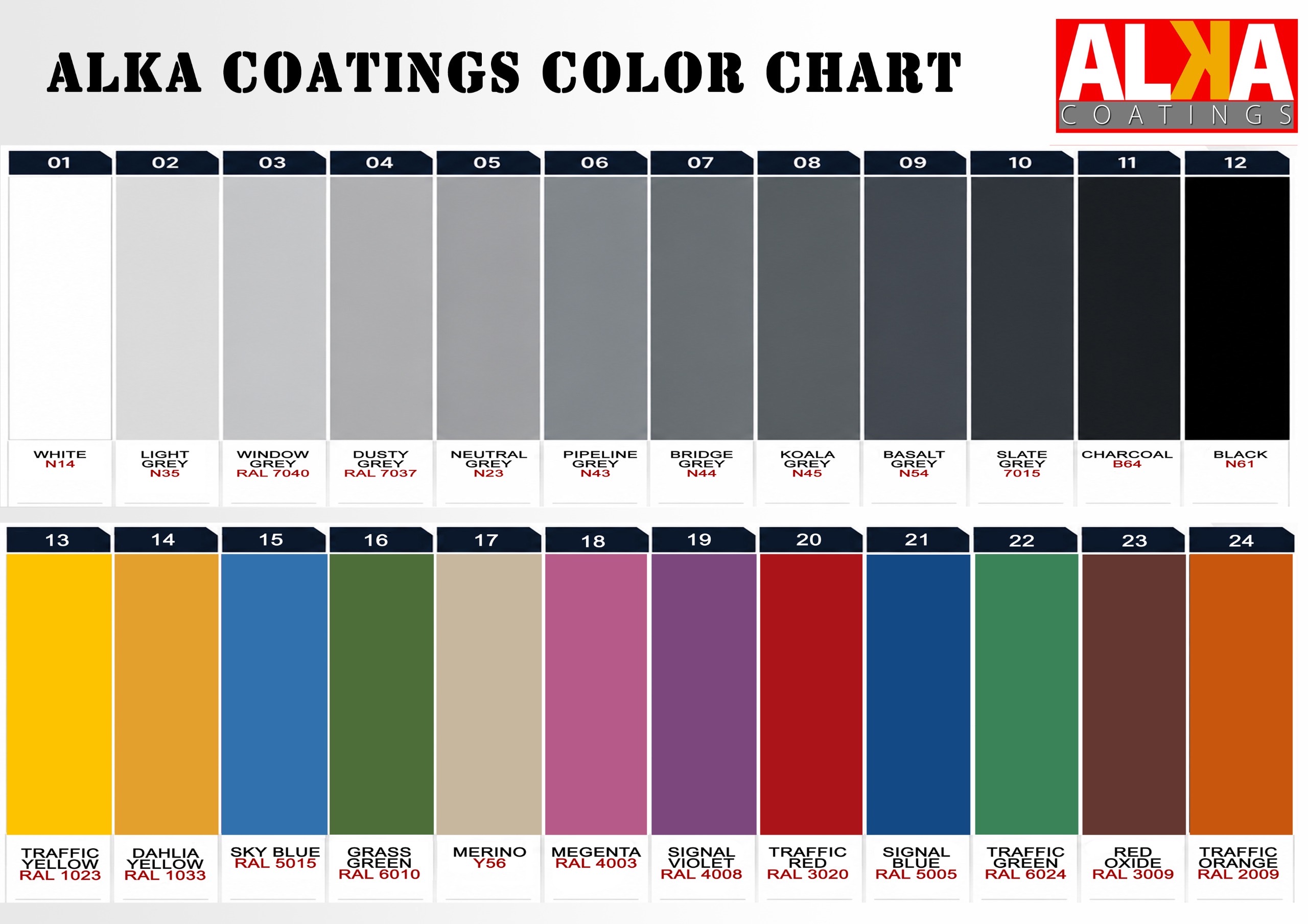
ALKA Coatings — Solid Colour Chart
Solid-colour reference for ALKA-9932. Confirm availability for the specified exposed coating and the project requirements. Colours shown are not automatically available in every primer, intermediate coat or specialist formulation.
View Colour Chart ↗ | Download Colour Chart ↓
Screen and printed colours are approximate. Confirm your final selection with a physical sample. Lighting, texture, application and the selected system can affect the finished appearance.
High-Performance Maintenance Protection for Existing Steel Assets
ALKA-9932 is a specialist maintenance and refurbishment coating system developed for existing steel structures where complete abrasive blasting is difficult, restricted or impractical.
Unlike new-build protective systems that depend on full abrasive blasting followed by a dedicated zinc-rich or zinc-phosphate primer, ALKA-9932 is based on ALKA-412 Surface-Tolerant Epoxy, normally applied as two high-build coats over appropriately prepared existing steel or compatible retained coatings.
Where the asset is externally exposed and improved colour stability or long-term appearance is required, an optional ALKA-421 Polyurethane Finish can be incorporated as the final coat.
The system is particularly suited to operating industrial facilities, shutdown maintenance, refurbishment work, difficult-access structures and existing steel assets where removing the entire existing coating system would create excessive cost, downtime or operational disruption.
ALKA-9932 should therefore be viewed as a low-disruption maintenance system, designed to extend the protective life of existing steel assets while working within realistic maintenance preparation constraints.
PROTECTION STRATEGY
ALKA-9932 uses a fundamentally different protection strategy from premium new-construction systems such as ALKA-9930 and ALKA-9931.
Rather than:
Abrasive Blast → Dedicated Primer → Barrier Coat → Finish
ALKA-9932 uses:
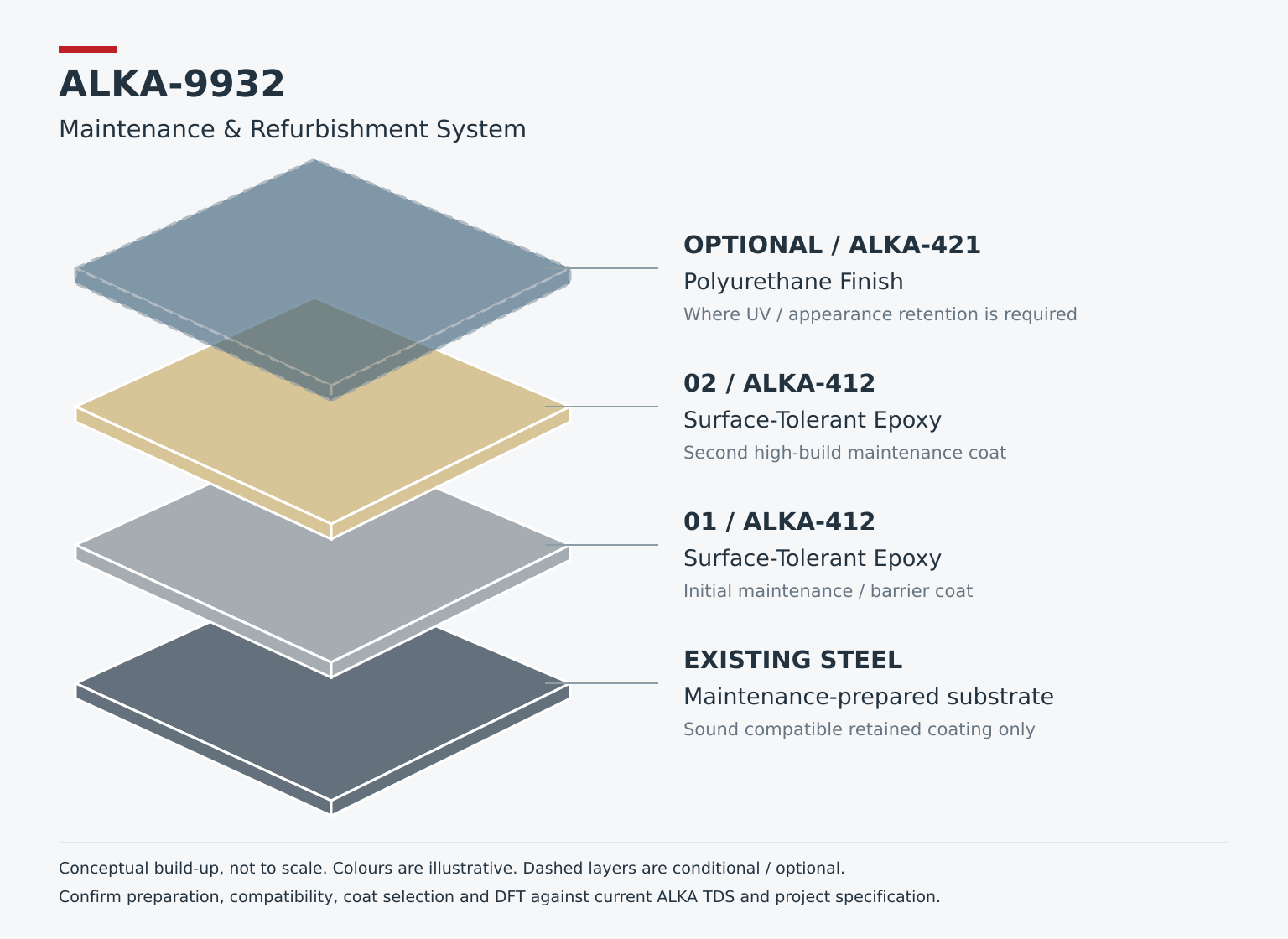
Existing Steel Assessment → Maintenance Surface Preparation → Surface-Tolerant High-Build Epoxy → Surface-Tolerant High-Build Epoxy → Optional UV-Stable Finish
The system relies on the ability of ALKA-412 to function as a surface-tolerant high-build maintenance epoxy, providing adhesion and barrier protection under appropriately prepared maintenance conditions.
The first ALKA-412 coat establishes the protective bond to the prepared substrate and isolates existing steel from the environment.
The second ALKA-412 coat increases total system film thickness, reinforces the protective barrier and provides additional coverage over irregular or aged steel surfaces.
Where required, ALKA-421 completes the system with a polyurethane weathering finish for improved exterior colour and appearance retention.
KEY PERFORMANCE BENEFITS
- Designed specifically for industrial maintenance and refurbishment
- Suitable for existing steel where full abrasive blasting is restricted
- Surface-tolerant epoxy technology
- High-build protective coating construction
- Two-coat ALKA-412 epoxy system
- Nominal epoxy system build of 200–400 μm
- Optional ALKA-421 polyurethane finish at approximately 50–75 μm
- Reduces dependence on complete abrasive blasting
- Supports hand-tool and power-tool prepared maintenance areas where technically appropriate
- Suitable for shutdown and repair programmes
- Suitable for patch coating and localised corrosion repairs
- Suitable for ageing structural steel
- Suitable for upgrading compatible existing coating systems
- Helps reduce maintenance disruption to operating facilities
- Suitable for complex and difficult-access steel structures
- Provides a practical alternative to complete coating removal and replacement
- Optional UV-stable finish where colour retention is important
- Can extend the service life of existing steel assets when correctly specified and applied
- Well suited to planned asset-maintenance programmes
- Practical balance between preparation requirements, coating performance and project downtime
SYSTEM BUILD-UP
SUBSTRATE — Existing / Corroded Carbon Steel or Compatible Existing Coating
ALKA-9932 is principally designed for existing steel where maintenance preparation conditions differ from those achievable on new fabricated steel.
Before specifying the system, the existing substrate must be assessed to determine:
- Degree and distribution of corrosion
- Condition of the existing coating
- Remaining coating adhesion
- Presence of under-film corrosion
- Areas of exposed steel
- Oil, grease and process contamination
- Presence of salts or other surface contamination
- Accessibility for surface preparation
- Practical limitations on abrasive blasting
- Compatibility of retained coatings with ALKA-412
The system should not be applied indiscriminately over an unknown or poorly adhered existing coating.
Retained coating must be sufficiently sound, properly adhered and demonstrated to be compatible with the proposed maintenance system.
COAT 1 — ALKA-412 Surface-Tolerant Epoxy
Function: Initial Surface-Tolerant Maintenance / Barrier Coat
The first coat of ALKA-412 is applied over the correctly prepared existing steel and any compatible retained coating.
Its primary role is to establish adhesion to the maintenance-prepared substrate while forming the first substantial epoxy barrier between the steel and the surrounding industrial environment.
Because existing structures commonly contain irregular surfaces, corrosion pits, transitions between bare steel and retained coating, welds and complex geometries, the first coat is particularly important in establishing continuity across the repaired surface.
Product: ALKA-412 Surface-Tolerant Epoxy
Position: First maintenance coat over prepared substrate
Primary Function: Adhesion, substrate isolation and initial high-build barrier protection
Nominal DFT: Project-specific within the overall 200–400 μm two-coat epoxy build
COAT 2 — ALKA-412 Surface-Tolerant Epoxy
Function: Additional High-Build Maintenance Barrier
The second ALKA-412 coat builds additional protective film thickness over the first maintenance coat.
Its purpose is to improve overall coating continuity, increase the physical barrier separating the substrate from atmospheric moisture and contaminants, and provide the total high-build epoxy construction required for the maintenance system.
Application of two ALKA-412 coats is particularly valuable where existing steel has an irregular profile or where the maintenance objective is to achieve a substantial protective barrier without introducing a separate conventional primer and intermediate coat.
Product: ALKA-412 Surface-Tolerant Epoxy
Position: Second high-build maintenance coat
Primary Function: Increased total DFT, barrier reinforcement and system continuity
Nominal Combined Epoxy DFT: 200–400 μm
OPTIONAL COAT 3 — ALKA-421 Polyurethane Finish
Function: UV Stability, Colour Retention and Finished Appearance
ALKA-421 is optional within ALKA-9932.
It should be incorporated where the refurbished steel will remain exposed to sunlight and where colour stability, gloss retention or a more controlled finished appearance is important.
Where these appearance requirements are secondary, the ALKA-412 epoxy maintenance build may be specified without the polyurethane finish according to the project requirements.
Product: ALKA-421 Polyurethane Finish
Position: Optional final exposed coat
Primary Function: UV resistance, weatherability and colour retention
Nominal DFT: 50–75 μm
Nominal Total System DFT
ALKA-412 × 2 coats: 200–400 μm
With optional ALKA-421 finish: 250–475 μm approximately
Final individual coat thicknesses and total system DFT must be confirmed against the current ALKA technical data sheets and project-specific coating recommendation.
SUITABLE SUBSTRATES
ALKA-9932 is primarily intended for:
Existing Carbon Steel
Including steel where corrosion is present but the asset remains structurally suitable for refurbishment.
Hand-Tool Prepared Steel
Localised maintenance areas where hand-tool preparation is permitted by the project specification.
Power-Tool Prepared Steel
Maintenance steel where mechanical power-tool preparation is used because abrasive blasting cannot practically be undertaken.
Existing Compatible Coating Systems
Sound retained coatings may form part of the substrate where compatibility and adhesion have been properly assessed.
Typical steel assets include:
- Existing structural beams
- Columns
- Pipe racks
- Platforms
- Stairs
- Handrails
- Support structures
- Equipment frames
- Tank exteriors
- Utility steelwork
- Industrial machinery structures
- Difficult-access fabricated steel
- Existing plant infrastructure
SERVICE & EXPOSURE ENVIRONMENT
ALKA-9932 is designed primarily for maintenance and refurbishment in industrial atmospheric environments.
Typical project conditions include:
- Operating manufacturing facilities
- Existing industrial plants
- Shutdown maintenance
- Restricted-access steel structures
- Areas where abrasive blasting is prohibited or difficult
- Existing weathered steel
- Locally corroded steel
- Existing coating systems requiring upgrading
- Areas requiring patch repair
- General industrial atmospheric exposure
- External exposure where optional ALKA-421 is incorporated
- Internal industrial environments
- Maintenance areas where minimising operational disruption is important
The system is particularly valuable when shutting down an entire plant area for full blast-and-recoat work would be disproportionate to the maintenance requirement.
TYPICAL APPLICATIONS
Industrial Shutdown Repairs
Structural steel, equipment supports, pipe racks, platforms and associated assets refurbished during planned plant shutdown periods.
ALKA-9932 allows maintenance teams to concentrate on corrosion repair and protective recoating without necessarily requiring complete removal of every existing coating layer from the entire structure.
Patch Coating & Localised Corrosion Repair
Local corrosion areas on otherwise serviceable coated steel structures.
Damaged or deteriorated coating can be appropriately removed and the exposed area prepared before integration into the maintenance coating system.
Corroded Structural Steel
Existing columns, beams, braces and fabricated structural elements showing atmospheric corrosion but remaining suitable for protective refurbishment.
Old Coating System Upgrades
Existing steel structures where the original protective coating has aged but sound sections can potentially be retained following compatibility and adhesion assessment.
The maintenance system can therefore be used as part of a controlled coating-upgrade programme rather than automatically removing the complete existing coating system.
Industrial Plant Maintenance
Existing structural steel within manufacturing plants, processing facilities and general industrial sites.
Typical assets include equipment supports, platforms, access structures, machinery frames and utility structures.
Existing Pipe Racks
Pipe racks and service-support structures where complete abrasive blasting is difficult because of operating pipework, access restrictions or surrounding plant.
Platforms, Stairs & Access Structures
Existing industrial platforms, stair structures, access frames and maintenance walkways where corrosion repair and protective recoating are required.
Tank Exteriors
External steel tank shells, roofs, access structures, ladders and support steel requiring maintenance coating.
This application refers to external atmospheric surfaces, not internal tank lining.
Equipment Frames & Skids
Existing equipment supports, machinery frames and fabricated industrial skids requiring refurbishment.
Utility & Service Structures
Existing brackets, structural supports, service frames and utility steelwork undergoing routine or corrective maintenance.
Difficult-Access Industrial Steel
Structures where geometry, operating equipment or access restrictions make complete abrasive blasting impractical.
Progressive Maintenance Programmes
Large industrial sites where corrosion protection is carried out section-by-section over multiple maintenance periods rather than through a complete plant-wide recoating project.
SURFACE PREPARATION
The term surface-tolerant must not be interpreted as meaning that surface preparation is unnecessary.
Performance still depends strongly on the condition and cleanliness of the substrate.
The selected preparation method must remove materials that would compromise coating adhesion or durability.
Depending on project conditions, preparation may involve suitable hand or power tools and other approved mechanical methods.
Attention should be given to:
- Loose rust
- Loose scale
- Failed coating
- Poorly adhered existing paint
- Oil and grease
- Dust
- Process residues
- Soluble contamination where relevant
- Sharp coating edges
- Corrosion pits
- Weld defects
- Damaged edges
- Moisture or condensation
Existing coatings should be feathered where appropriate to avoid abrupt edges between retained coating and bare steel.
Particular attention should be given to corrosion pits because these areas can be difficult to coat uniformly and may retain contamination.
EXISTING COATING ASSESSMENT
Because ALKA-9932 is specifically a maintenance system, evaluation of the existing coating is an important part of specification.
Before overcoating, the retained coating should be assessed for:
Adhesion
Poorly adhered coating must not simply be covered by the new system.
Compatibility
The retained coating must be chemically and physically compatible with ALKA-412.
Condition
Cracking, blistering, delamination or severe under-film corrosion may indicate that the existing system is unsuitable for retention.
Contamination
Industrial oils, grease, process chemicals, salts or other residues may remain on aged coatings and must be properly addressed.
Where compatibility is uncertain, an appropriate test area or adhesion assessment should be considered before full-scale application.
TRANSITION BETWEEN EXISTING COATING & BARE STEEL
Maintenance projects frequently involve surfaces containing both retained coating and exposed steel.
These transition zones should be prepared carefully.
Loose or weak coating should be removed back to a sound edge, and remaining coating edges should be feathered where appropriate.
ALKA-412 must then be applied to achieve a continuous protective film across the transition between prepared exposed steel and retained compatible coating.
This is one of the most critical practical details in maintenance coating work.
APPLICATION CONSIDERATIONS
Application should comply with the current ALKA-412 and, where used, ALKA-421 technical data sheets.
Important application controls include:
- Ambient temperature
- Steel temperature
- Relative humidity
- Dew point
- Surface dryness
- Surface contamination
- Mixing ratio
- Thorough mechanical mixing
- Pot life
- Application method
- Wet-film thickness
- Dry-film thickness
- Minimum recoat interval
- Maximum recoat interval
- Cure condition
- Ventilation
- Protection from contamination between coats
Because existing structures often contain complex geometry, applicators must avoid creating thin-film areas around edges, welds, bolts, pits and difficult-access surfaces.
STRIPE COATING & DETAIL WORK
Where required by the project specification, additional stripe coating should be considered around:
- Welds
- Edges
- Bolts
- Nuts
- Corners
- Brackets
- Corrosion pits
- Difficult-access geometries
- Steel transitions
- Complex fabricated connections
These locations are particularly vulnerable to insufficient film build during spray or roller application.
INSPECTION & QUALITY CONTROL
Maintenance coating inspection should focus not only on the new coating but also on the quality and condition of the substrate being retained.
Depending on project requirements, inspection may include:
- Existing coating condition assessment
- Adhesion assessment
- Identification of failed coating
- Verification of surface preparation
- Inspection of corrosion removal
- Environmental-condition recording
- Dew-point monitoring
- Inspection of transition areas
- Stripe-coat verification
- Wet-film thickness checks
- Dry-film thickness measurements
- Inspection for missed areas
- Final total DFT verification
- Final appearance inspection
- Batch-number recording
- Application-condition records
For maintenance systems, quality control before the first coat is especially important because coating over unsound material cannot restore the integrity of the underlying substrate or failed coating.
WHY SPECIFY ALKA-9932?
ALKA-9932 should be selected when a steel asset requires renewed corrosion protection but a complete blast-and-recoat programme would create unnecessary cost, shutdown time or operational disruption.
The system is designed around the realities of maintenance work.
Its protection strategy is:
Prepared Existing Steel → ALKA-412 Surface-Tolerant Epoxy → ALKA-412 Surface-Tolerant Epoxy → Optional ALKA-421
This provides a high-build maintenance solution while reducing the preparation demands associated with premium new-build systems.
The system is especially relevant where:
- Plant shutdown time is limited
- Complete abrasive blasting is restricted
- Some existing coating can safely remain
- Structural steel is difficult to access
- Local corrosion repairs are required
- A progressive maintenance programme is preferred
- Long-term protection must be restored without complete coating replacement
LOW-DISRUPTION MAINTENANCE POSITIONING
ALKA-9932 is positioned within the ALKA protective coating range as the low-disruption maintenance solution.
Its value is not that preparation can be ignored.
Its value is that a correctly engineered maintenance programme can often be undertaken without automatically requiring complete abrasive blasting of every square metre of existing steel.
This can significantly improve the practicality of maintenance on operating industrial assets.
WHEN TO CHOOSE ALKA-9932
ALKA-9932 is particularly appropriate when:
- Existing steel requires refurbishment
- Full abrasive blasting is restricted
- Hand or power-tool preparation is part of the approved maintenance strategy
- Existing coating is partially retained
- Localised repair is required
- Plant downtime must be minimised
- A high-build surface-tolerant epoxy system is appropriate
- Appearance retention can be added through optional ALKA-421
WHEN ALKA-9932 MAY NOT BE THE RIGHT SYSTEM
A different ALKA system should be considered when:
- The project is new construction with full abrasive blasting available
- A zinc-rich premium primer is required
- Exposure severity requires a dedicated marine system
- Chemical immersion is involved
- A specialist tank lining is required
- Splash or tidal exposure is present
- Glass-flake reinforced severe-duty protection is required
- Existing coating adhesion is poor across most of the structure
- The underlying steel requires structural repair rather than coating maintenance
ALKA-9932 VS ALKA-9937
Both systems address difficult maintenance conditions, but they serve different severity levels.
ALKA-9932 is the practical general maintenance and refurbishment system based on two coats of ALKA-412 surface-tolerant epoxy.
ALKA-9937 is the more severe-duty maintenance option using ALKA-418 MIO Glass-Flake Surface-Tolerant Epoxy, where higher build and glass-flake/MIO barrier performance are required.
As a practical selection principle:
General maintenance / refurbishment → ALKA-9932
More demanding severe-duty maintenance → ALKA-9937
Final selection must still consider substrate, preparation capability and actual exposure.
LIMITATIONS
ALKA-9932 should not be treated as a universal substitute for full surface preparation or specialist protective systems.
Key limitations include:
- Existing coatings require compatibility assessment
- Existing coatings require adhesion assessment
- Poorly adhered coatings must be removed
- Surface-tolerant does not mean preparation-free
- Severe contamination must be properly removed
- Structural corrosion damage cannot be repaired by coating alone
- Optional ALKA-421 is required where improved UV colour retention is specified
- The standard system is not positioned as a dedicated immersion lining
- It is not a specialist chemical-containment system
- It is not the preferred severe splash/tidal system
- Exposure severity must be reviewed before system selection
SPECIFICATION GUIDANCE
A complete ALKA-9932 project specification should define:
Existing Asset Condition → Existing Coating Assessment → Adhesion/Compatibility → Areas to Be Removed → Surface Preparation Method → Bare-Steel Repair Areas → Feathered Existing-Coating Transitions → Stripe-Coat Requirements → ALKA-412 First Coat → ALKA-412 Second Coat → 200–400 μm Total Epoxy DFT → Optional ALKA-421 50–75 μm → Environmental Conditions → Recoat Windows → Inspection → Final Acceptance
For complex maintenance projects, the coating specification should also clearly identify which areas are:
Fully stripped
Locally prepared
Patch repaired
Overcoated
Excluded from coating
This prevents ambiguity during application and inspection.
SYSTEM POSITIONING
ALKA-9932 should be presented to contractors, engineers and asset owners as:
A practical high-build surface-tolerant epoxy system for extending the service life of existing industrial steel while reducing the disruption associated with complete abrasive blasting and total coating replacement.
Its core value proposition is:
Lower preparation disruption + high-build epoxy protection + practical refurbishment capability + optional UV-stable finish.
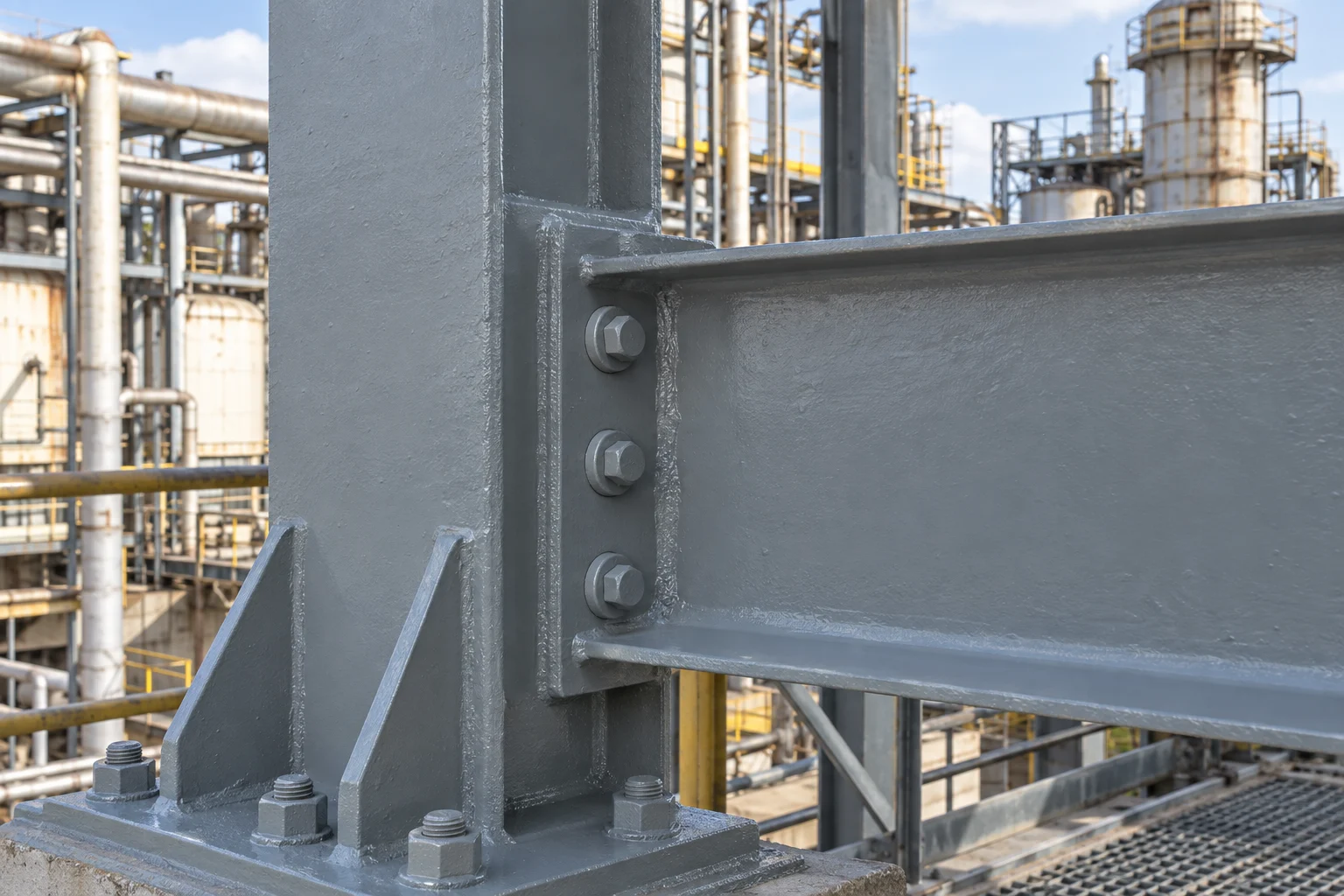
Application Examples
Representative applications; final system selection depends on substrate, preparation and service conditions.

Existing Access Structures

Tank Exterior Maintenance

Existing Pipe Racks
Photographic visuals on this page are AI-generated application illustrations, not completed ALKA projects. Colours are illustrative. The system schematic is conceptual and not to scale; refer to current ALKA technical data and project specifications.