Industrial flooring • built around the duty
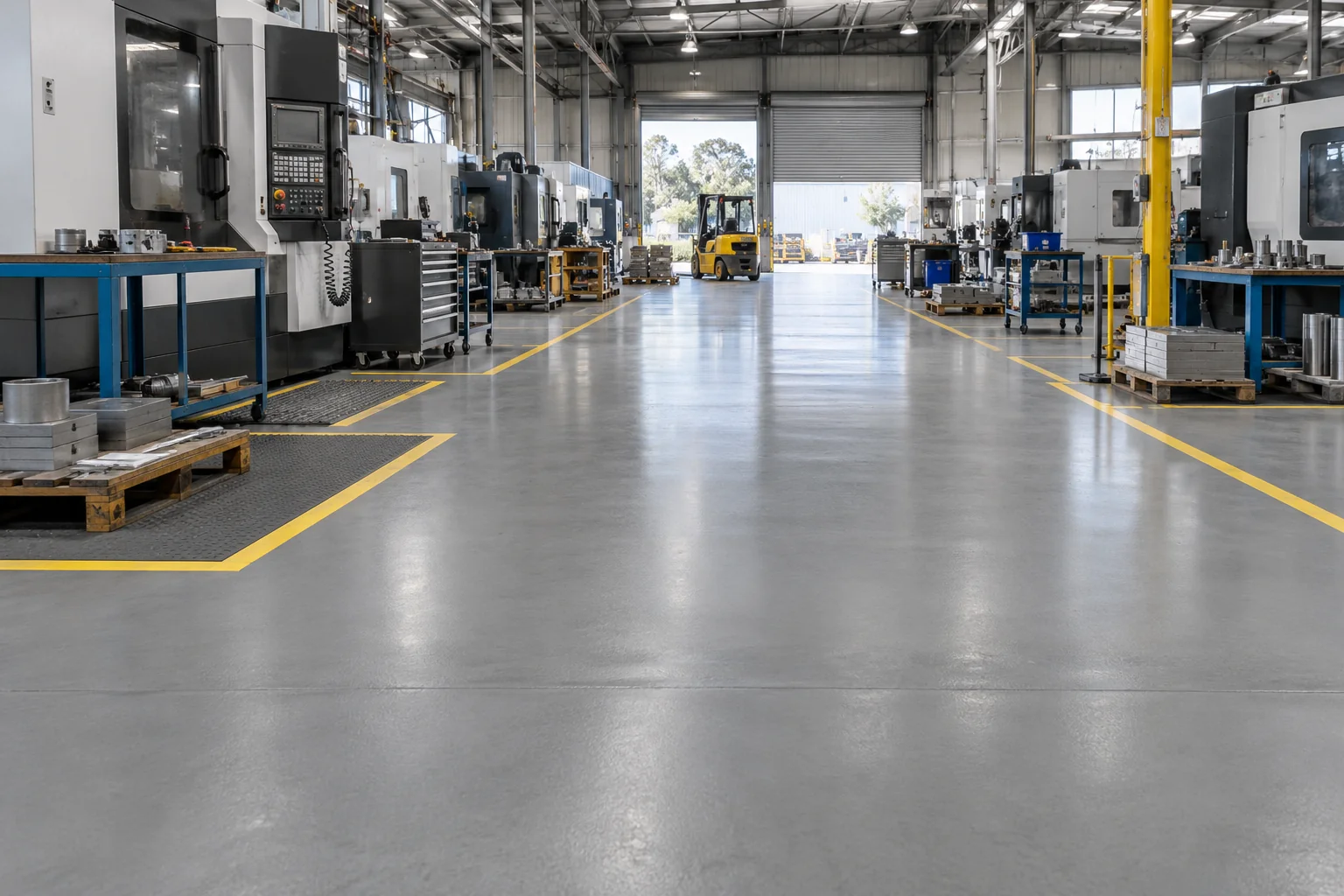
Heavy duty epoxy flooring for demanding industrial areas.
Heavy traffic is only part of the brief. Match your ALKA floor to wheel loads, turning points, impact, chemicals and cleaning—then build the right system for each zone.
ALKA COATINGS · Technical guidance. Project-specific selection.
Understand the application
Start with the operating conditions.
A factory aisle, machining bay and hot washdown area can share one building while needing different floors. ALKA helps separate abrasion, impact and chemical exposure from thermal and wet-service demands, so the specification addresses the actual causes of wear.
01
Traffic routes
Hard wheels, repeated turning and debris trapped under tyres concentrate abrasion. Record vehicle types, loaded weights, turning areas and the condition of existing joints.
02
Work and loading bays
Dropped tools, pallet movement and metal swarf create local impact and scratching. Repair damaged concrete and detail vulnerable edges before choosing the finish.
03
Wet and process zones
Oil, coolant, cleaning chemicals and hot water change the selection. Thermal cycling or sustained wet processing may call for a PU-cement pathway.
Compare the pathways
Choose the system around the service conditions.
| Application / requirement | ALKA pathway to review | Confirm before specification |
|---|---|---|
| Dry production and circulation | ALKA901; ALKA902 for a thinner-duty brief | Wheel contact, impact, finish texture and slab condition. |
| Workshop and maintenance bays | ALKA908 | Oils, coolants, cleaning, tyre contact and optional finish selection. |
| Hot, wet processing | ALKA904; assess ALKA905 for other process zones | Temperature cycle, washdown method, drainage and coving. |
Selection guide only. Current product data, substrate assessment and the approved project specification determine suitability and the final build.
What goes into the floor
The ALKA system, layer by layer.
ALKA901
Premium self-levelling epoxy
2–4 mm
A smooth, high-build epoxy option for suitably prepared production and industrial floors.
ALKA901 · surface to substrate
- LAYER 1Self-levelling epoxy body
- LAYER 2Specified compatible primer
- LAYER 3Prepared concrete
ALKA908
Heavy-duty workshop floor
1–2 mm
A workshop-focused option for service bays, wheeled traffic and a finish matched to the operating environment.
ALKA908 · surface to substrate
- LAYER 1Selected compatible protective finish
- LAYER 2ALKA210 pigmented body
- LAYER 3ALKA113 or ALKA112 primer, as specified
- LAYER 4Prepared concrete
ALKA904
PU-cement thermal shield
6–9 mm
A thicker PU-cement pathway for demanding wet processing and thermal exposure, subject to the approved service specification.
ALKA904 · surface to substrate
- LAYER 1ALKA255 PU-cement mortar / topping
- LAYER 2Suitable primer / sealer as specified
- LAYER 3Prepared concrete with detailed terminations
Listed builds reflect ALKA’s published system pages. Alternatives shown within a layer require a specified selection; they are not automatically interchangeable.
Design and installation
The slab and the details carry the specification.
Repair before coating
A resin finish does not restore the load-bearing capacity of a weak slab. Check concrete strength, moisture, laitance, contamination, cracks and existing coatings.
Retain movement joints
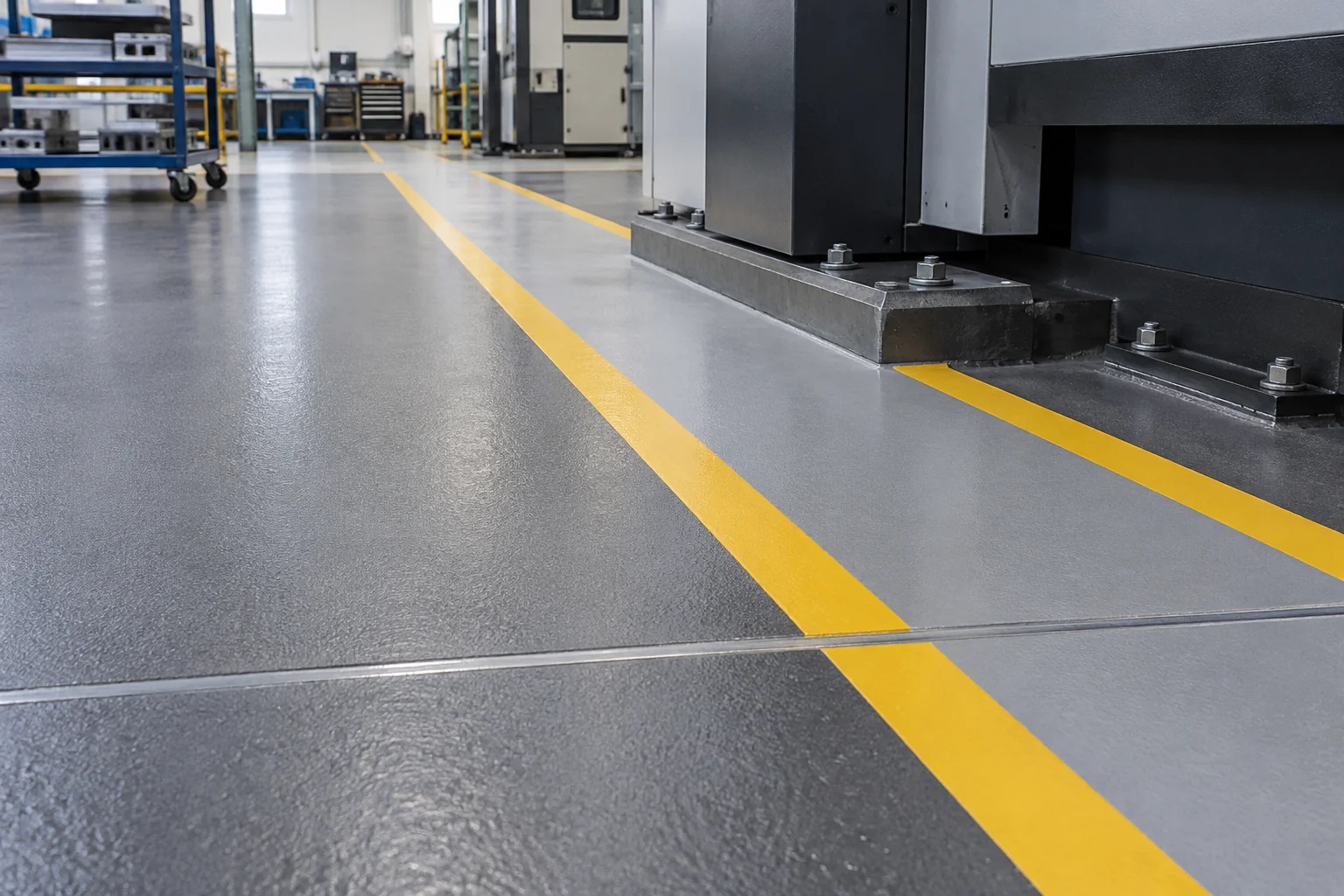
Carry required movement joints through the finish with an appropriate detail. Plan thresholds, loading edges and interfaces with adjoining floors.
Specify the surface you can maintain
More texture can improve traction in a chosen environment but requires an appropriate cleaning method. Agree the finish using a representative sample.
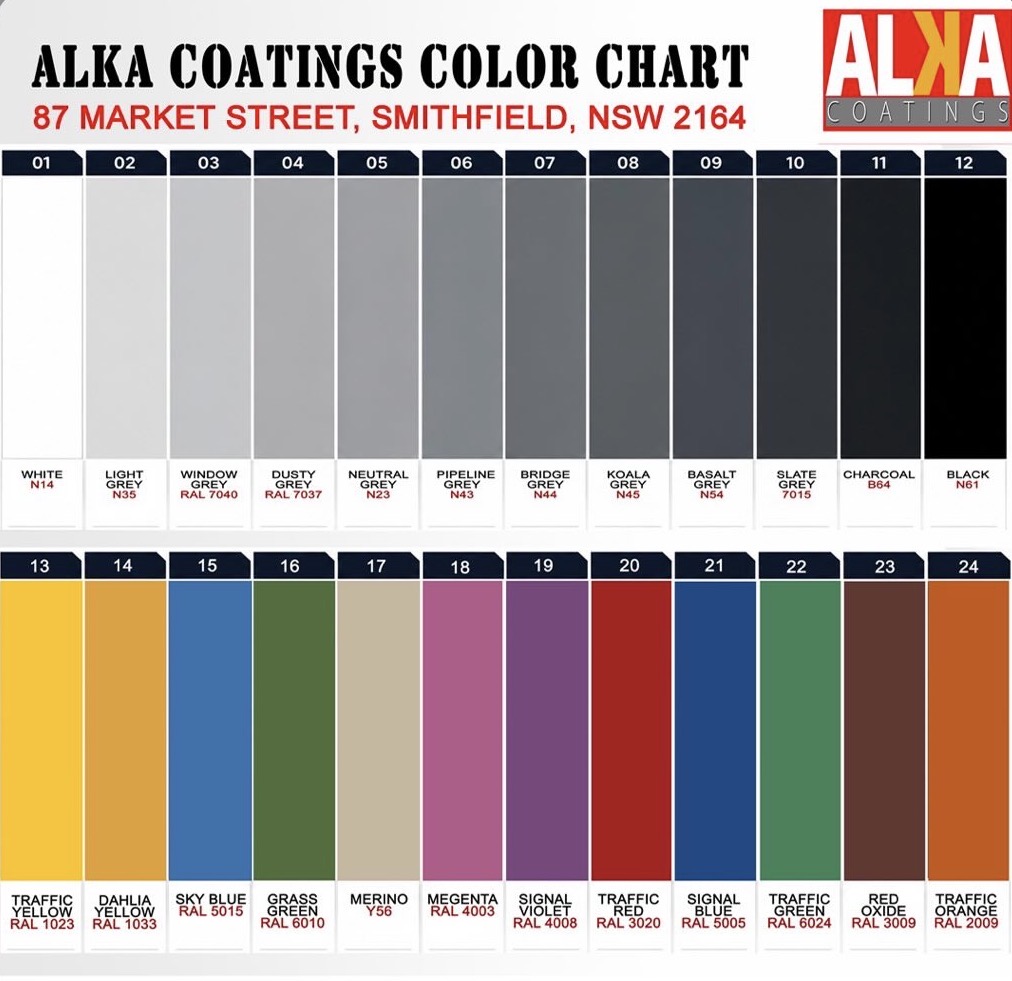
Lighting, sheen and texture affect the installed appearance. Use the ALKA colour chart to shortlist colours and confirm availability for the selected system.
From enquiry to installation
Get the right people and information in place.
Start with a technical conversation and a clear project brief.
ALKA can help review the duty, identify a suitable system pathway and provide product information for your project. For installation, ask about an approved applicator referral for your location and scope; suitability and availability are confirmed for the project.
Practical questions
Before you choose the floor.
Is thicker always better?
Thickness is one variable. Resin chemistry, substrate preparation, impact, wheel contact and detailing must work together. A thick dry-service epoxy is not automatically the right choice for hot washdown.
Can installation be staged around production?
Often the area can be divided into work zones, but access, dust control, transitions and curing need a practical programme. Ask ALKA to review the stages with the proposed applicator.
When can forklifts return?
Return-to-service depends on the specified system, temperature, humidity and cure achieved. Confirm pedestrian, wheeled and chemical service separately before handover.
Technical detail · products · practical answers
Specify the details that determine performance.
Identify the actual failure mechanism
Abrasion, impact, point loading, chemical softening and thermal cycling are different problems. Examine existing damage and record where it occurs. A coating selected only by thickness can leave the main cause of failure unchanged.
Resolve the substrate first
Assess weak concrete, delamination, contamination, moisture and damaged joint edges. The repair method must match the depth and cause of damage. Load-bearing repairs and slab movement may require specialist input before a coating schedule is finalised.
Create measurable acceptance points
Agree preparation quality, repair boundaries, coating consumption or thickness checks, texture samples and service-release conditions. Record product batches and application conditions so future maintenance has a usable reference.
ALKA products and technical data sheets
The products below relate to the pathways discussed on this page. Select one approved coating schedule for the project: alternative primers, binders and finishes are not a list of layers to combine automatically.
Use the current TDS and safety data for the exact product and supplied kit. Confirm substrate preparation, moisture limits, mixing, coverage, coat thickness, recoat intervals and full-service cure. Where a direct PDF is not listed, request the product-specific document from ALKA technical support before proceeding.
More answers for your project
Can the resin floor strengthen a failing slab?
It can protect a suitably prepared surface but does not restore the structural capacity of a failing slab. Investigate settlement, major cracking and load-bearing defects separately. Surface repair, structural remediation and protective coating perform different jobs.
What thickness should I specify?
Start with the selected ALKA system and actual duty. The pathways above show typical ranges, but local impact, substrate profile and service exposure determine the approved build. Compare complete schedules rather than buying by millimetres alone.
Can a smooth floor still provide grip?
Grip depends on the installed surface, contamination, footwear or tyres and the assessment method. A glossy appearance is not a slip rating. Specify and assess texture for the operating conditions while keeping the surface practical to clean.
What should the maintenance plan cover?
Remove grit and swarf, clean spills promptly, inspect joints and edges, and address wear before the underlying build is exposed. Record cleaning chemicals and repair materials. Periodic local repairs or recoating can be planned around production when the existing system remains sound.
Make the quote a complete scope
Ask the proposal to identify preparation and repairs, the selected ALKA products, coating stages, finish sample, joint and edge details, installation stages and the permitted return to service. Include cleaning instructions and the technical documents in the handover so future maintenance follows the installed system.
Let’s review your project
A floor selected for your space.
Share the operating conditions and the outcome you need. We’ll help you take the next step with a suitable ALKA system and installation pathway.
Tell us about your project
Leave your contact details and tell us about your heavy duty flooring project. Include the location, approximate floor area, current surface condition and preferred timing. ALKA can help recommend a suitable system and discuss an applicator referral for your project.
Heavy duty epoxy flooring — Sydney, Brisbane and Melbourne
Compare resin floor systems by load, wheel type, impact and process exposure. ALKA helps specify complete industrial floor coating builds for factories, production areas and maintenance spaces.
Heavy duty epoxy flooring in Sydney
For a Sydney factory floor, map forklift turns, machining bays and damaged joints before comparing system thickness. Identify oil contamination and the condition of the supporting concrete.
Heavy duty epoxy flooring in Brisbane
For Brisbane industrial flooring, distinguish wet processing from dry traffic areas. Moisture, wash-down temperature and cleaning chemistry may require a different resin system in adjoining zones.
Heavy duty epoxy flooring in Melbourne
For Melbourne production sites, include substrate temperature and staged access in the refurbishment scope. A rapid-cure option still needs suitable preparation and confirmed return-to-service conditions.
High-build epoxy system · PU-cement thermal system · ALKA 110 epoxy · ALKACRETE 255
Request a project-specific ALKA system recommendation. Send your location, area, substrate photos and service conditions. Ask about product supply, current technical data and an applicator referral; availability and final suitability are confirmed for the project.