WATER INFRASTRUCTURE
Water & Wastewater Infrastructure
Barrier and chemical-lining options for pump stations, treatment assets, bunds and process areas, selected for the actual service.
ALKA PROTECTIVE COATINGS
Match the lining to the water chemistry.
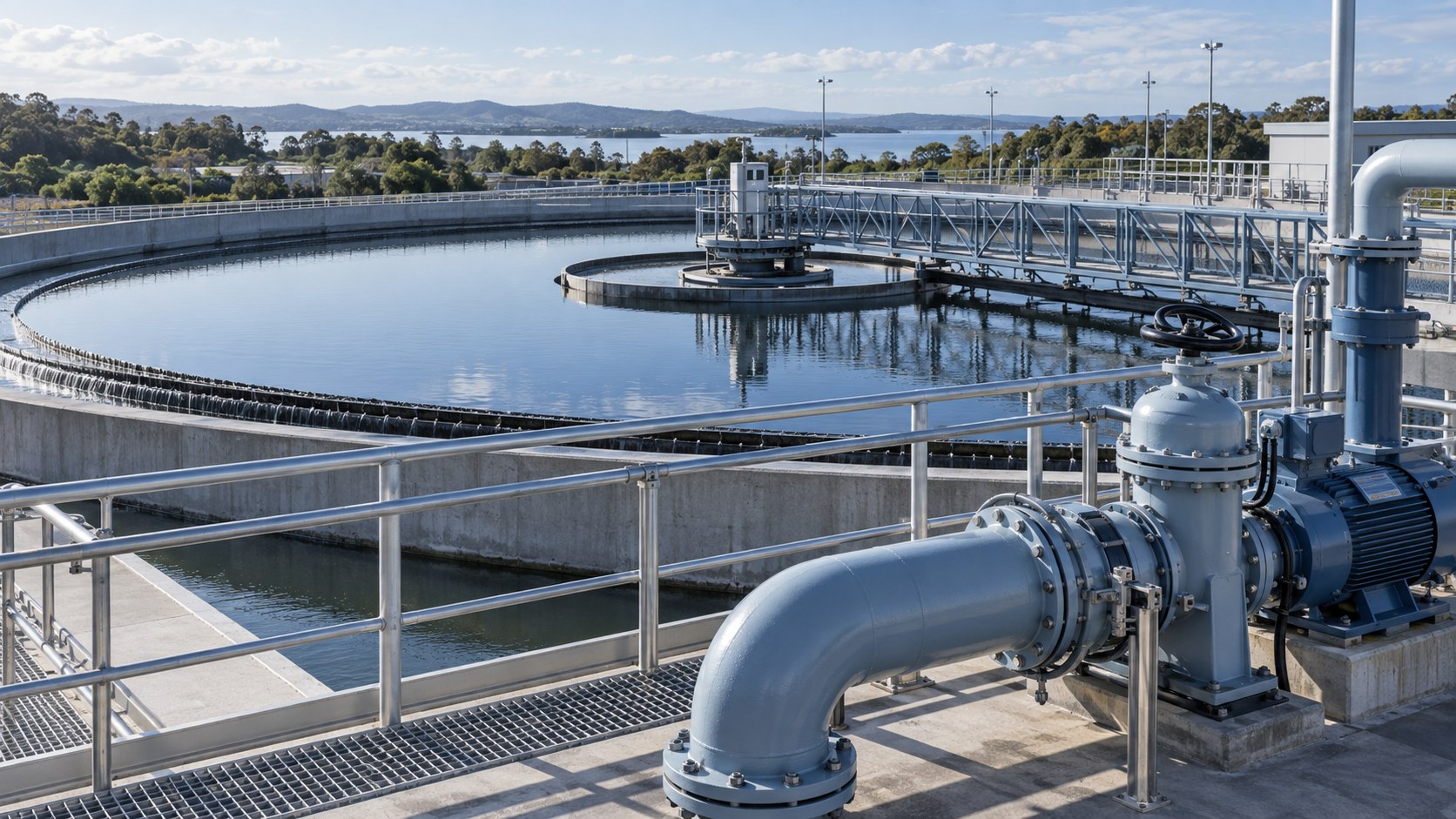
Water and wastewater assets can combine atmospheric corrosion, continuous wetting, abrasion and chemical attack. ALKA supplies protective and lining systems for technical review against the specific substrate, water chemistry, operating temperature and exposure regime.
Treatment and pump assets
Prepared steel or concrete in pump bases, sumps and wet-service areas requiring a high-build barrier.Chemical containment
Dosing areas and process bunds requiring written chemical-resistance confirmation for the complete lining system.Splash and wet/dry zones
Clarifiers and other assets subject to repeated wetting and drying, splash and abrasive service.UNDERSTAND THE SERVICE
A water-service lining starts with the full exposure profile.
Liquid, splash and headspace
An asset can expose a lining to liquid below the waterline, repeated wetting near the surface and a different gas-phase environment above it. Describe these zones individually during technical review.Chemical and cleaning conditions
Water composition, dosing chemicals, concentrations and temperature affect selection. Include normal service, cleaning and credible process upset conditions rather than relying on the label wastewater alone.Substrate and continuity of the lining
Concrete moisture, defects, steel preparation, penetrations and joints all influence the lining specification. Agree repair and detailing requirements before assigning a barrier build.ALKYD PRIMERS · ENAMELS · SINGLE-PACK FINISHING
Single-pack finishing for dry ancillary assets
Selected dry cabinets, workshop items and sheltered service frames may be considered for single-pack protective primers and enamels. Treatment tanks, wet process steel, chemical-dosing areas and repeatedly washed surfaces require a separate review of water chemistry and service exposure.
Products to assess for the job
- ALKA 401 · Alkyd zinc phosphate primerPrepared carbon steel; a corrosion-inhibiting primer for compatible alkyd and enamel finishing routes.
- ALKA 403 · Red oxide anti-corrosive primerA primer option for prepared ferrous metal, fabricated steel and general maintenance; confirm the selected finish compatibility.
- ALKA 410 · Rapid-cure protective enamelA gloss finishing option for machinery, fabricated components and maintenance work over a compatible prepared and primed surface.
Select a complete, compatible primer and finish. The products above are options by role, not a blanket approval to combine every primer and topcoat.
What the applicator or specifier needs
Write a usable coating schedule
Specify the substrate and preparation, exact primer and finish, individual-coat dry-film thickness, application method, thinning limits, recoat interval and service-cure requirement from current product data. For repainting, document the retained coating and a representative compatibility trial before full application.Choose the coating for the exposure
Ordinary enamel is not proposed for potable-water contact, wastewater immersion, chemical dosing contact or aggressive treatment atmospheres.A single-pack route can simplify small batches and routine repainting because it does not require mixing a separate hardener. It still depends on sound preparation, suitable film build and the correct recoat window. Where exposure or the required maintenance interval is more demanding, assess the relevant two-pack epoxy, polyurethane or specialist lining system.Does fast drying mean the part is ready for service?
No. Touch-dry, recoatable, handleable and fully cured describe different stages. Use the selected product data and actual application conditions to plan each stage. Excessive film build, early overcoating or premature handling can compromise the finish; adding extra thinner or a hardener is not a substitute for the specified application procedure.SYSTEM SELECTION
ALKA systems to consider.
Start with the service conditions, then confirm the complete build for your asset.
| System | Coating build | Nominal DFT | Selection note |
|---|---|---|---|
| ALKA-9935 Glass-Flake Barrier Lining | Substrate-specific primer where required → Alka 414 Glass Flake Epoxy → optional approved build or finish coat | 400–750 µm | Chemical, temperature, substrate moisture and immersion suitability must be confirmed for each project. |
| ALKA-9936 Chemical-Resistant Lining | Alka Tanklin 100 and/or Alka Tanklin Chem system selected to suit the chemical service | 450–600 µm | Written chemical-resistance confirmation is required, including chemical, concentration, temperature, exposure duration and cleaning regime. |
| ALKA-9939 Splash / Tidal Zone | Substrate-specific primer → Alka 414 Glass Flake Epoxy or approved Alka UHB epoxy build system | 500–1000 µm | Primer and build vary by substrate. Standard polyurethane topcoats are generally not used as the primary splash-zone barrier. |
| ALKA-9932 Maintenance / Refurbishment | Alka 412 surface-tolerant epoxy × 2 coats → optional Alka 421 polyurethane finish | 200–400 µm plus optional 50–75 µm finish | Existing coatings require compatibility and adhesion assessment. UV finish is optional where colour retention is required. |
DFT = dry-film thickness. Values are nominal selection-guide totals, not wet-film thicknesses or individual-coat application instructions. Use current TDS and written project-specific recommendations.
FROM EXPOSURE TO SYSTEM
Why these systems are considered.
Use the application and preparation requirements to narrow the options, then confirm the complete specification.
Barrier lining for reviewed service
The glass-flake epoxy route is a starting point for selected steel or concrete assets. Substrate-specific preparation and primer needs must be resolved alongside chemistry, temperature and immersion suitability.Chemical containment and process exposure
The Tanklin system is selected for the named chemical environment. Written compatibility confirmation should cover concentration, temperature, exposure duration and the cleaning regime.Splash and wet/dry areas
The high-build barrier route separates these zones from general atmosphere. Confirm substrate, abrasion and wetting conditions before approving the primer and build.Maintenance steel outside dedicated lining duties
Use this as a refurbishment route for suitable existing steel and retained coatings. It is not an automatic substitute for a lining in continuously immersed or chemically aggressive service.SPECIFICATION CHECKPOINTS
Get the details right before coating.
- 01Water or chemical composition, concentration and pH
- 02Operating and cleaning temperatures
- 03Immersion, splash and gas-phase exposure
- 04Substrate moisture, cure and holiday-testing requirements
THE SYSTEM APPROACH
A lining specification must address the full exposure regime, including cleaning and intermittent upset conditions.
Confirm surface preparation, stripe coating, application conditions, recoat intervals and cure. Record inspection results against the approved coating schedule.
APPLICATION & QUALITY PLANNING
Build inspection into the specification.
Agree the acceptance criteria before work starts, with the current product data and project coating schedule as the reference.
01 · Accept the substrate
Record substrate condition, cleanliness and the specified surface preparation. Resolve contamination, unsound existing coatings and detailing before the first coat.02 · Control application
Confirm environmental limits, mixing, usable application time and recoat windows from the current product data. Record coating batches and the conditions during each stage.03 · Verify the complete build
Check coverage at edges and details, specified individual-coat thickness and total dry-film thickness. Define how defects will be repaired and re-inspected.04 · Release to service
Set written filling or commissioning criteria, including cure, final inspection and any agreed lining-continuity testing and repair verification.TECHNICAL QUESTIONS
Details that change the specification.
Does suitability for wastewater establish potable-water approval?
No. Drinking-water contact requires product-specific evidence and approval for the exact intended use. Confirm those requirements before selecting a system; the options here do not imply universal potable-water certification.Why must the tank headspace be described?
The environment above the liquid can differ from the liquid itself. Include gases, condensation, cleaning and operating temperatures in the review so the lining is assessed for the whole exposed surface.What inspections are needed before filling or commissioning?
Agree the inspection and test plan before work begins. It should address preparation, environmental conditions, thickness and cure, with discontinuity or holiday testing where appropriate to the approved lining and substrate. Record repairs and acceptance before release.TECHNICAL RESOURCES
Move from selection to specification.
Coating system library
Compare ALKA system builds for atmospheric, maintenance and lining applications.Browse systems →Product information
Explore product information and request current technical and safety data sheets.Technical information →Specification support
Confirm preparation, products, film thickness and service conditions with ALKA.Contact technical team →SPEAK WITH THE MANUFACTURER