Aviation facilities • hangars and maintenance
Aircraft hangar flooring and aviation floor coatings.
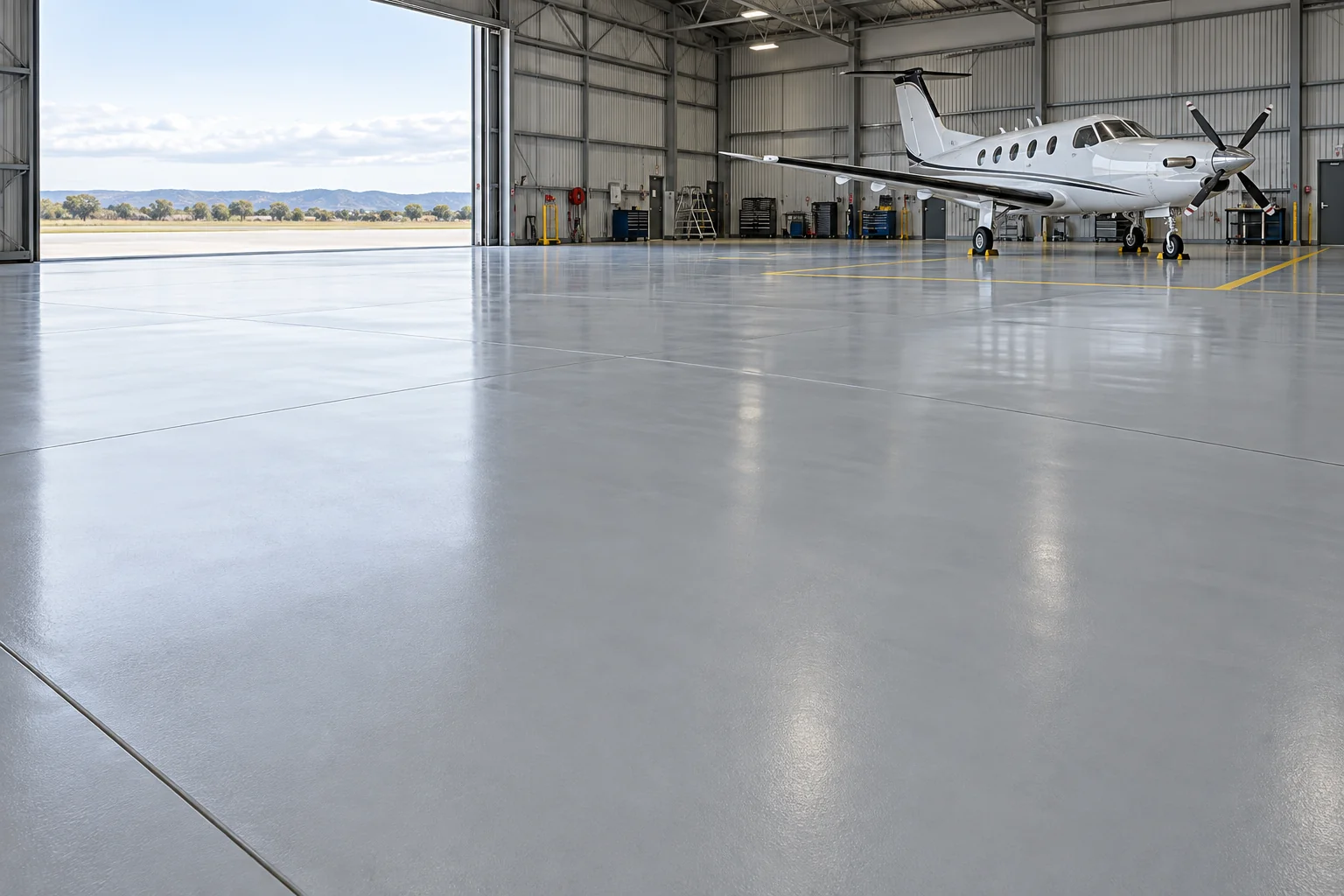
Review the floor around aircraft movements, maintenance activity, daylight at hangar doors and the fluids used on site. ALKA909 provides a defined hangar-system pathway for assessment.
ALKA COATINGS · Technical guidance. Project-specific selection.
Understand the application
Separate the hangar envelope from the maintenance exposures.
Daylight near an open door, aircraft tyre contact, tooling and cleaning all influence the finish. Maintenance bays may add aviation fuel, lubricants and specialist hydraulic fluids. Each exposure needs review before the system is specified.
01
Aircraft movement areas
Provide aircraft types, tyre contact conditions and towing routes. The underlying slab must independently meet structural loading requirements.
02
Maintenance work zones
List the actual fuels, oils, cleaners and hydraulic fluids. Include how long a spill can remain and whether the area sees repeated chemical contact.
03
Doorways and perimeter zones
Assess daylight, tracked-in water, thresholds and drainage. Coordinate the coating with movement joints, markings and adjoining external surfaces.
Compare the pathways
Choose the system around the service conditions.
| Application / requirement | ALKA pathway to review | Confirm before specification |
|---|---|---|
| Main hangar floor | ALKA909 UV-stable hangar system | Confirm the complete current build and the chosen surface finish. |
| Selected rapid-reopening areas | ALKA910 for project review | Check compatibility with aviation duty and the available cure window. |
| Specialist chemical or ESD requirements | Separate technical assessment | Do not infer hydraulic-fluid resistance or electrical performance from a general hangar designation. |
Selection guide only. Current product data, substrate assessment and the approved project specification determine suitability and the final build.
What goes into the floor
The ALKA system, layer by layer.
ALKA909
UV-stable hangar floor
2–3 mm epoxy body + finish
A hangar system combining a self-levelling epoxy body with a UV-stable finish.
ALKA909 · surface to substrate
- LAYER 1ALKA210 UV-stable finish · 1–2 coats
- LAYER 2ALKA111 self-levelling epoxy body
- LAYER 3ALKA105 primer
- LAYER 4Prepared concrete
ALKA910
Rapid-cure polyaspartic floor
1–2 mm
A rapid-cure polyaspartic pathway for projects where the installation and reopening programme is critical.
ALKA910 · surface to substrate
- LAYER 1ALKA200 topcoat
- LAYER 2ALKA200 body coat
- LAYER 3ALKA113 primer
- LAYER 4Prepared concrete
Listed builds reflect ALKA’s published system pages. Alternatives shown within a layer require a specified selection; they are not automatically interchangeable.
Design and installation
Make the specification useful to the operator.
Confirm fluid compatibility
Name hydraulic fluids explicitly, including phosphate-ester fluids where used. UV stability does not establish resistance to those chemicals.
Coordinate markings and repairs
Agree bay outlines, pedestrian routes, exclusion areas and repair details. Confirm marking compatibility and sequencing with the coating system.
Set handover conditions
Document cleaning, inspection and approved repair materials. Return aircraft and service equipment only after the specified cure has been achieved.
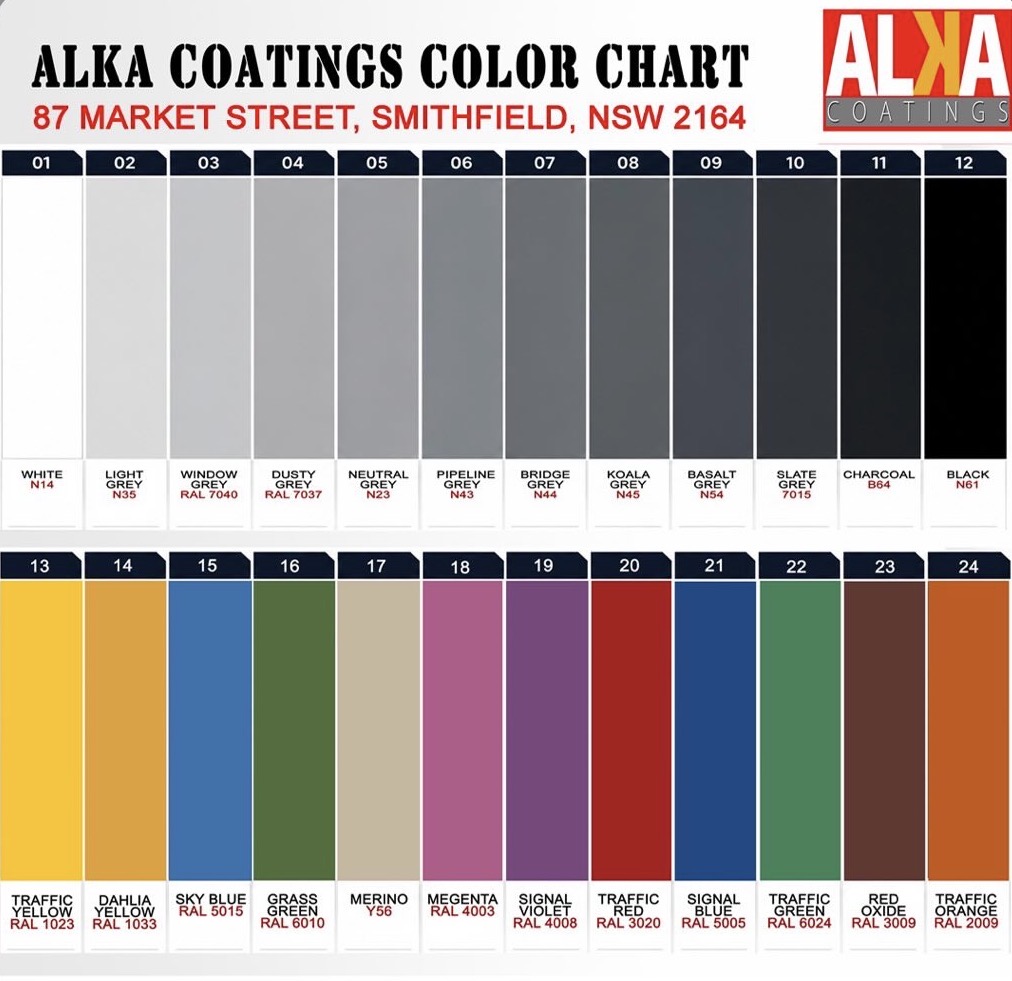
Lighting, sheen and texture affect the installed appearance. Use the ALKA colour chart to shortlist colours and confirm availability for the selected system.
From enquiry to installation
Get the right people and information in place.
Start with a technical conversation and a clear project brief.
ALKA can help review the duty, identify a suitable system pathway and provide product information for your project. For installation, ask about an approved applicator referral for your location and scope; suitability and availability are confirmed for the project.
Practical questions
Before you choose the floor.
Does the system increase the concrete load capacity?
No. Structural adequacy, slab thickness, sub-base and joint design require their own assessment. The coating is a surface protection system.
Is ALKA909 automatically resistant to Skydrol or every aviation fluid?
No. Supply the exact fluid and exposure conditions for compatibility review before specifying the system.
Can the same coating be used outside the hangar?
Exterior surfaces have additional weather, water, traction and substrate requirements. Ask ALKA to review the external area separately rather than extending an internal specification by assumption.
Technical detail · products · practical answers
Specify the details that determine performance.
Provide aircraft and equipment loads
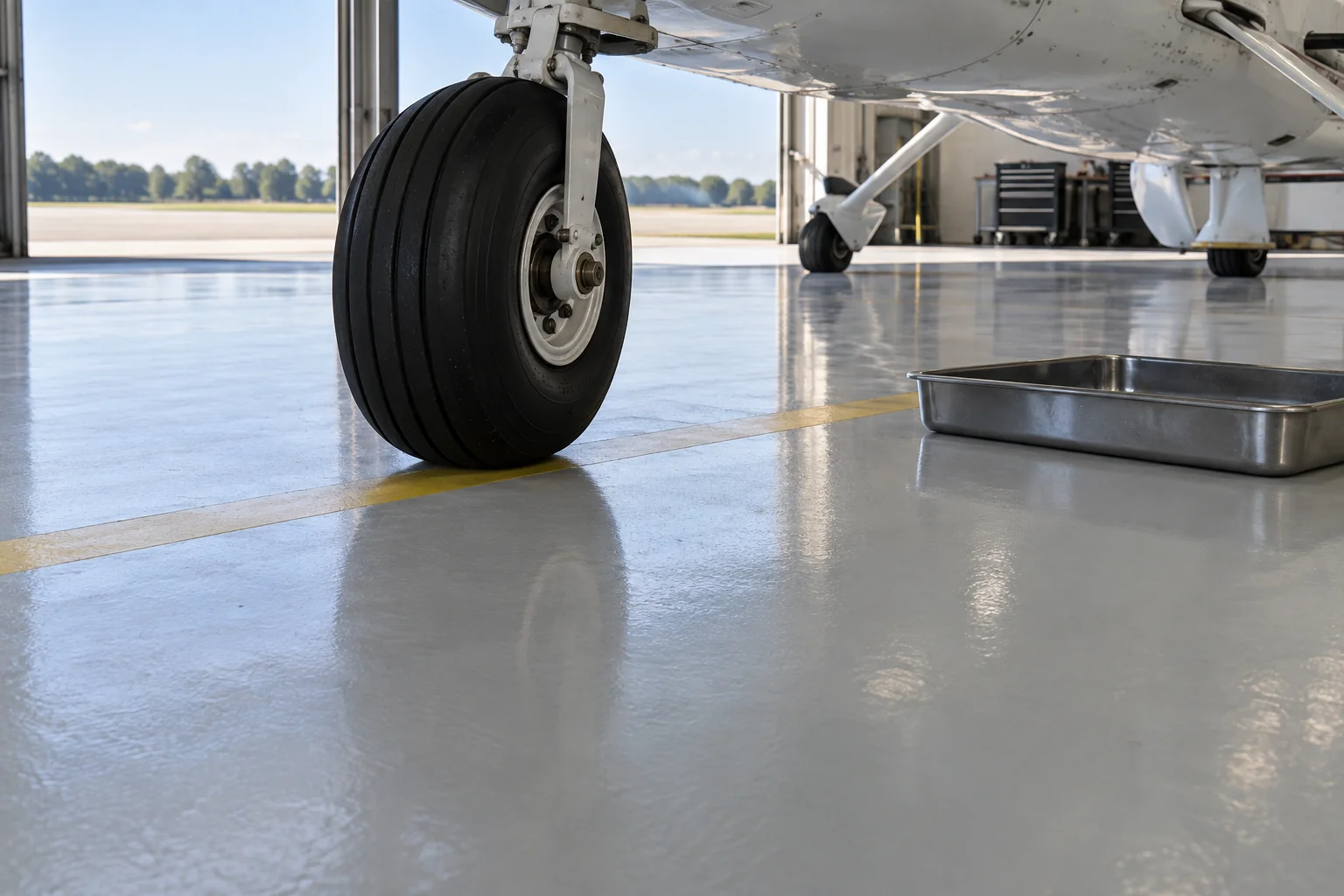
Record aircraft wheel contact, towing routes, maintenance stands, jacks and service equipment. The slab and any load-spreading arrangements need to suit concentrated loads. Floor-coating selection does not replace aircraft jacking or structural requirements.
Identify every maintenance fluid
List fuels, lubricants, hydraulic fluids, cleaners and solvents, including contact time and spill-cleaning methods. Special hydraulic fluids require explicit compatibility review. Keep chemical resistance separate from UV stability and visual appearance.
Detail the hangar opening
Sunlight, weather at the door, thresholds and external-to-internal transitions need review. Coordinate drainage, joints and line markings with the operating layout. Choose a finish that meets the intended exposure without assuming every layer is suitable outdoors.
ALKA products and technical data sheets
The products below relate to the pathways discussed on this page. Select one approved coating schedule for the project: alternative primers, binders and finishes are not a list of layers to combine automatically.
Use the current TDS and safety data for the exact product and supplied kit. Confirm substrate preparation, moisture limits, mixing, coverage, coat thickness, recoat intervals and full-service cure. Where a direct PDF is not listed, request the product-specific document from ALKA technical support before proceeding.
More answers for your project
Is the system automatically resistant to aviation hydraulic fluid?
No. Provide the exact fluid, concentration where relevant, temperature and exposure duration. Obtain written compatibility for the complete schedule before relying on it. General oil or chemical-resistance wording does not establish resistance to every aviation fluid.
Does UV stable mean no wear or staining?
No. UV stability addresses an aspect of weathering and appearance. Abrasion, tyre contact, chemicals and cleaning are separate considerations. A UV-stable finish still needs an appropriate substrate, build and maintenance plan.
Can jack stands damage the finish?
Concentrated contact, sharp edges and movement can damage a coating or its substrate. Review the equipment loads and protection arrangements as part of the project. Do not infer point-load capacity from coating thickness alone.
Can bright colours improve inspection?
A light, uniform surface may help visibility of debris and spills, but lighting, glare and maintenance also matter. Approve colour and sheen in a sample area and coordinate markings with the facility’s operating requirements.
Make the quote a complete scope
Ask the proposal to identify preparation and repairs, the selected ALKA products, coating stages, finish sample, joint and edge details, installation stages and the permitted return to service. Include cleaning instructions and the technical documents in the handover so future maintenance follows the installed system.
Let’s review your project
A floor selected for your space.
Share the operating conditions and the outcome you need. We’ll help you take the next step with a suitable ALKA system and installation pathway.
Tell us about your project
Leave your contact details and tell us about your aircraft hangar flooring project. Include the location, approximate floor area, current surface condition and preferred timing. ALKA can help recommend a suitable system and discuss an applicator referral for your project.
Aircraft hangar flooring — Sydney, Brisbane and Melbourne
An aviation floor specification should identify aircraft movements, maintenance chemicals and daylight exposure. Review the ALKA hangar pathway alongside the actual substrate and operating requirements.
Aircraft hangar flooring in Sydney
For Sydney aviation projects, provide aircraft types, towing routes and maintenance-zone plans. Ask for product-level review of fuels, lubricants and hydraulic fluids before selecting the coating.
Aircraft hangar flooring in Brisbane
For Brisbane hangars, identify rain tracking, exposed thresholds and direct daylight at open doors. Coordinate the selected finish with drainage, joints and markings.
Aircraft hangar flooring in Melbourne
For Melbourne hangar refurbishment, agree substrate-temperature limits, access staging and full cure before aircraft movement. A hangar designation alone does not establish electrical or chemical performance.
ALKA-909 hangar system · Chemical exposure guidance · Resin flooring products
Request a project-specific ALKA system recommendation. Send your location, area, substrate photos and service conditions. Ask about product supply, current technical data and an applicator referral; availability and final suitability are confirmed for the project.