
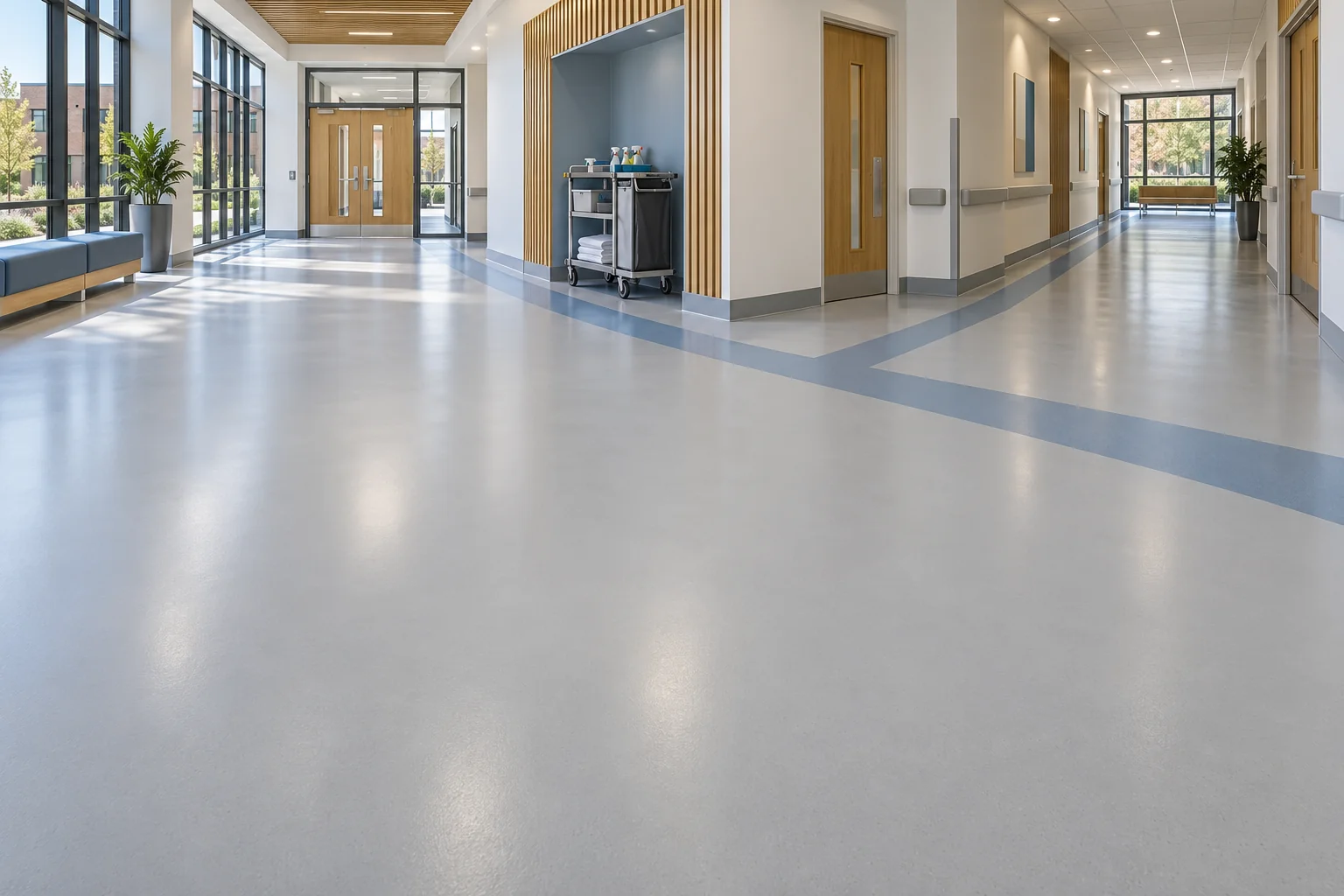
Busy commercial and industrial spaces
High traffic epoxy flooring for busy commercial spaces.
Entrances, corners and service routes see more than a daily footfall count. Match the coating to wheels, grit, cleaning and the time available for maintenance.
ALKA COATINGS · Technical guidance. Project-specific selection.
Understand the application
Traffic type matters as much as traffic volume.
A shopping corridor, a trolley route and a pallet-jack aisle load the surface differently. ALKA can help define the wear zones and select an epoxy, workshop or rapid-cure pathway around the operational brief.
01
Entrances and circulation
Tracked-in grit and moisture accelerate wear. Combine the floor finish with practical entry matting and a cleaning programme.
02
Trolleys and service routes
Wheel material, concentrated loads and sharp turns affect selection. Map delivery routes and the places where equipment stops or changes direction.
03
Occupied premises
Assess access, separation of work areas, odour controls and curing. A phased programme must provide safe, usable transitions between stages.
Compare the pathways
Choose the system around the service conditions.
| Application / requirement | ALKA pathway to review | Confirm before specification |
|---|---|---|
| General circulation and suitable light industrial use | ALKA902 | Check traffic intensity, substrate, film build and texture. |
| Higher-build dry production and wheeled routes | ALKA901 | Review wheel type, abrasion, impact and floor flatness. |
| A tightly managed reopening programme | ALKA910 rapid-cure polyaspartic | Confirm working time, site conditions and each return-to-service stage. |
Selection guide only. Current product data, substrate assessment and the approved project specification determine suitability and the final build.
What goes into the floor
The ALKA system, layer by layer.
ALKA902
Standard epoxy floor
0.5–1.5 mm
An economical epoxy pathway for general industrial use where a thinner build suits the service conditions.
ALKA902 · surface to substrate
- LAYER 1ALKA110 finish coat
- LAYER 2ALKA110 epoxy body
- LAYER 3ALKA100 primer
- LAYER 4Prepared concrete
ALKA901
Premium self-levelling epoxy
2–4 mm
A smooth, high-build epoxy option for suitably prepared production and industrial floors.
ALKA901 · surface to substrate
- LAYER 1Self-levelling epoxy body
- LAYER 2Specified compatible primer
- LAYER 3Prepared concrete
ALKA910
Rapid-cure polyaspartic floor
1–2 mm
A rapid-cure polyaspartic pathway for projects where the installation and reopening programme is critical.
ALKA910 · surface to substrate
- LAYER 1ALKA200 topcoat
- LAYER 2ALKA200 body coat
- LAYER 3ALKA113 primer
- LAYER 4Prepared concrete
Listed builds reflect ALKA’s published system pages. Alternatives shown within a layer require a specified selection; they are not automatically interchangeable.
Design and installation
Design for maintenance as well as opening day.
Use colour with purpose
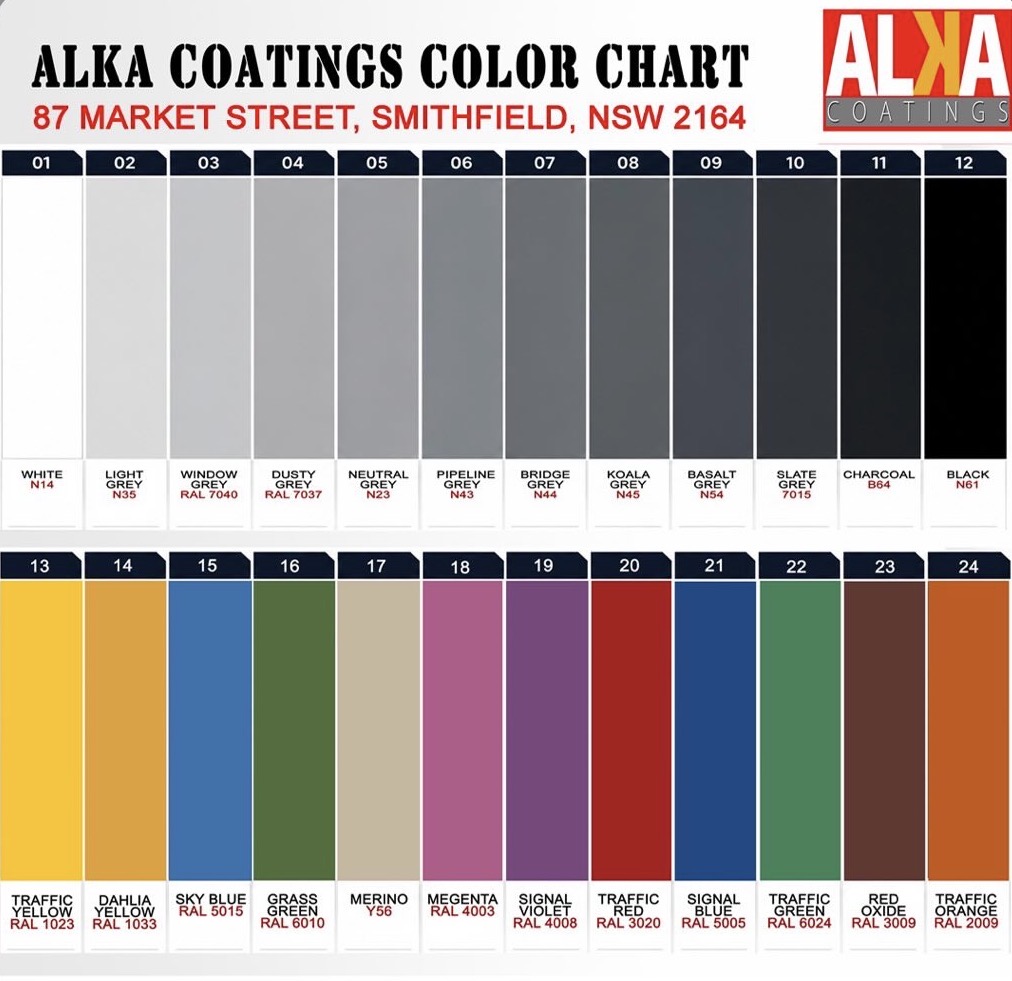
Define pedestrian routes, work zones and thresholds with an agreed colour plan. A colour band supports wayfinding but does not replace the wider site traffic plan.
Keep the wear layer clean
Remove abrasive grit and clean spills promptly. Match pads, brushes and detergents to the finish so routine cleaning does not damage the coating.
Plan local renewal
Record the installed products and finish. Inspect turning points and busy thresholds so local repair or recoating can be planned before wider deterioration.
Lighting, sheen and texture affect the installed appearance. Use the ALKA colour chart to shortlist colours and confirm availability for the selected system.
From enquiry to installation
Get the right people and information in place.
Start with a technical conversation and a clear project brief.
ALKA can help review the duty, identify a suitable system pathway and provide product information for your project. For installation, ask about an approved applicator referral for your location and scope; suitability and availability are confirmed for the project.
Practical questions
Before you choose the floor.
Does rapid-cure mean the floor can open overnight?
Not automatically. ALKA910 is a rapid-cure pathway, but the programme depends on preparation, area, application conditions and the cure required for the intended service.
Will a glossy surface show wear?
Gloss can make fine scratches and wear patterns more visible. Review sheen, colour and texture using a sample and consider the maintenance you can sustain.
Can line marking be included?
Yes, it can be planned as part of the project. Confirm compatibility, sequencing, colours and access requirements with the selected flooring specification.
Technical detail · products · practical answers
Specify the details that determine performance.
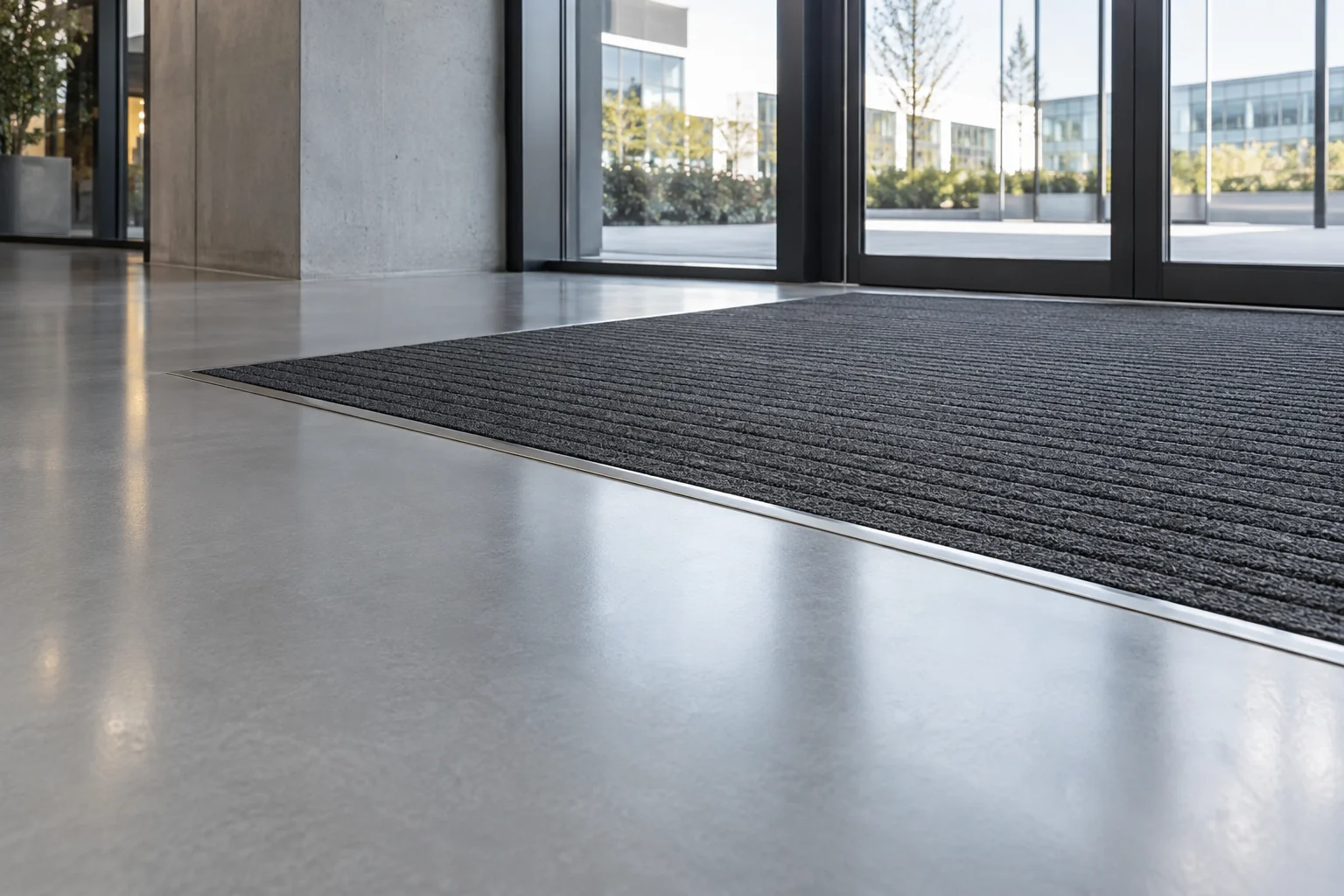
Control grit at the entrance
Tracked-in grit acts as an abrasive and water changes traction. Coordinate entrance matting, drainage and cleaning with the floor specification. Check that mat edges and thresholds do not introduce trip points or trap moisture beneath the finish.
Define the actual traffic
Pedestrians, shopping trolleys, hospital equipment and delivery vehicles impose different contact and turning loads. Map pinch points, ramps, lift entrances and service routes. Choose surface texture and build for those locations as well as the main floor.
Plan future recoating
Select practical repair boundaries and record the installed products, colour and sheen. Furniture protection, compatible cleaning pads and early attention to wear help maintain appearance. A maintenance coat needs sound adhesion and an approved preparation method.
ALKA products and technical data sheets
The products below relate to the pathways discussed on this page. Select one approved coating schedule for the project: alternative primers, binders and finishes are not a list of layers to combine automatically.
Use the current TDS and safety data for the exact product and supplied kit. Confirm substrate preparation, moisture limits, mixing, coverage, coat thickness, recoat intervals and full-service cure. Where a direct PDF is not listed, request the product-specific document from ALKA technical support before proceeding.
More answers for your project
Will a high-gloss floor show scratches?
It can, especially in directional lighting or dark colours. Grit control and suitable cleaning reduce avoidable scratching. Compare gloss, satin, texture and colour on samples under the intended lighting before deciding which appearance is practical.
Can flooring work be completed overnight?
Only if preparation, repairs, coating stages and the required cure all fit the programme. Rapid-cure products do not remove the need for substrate assessment or environmental control. Agree the service-release conditions before promising an overnight reopening.
Does a slip rating apply in every condition?
No. The test method and conditions matter, and contamination or wear can change performance. Specify the relevant assessment for the use area and manage cleaning, spills and maintenance alongside the surface finish.
Can existing line markings be retained?
Assess their adhesion and compatibility with the new schedule. Old markings may need removal or isolation, and new markings require the correct preparation and recoat timing. Plan the finished layout before work begins.
Make the quote a complete scope
Ask the proposal to identify preparation and repairs, the selected ALKA products, coating stages, finish sample, joint and edge details, installation stages and the permitted return to service. Include cleaning instructions and the technical documents in the handover so future maintenance follows the installed system.
Let’s review your project
A floor selected for your space.
Share the operating conditions and the outcome you need. We’ll help you take the next step with a suitable ALKA system and installation pathway.
Tell us about your project
Leave your contact details and tell us about your high traffic flooring project. Include the location, approximate floor area, current surface condition and preferred timing. ALKA can help recommend a suitable system and discuss an applicator referral for your project.
High traffic epoxy flooring — Sydney, Brisbane and Melbourne
Retail circulation, showrooms, entrances and service routes need the finish matched to actual foot and trolley traffic. Compare appearance, cleaning, wear and the available installation window.
High traffic epoxy flooring in Sydney
For Sydney retail or showroom refurbishments, plan public access and work separation. Identify entrances where tracked grit concentrates wear and where texture needs to change.
High traffic epoxy flooring in Brisbane
For Brisbane commercial premises, discuss water carried through entries and daylight exposure. Agree practical slip-resistant texture and cleaning access before the finish is selected.
High traffic epoxy flooring in Melbourne
For Melbourne high-traffic facilities, plan staged work around operating hours and actual curing conditions. Coordinate transitions, door clearances and the reopening of service routes.
Standard epoxy flooring · Rapid-cure flooring system · Floor coating products
Request a project-specific ALKA system recommendation. Send your location, area, substrate photos and service conditions. Ask about product supply, current technical data and an applicator referral; availability and final suitability are confirmed for the project.