ALKA · AUSTRALIAN COATINGS MANUFACTURER
Mining Pipelines
Separate external corrosion protection from internal duty.
SERVICE & APPLICATIONS
Protection matched to the asset.
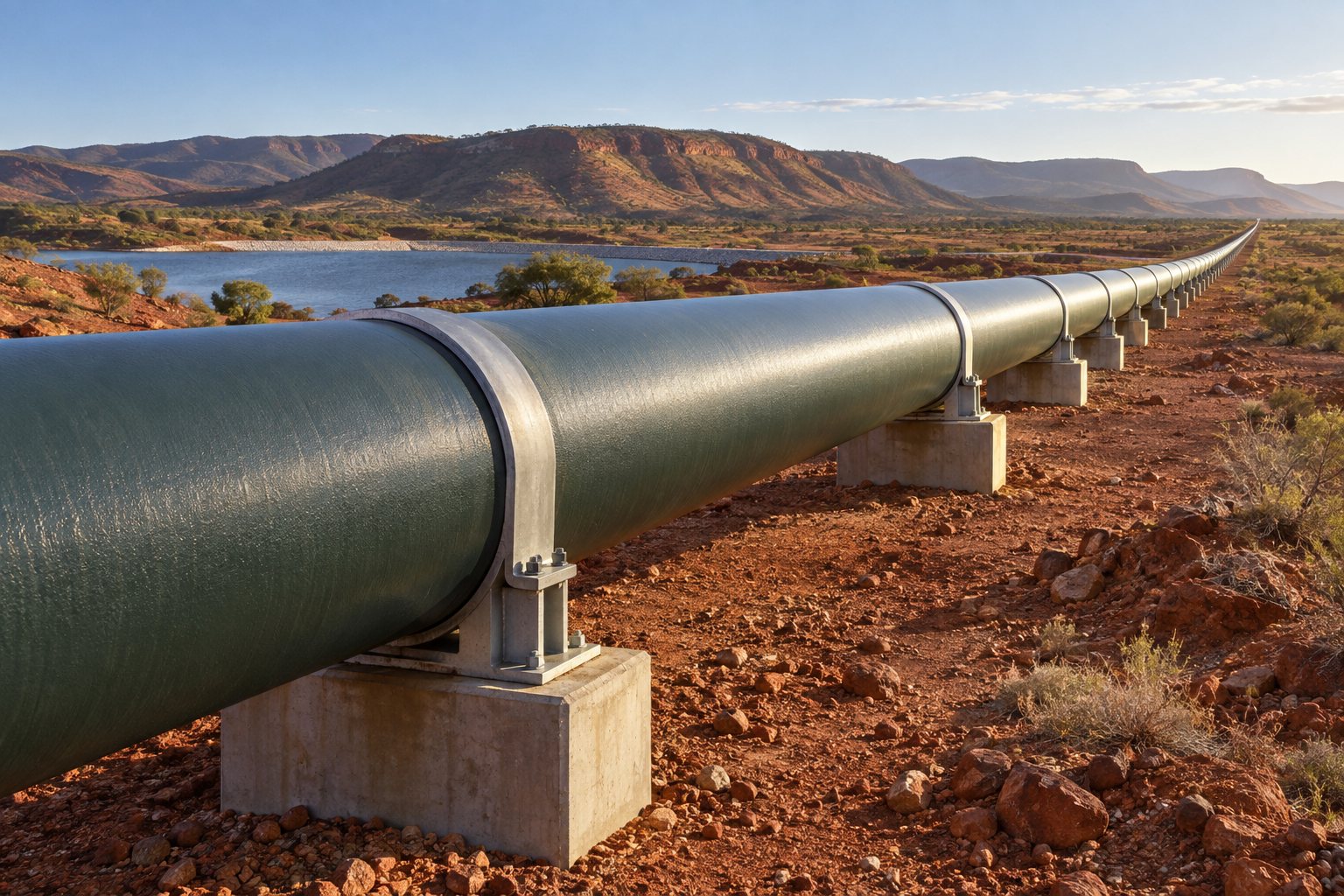
Mine pipelines can carry process water, return water or slurry while their external surfaces face weather and washdown. ALKA system selection begins by distinguishing above-ground external steel, supports and any separately specified internal lining.
Above-ground pipework
Prepared carbon-steel exteriors and supports can use an atmospheric build with the required colour and finish.
Maintenance joints
Define repair boundaries around welds, flanges and damaged existing coatings, with suitable preparation of transition edges.
Internal service
Fluid chemistry, solids and operating conditions determine whether a lining is appropriate and what evidence is required.
ALKYD PRIMERS · ENAMELS · SINGLE-PACK FINISHING
Separate pipe exteriors, supports and internal duty
For selected above-ground supports, brackets and pipework exteriors in mild atmospheric conditions, a compatible single-pack primer and enamel may be a practical maintenance option. The internal fluid, external weathering and condition under clamps or insulation are separate selection questions.
Products to assess for the job
- ALKA 401 · Alkyd zinc phosphate primer
Prepared carbon steel; a corrosion-inhibiting primer for compatible alkyd and enamel finishing routes.
- ALKA 403 · Red oxide anti-corrosive primer
A primer option for prepared ferrous metal, fabricated steel and general maintenance; confirm the selected finish compatibility.
- ALKA 410 · Rapid-cure protective enamel
A gloss finishing option for machinery, fabricated components and maintenance work over a compatible prepared and primed surface.
Select a complete, compatible primer and finish. The products above are options by role, not a blanket approval to combine every primer and topcoat.
What the applicator or specifier needs
Record the fluid temperature, external surface temperature, insulation and cleaning regime. Identify buried sections and areas that retain water independently from exposed supports.
Detail preparation around clamps, welds and support interfaces. Assess corrosion hidden by failed coatings before deciding whether local repair is sufficient.
Agree colour identification, coating continuity at supports and inspection access. Use the specified full-cure requirement before service exposes the coating to its operating conditions.
Write a usable coating schedule
Specify the substrate and preparation, exact primer and finish, individual-coat dry-film thickness, application method, thinning limits, recoat interval and service-cure requirement from current product data. For repainting, document the retained coating and a representative compatibility trial before full application.
Choose the coating for the exposure
Do not use the atmospheric enamel route as an internal pipe lining, buried-pipe system or corrosion-under-insulation specification.
A single-pack route can simplify small batches and routine repainting because it does not require mixing a separate hardener. It still depends on sound preparation, suitable film build and the correct recoat window. Where exposure or the required maintenance interval is more demanding, assess the relevant two-pack epoxy, polyurethane or specialist lining system.
Does fast drying mean the part is ready for service?
No. Touch-dry, recoatable, handleable and fully cured describe different stages. Use the selected product data and actual application conditions to plan each stage. Excessive film build, early overcoating or premature handling can compromise the finish; adding extra thinner or a hardener is not a substitute for the specified application procedure.
SELECT THE COMPLETE BUILD
ALKA systems for this application.
| System | Why select it | Coating build | Total DFT |
|---|---|---|---|
| ALKA-9930 Premium External | Premium corrosion protection combined with a UV-stable, colour-retentive finish Abrasive-blasted carbon steel; external industrial and coastal atmospheric exposure | Alka 404 zinc-rich epoxy primer → Alka 413 high-build epoxy → Alka 421 polyurethane finish | 250–300 µm |
| ALKA-9932 Maintenance / Refurbishment | Reduces preparation demands and supports practical maintenance programs Existing steel where full abrasive blasting is restricted; hand- or power-tool prepared areas | Alka 412 surface-tolerant epoxy × 2 coats → optional Alka 421 polyurethane finish | 200–400 µm plus optional 50–75 µm finish |
| ALKA-9935 Glass-Flake Barrier Lining | High-build glass-flake barrier delivers strong resistance to permeation, wet service and abrasion Prepared steel or concrete exposed to wet service, abrasion, splash, spillage or aggressive industrial conditions | Substrate-specific primer where required → Alka 414 Glass Flake Epoxy → optional approved build or finish coat | 400–750 µm |
DFT = dry-film thickness. These are nominal system totals; individual-coat thicknesses and application conditions belong in the final coating schedule.
SPECIFICATION & APPLICATION
From surface preparation to return to service.
Build the coating schedule around the substrate and the work that can be achieved on site. For refurbishment, assess the adhesion and compatibility of retained coatings before defining repair boundaries.
- 01External or internal surface
- 02Above-ground or buried installation
- 03Fluid and solids information
- 04Field-joint and repair details
Record surface preparation, environmental conditions, coverage at details and coat thickness. Allow for the specified recoat and cure periods, then inspect and repair defects before release to service.
ALKA-9930 · External steel example
Schematic, not to scale. Follow the selected system for products, layer count and thickness.
TECHNICAL QUESTIONS
Details that affect system selection.
Can the external coating be used inside the pipe?
Not on that basis. Internal exposure may involve continuous immersion, chemicals or moving solids. Provide the fluid, temperature, velocity and solids information for a dedicated lining review.
What belongs in the final technical submission?
Include current TDS and SDS, substrate preparation, the product and thickness schedule, application conditions, inspection criteria and cure requirements. For chemical or immersed service, include written suitability for the actual exposure. Any required certification or durability commitment must be supported by the relevant evidence.
Buried pipe, cathodic-protection compatibility, insulated service and abrasive slurry internals are separate specification duties. The atmospheric systems below do not establish approval for them.
PRODUCTS & TECHNICAL DOCUMENTS
Go directly to the product information.
Read the published technical data sheets below, or open a product overview. Request the current SDS set and confirm the document revisions for your specification before procurement.
MANUFACTURER TECHNICAL SUPPORT
Turn the service conditions into a coating specification.
Send the asset, substrate, exposure and maintenance window. ALKA can help define the coating build, preparation and technical documentation for your review.