HEALTHCARE & LIFE SCIENCES
Healthcare & Pharmaceutical Facilities
Coatings for facility steelwork, utility assets and selected containment areas, matched to cleaning and chemical exposure.
ALKA PROTECTIVE COATINGS
Surface protection shaped by the facility.
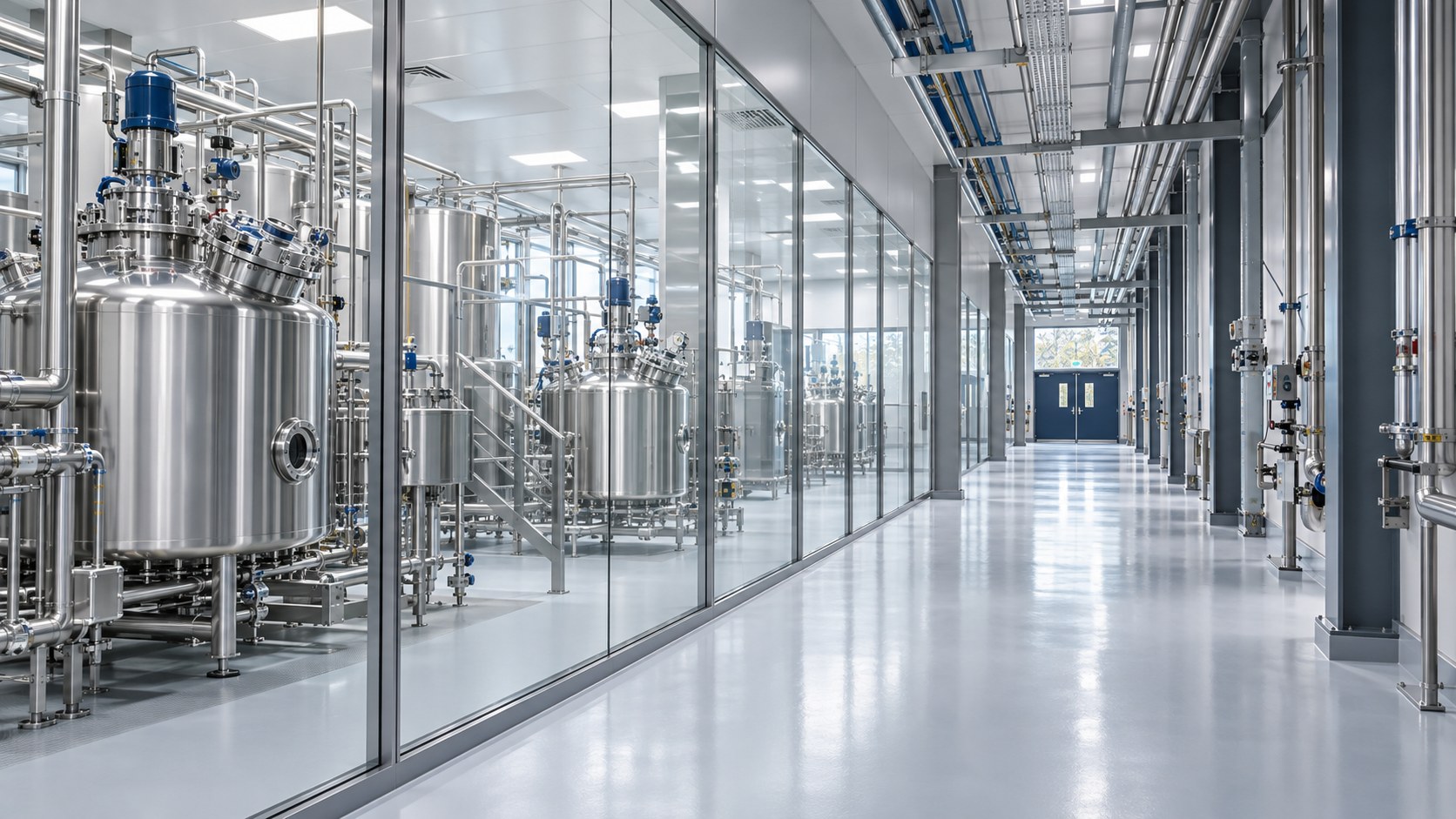
Healthcare and pharmaceutical sites combine service infrastructure, controlled spaces and areas exposed to cleaning agents or process chemicals. ALKA supports coating selection for structural and utility assets, with dedicated review for containment and floor systems.
Utility and equipment steel
Prepared frames, supports and service-area steel requiring a cleanable protective finish.
External infrastructure
Canopies, building steel and exposed plant supports requiring corrosion and weathering protection.
Chemical handling areas
Selected bunds, sumps and containment zones where the exact chemical, concentration and temperature determine the lining.
UNDERSTAND THE SERVICE
Specify for the cleaning regime and the process environment.
Repeated cleaning and disinfection
Name the actual detergents and disinfectants, their working concentrations, contact times and temperatures. A general statement that a surface is cleanable does not establish resistance to every cleaning regime.
Utility steel versus containment
External frames, internal supports and chemical bunds serve different functions. Keep their specifications separate so a decorative protective finish is not mistaken for a chemical-resistant lining.
Junctions and controlled-area requirements
Cleanability depends on accessible detailing as well as the coating. Define joints, penetrations and floor-to-wall transitions, then confirm facility requirements for emissions, cure and validation.
ALKYD PRIMERS · ENAMELS · SINGLE-PACK FINISHING
Separate utility metalwork from controlled-area finishes
Selected dry utility frames, service cabinets and non-process ancillary metalwork may be considered for single-pack primers and enamels. Controlled rooms, frequently disinfected surfaces and product-contact areas need their own material review and facility acceptance criteria.
Products to assess for the job
- ALKA 401 · Alkyd zinc phosphate primer
Prepared carbon steel; a corrosion-inhibiting primer for compatible alkyd and enamel finishing routes.
- ALKA 402 · Single-pack acrylic etch primer
A substrate-specific adhesion option for steel and suitable galvanised or aluminium components. This is a thermoplastic acrylic primer, not an alkyd.
- ALKA 410 · Rapid-cure protective enamel
A gloss finishing option for machinery, fabricated components and maintenance work over a compatible prepared and primed surface.
Select a complete, compatible primer and finish. The products above are options by role, not a blanket approval to combine every primer and topcoat.
What the applicator or specifier needs
Identify whether the component is in a general service area or a controlled zone. Record cleaning and disinfectant products, contact time, temperature and frequency.
Assess the actual substrate and existing coating before preparation. Plan work to contain dust and prevent contamination of adjacent operating or controlled spaces.
Agree ventilation, odour, cure and facility release requirements in advance. Finish appearance alone is not evidence of cleanability under the nominated disinfectant regime.
Write a usable coating schedule
Specify the substrate and preparation, exact primer and finish, individual-coat dry-film thickness, application method, thinning limits, recoat interval and service-cure requirement from current product data. For repainting, document the retained coating and a representative compatibility trial before full application.
Choose the coating for the exposure
No sterile-area, antimicrobial, food-contact or GMP suitability is implied by an ordinary protective enamel recommendation.
A single-pack route can simplify small batches and routine repainting because it does not require mixing a separate hardener. It still depends on sound preparation, suitable film build and the correct recoat window. Where exposure or the required maintenance interval is more demanding, assess the relevant two-pack epoxy, polyurethane or specialist lining system.
Does fast drying mean the part is ready for service?
No. Touch-dry, recoatable, handleable and fully cured describe different stages. Use the selected product data and actual application conditions to plan each stage. Excessive film build, early overcoating or premature handling can compromise the finish; adding extra thinner or a hardener is not a substitute for the specified application procedure.
SYSTEM SELECTION
ALKA systems to consider.
Start with the service conditions, then confirm the complete build for your asset.
| System | Coating build | Nominal DFT | Selection note |
|---|---|---|---|
| ALKA-9934 Industrial Finish | Alka 416 or project-approved Alka epoxy primer → Alka 421 polyurethane finish | 150–200 µm | Not intended for immersion, tidal zones or severe chemical service. |
| ALKA-9930 Premium External | Alka 404 zinc-rich epoxy primer → Alka 413 high-build epoxy → Alka 421 polyurethane finish | 250–300 µm | Preferred where long-term durability and appearance are both important. Not an immersion system unless separately approved. |
| ALKA-9936 Chemical-Resistant Lining | Alka Tanklin 100 and/or Alka Tanklin Chem system selected to suit the chemical service | 450–600 µm | Written chemical-resistance confirmation is required, including chemical, concentration, temperature, exposure duration and cleaning regime. |
DFT = dry-film thickness. Values are nominal selection-guide totals, not wet-film thicknesses or individual-coat application instructions. Use current TDS and written project-specific recommendations.
FROM EXPOSURE TO SYSTEM
Why these systems are considered.
Use the application and preparation requirements to narrow the options, then confirm the complete specification.
Service and equipment steel
The epoxy-primer and polyurethane-finish build can be assessed for facility steelwork where a specified finish is required. Check the complete cleaning exposure before approval.
Weather-exposed facility structures
The three-coat zinc-rich epoxy, barrier epoxy and polyurethane route is a starting point for external carbon steel such as canopies and plant supports.
Chemical containment
The Tanklin-based lining must be selected for the named chemical service. Chemical identity, concentration, temperature, duration and cleaning conditions determine the review; industry type alone is insufficient.
SPECIFICATION CHECKPOINTS
Get the details right before coating.
- 01Cleaning and disinfection chemicals with concentrations
- 02Wet contact time, temperature and frequency
- 03Finish, junctions and cleanability requirements
- 04Cure, ventilation and facility validation requirements
THE SYSTEM APPROACH
A lining specification must address the full exposure regime, including cleaning and intermittent upset conditions.
Confirm surface preparation, stripe coating, application conditions, recoat intervals and cure. Record inspection results against the approved coating schedule.
APPLICATION & QUALITY PLANNING
Build inspection into the specification.
Agree the acceptance criteria before work starts, with the current product data and project coating schedule as the reference.
01 · Accept the substrate
Record substrate condition, cleanliness and the specified surface preparation. Resolve contamination, unsound existing coatings and detailing before the first coat.
02 · Control application
Confirm environmental limits, mixing, usable application time and recoat windows from the current product data. Record coating batches and the conditions during each stage.
03 · Verify the complete build
Check coverage at edges and details, specified individual-coat thickness and total dry-film thickness. Define how defects will be repaired and re-inspected.
04 · Release to service
Include the approved cleaning conditions, cure and ventilation requirements in handover, together with any facility-specific inspection or validation records.
TECHNICAL QUESTIONS
Details that change the specification.
Does a cleanable finish mean antimicrobial or cleanroom-certified?
No. Those are separate performance or validation requirements and need appropriate evidence for the selected product and use. Confirm the facility acceptance criteria before assigning a coating to a controlled space.
How should disinfectant resistance be checked?
Provide the chemical name, working concentration, temperature, contact time, frequency and rinse procedure. Include occasional stronger cleaning or decontamination cycles; obtain written confirmation for the proposed system.
Can the steelwork coating also be used for floors and coving?
Select flooring and coving as a separate system. Concrete moisture, traffic, slip resistance, cleaning and junction design must be reviewed alongside any controlled-environment requirements.
TECHNICAL RESOURCES
Move from selection to specification.
Coating system library
Compare ALKA system builds for atmospheric, maintenance and lining applications.
Browse systems →Product information
Explore product information and request current technical and safety data sheets.
Technical information →Specification support
Confirm preparation, products, film thickness and service conditions with ALKA.
Contact technical team →SPEAK WITH THE MANUFACTURER
Specify the right protection.
Send the substrate, exposure, existing coating condition and required finish. Our technical team can help identify a suitable ALKA system and the information needed for your specification.