
Sydney projects · ALKA technical support
Concrete polishing
in Sydney.
Bring out the character of your concrete. Explore mechanically polished floors for homes, showrooms and commercial interiors, supported by ALKA Lithium Densifier.
Product guidance from ALKA. Site assessment and installation through an ALKA-approved contractor, subject to suitability and availability.
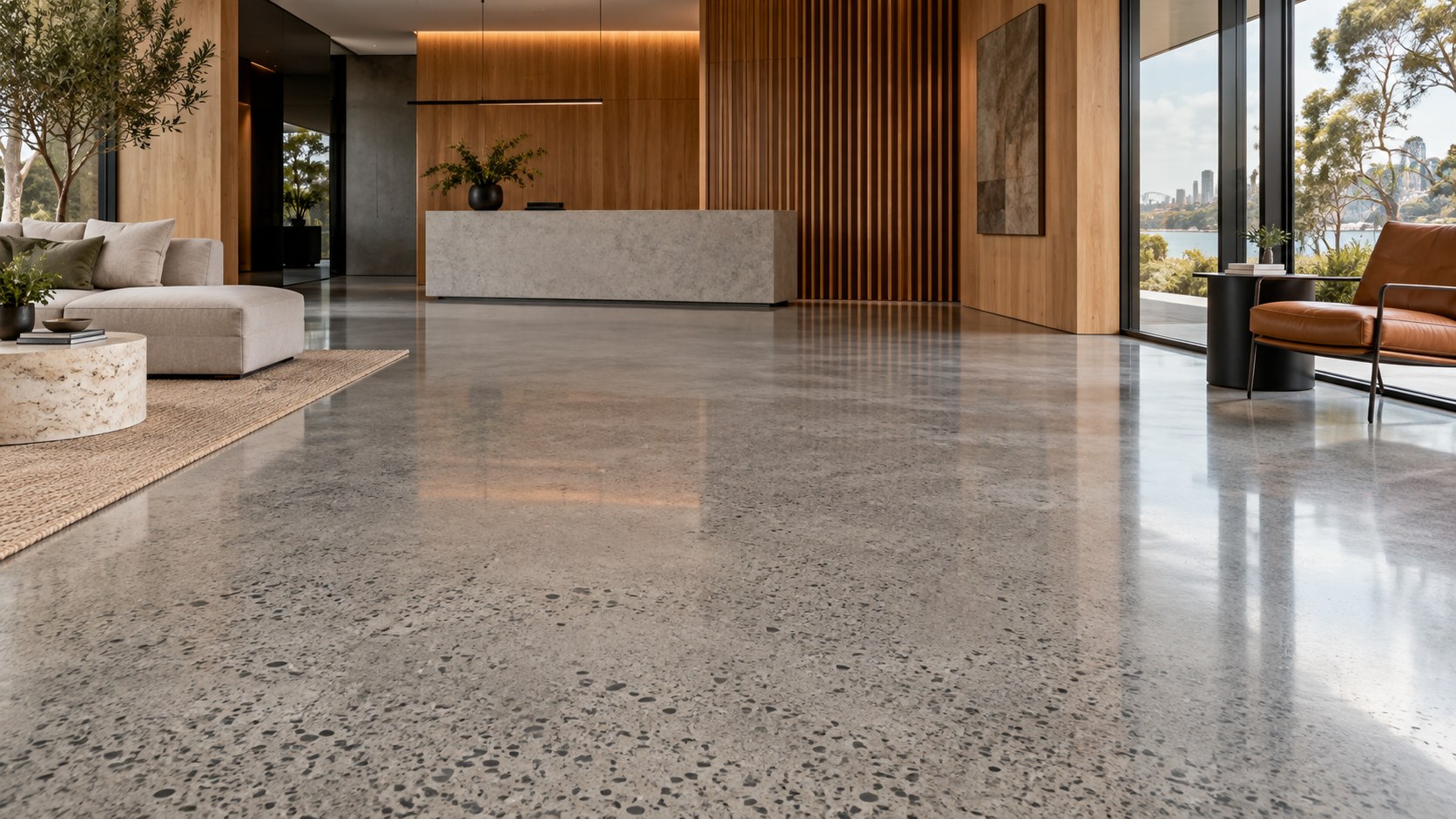
The slab becomes the finish
Polished concrete floors.
Considered from the start.
Concrete polishing progressively grinds, hones and refines the existing slab. The exposed stone and concrete become the finished surface. The right result starts with understanding your slab and how the space will be used.
Residential interiors
Living rooms, hallways and open-plan spaces where the natural variation of concrete is part of the design. Coordinate thresholds, edges and construction protection early.Retail & showrooms
A continuous visual finish for display and customer areas. Agree the sheen, cleaning plan, spill exposure and slip requirements before choosing the process.Commercial & warehouse
Assess a densified or polished surface for suitable dry working areas. Traffic, repairs and operational access determine whether polishing or a coating system is the better choice.Finish inspiration
Natural stone.
A refined concrete surface.
Explore the character of exposed aggregate in a bright residential interior. Your concrete mix, grinding depth and chosen sheen determine the result on your own slab.
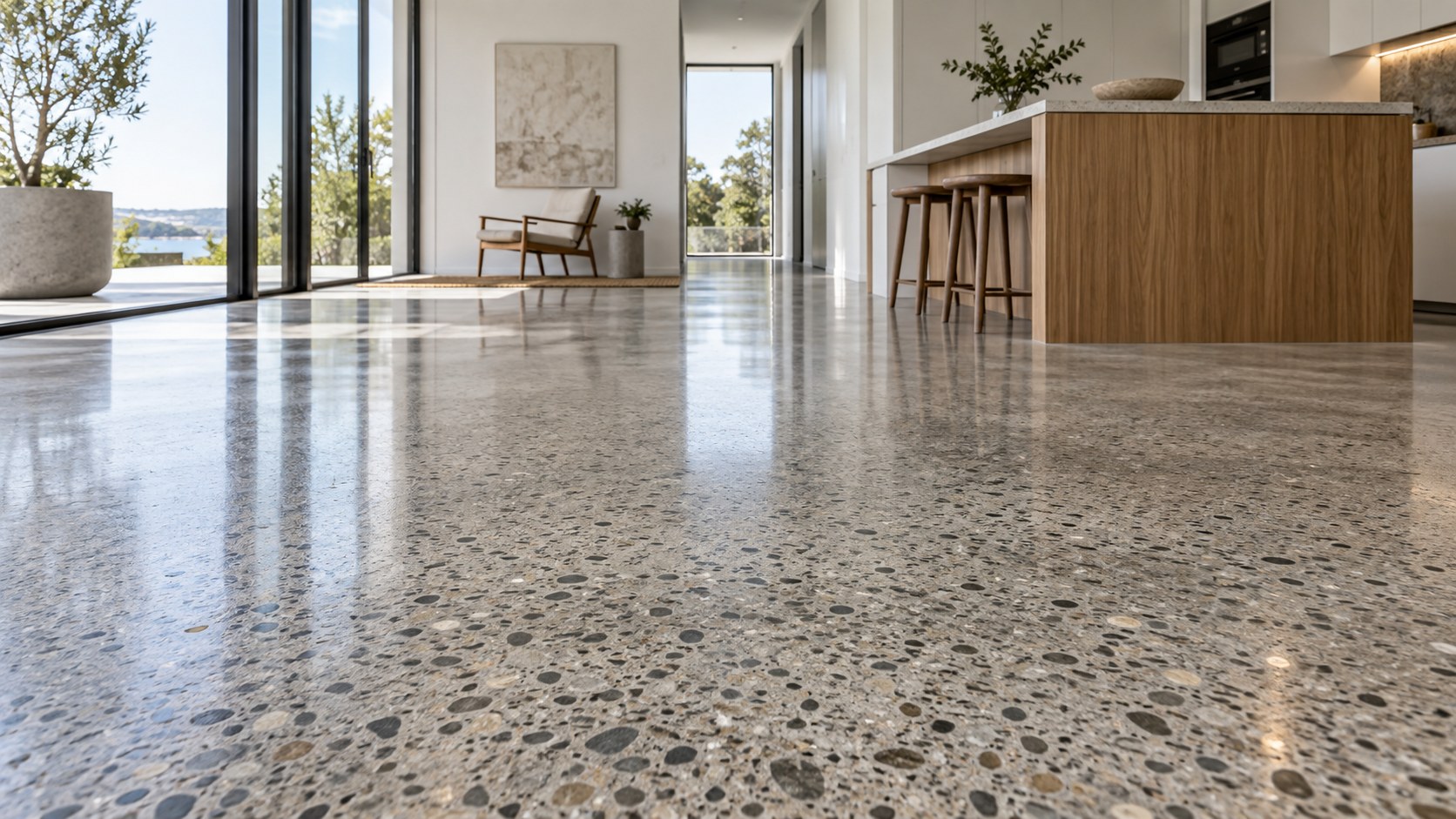
Two separate design decisions
Choose the exposure.
Then choose the sheen.
How much stone you see and how much light the floor reflects are different choices. Discuss both with the contractor and use an agreed sample area to set expectations.
Minimal exposure
A more restrained concrete appearance with limited visible stone. Suitability depends heavily on the original surface and its consistency; this look cannot be promised on every existing slab.Salt & pepper
Fine aggregate becomes visible for a more subtly textured appearance. High and low spots can change exposure, so the slab must guide the specification.Exposed aggregate
A stronger stone character created by deeper grinding. Aggregate type, distribution and floor levels influence the outcome; chasing uniform stone is not always practical.Matte, satin or higher gloss?
Specify the final appearance as well as the exposure. More reflectivity is not automatically the best finish for every space. Review lighting, traffic, maintenance and wet-use conditions with your contractor.Natural variation, construction marks and repairs can remain visible. Polishing does not create the uniform colour of a pigmented resin coating.
Make an informed comparison
Polishing, grind & seal, or resurfacing?
| Approach | What creates the finish? | What to consider |
|---|---|---|
| Mechanical polishing | The concrete is refined through successive abrasives, with densification and any specified stain protection. | Slab quality, aggregate exposure, edge detailing and the agreed sheen. |
| Grind & seal | Prepared concrete receives a surface sealer or coating. | The coating’s wear, compatibility, slip performance and future recoating. |
| Concrete resurfacing | A new decorative surface is applied over suitably prepared concrete. | Bonding, existing defects, texture, drainage and exposure. Explore resurfacing. |
From inspection to handover
The concrete polishing process.
A project-specific sequence matters more than a generic grit checklist. The contractor selects tooling and passes around concrete hardness, exposure, repairs and the agreed finish.
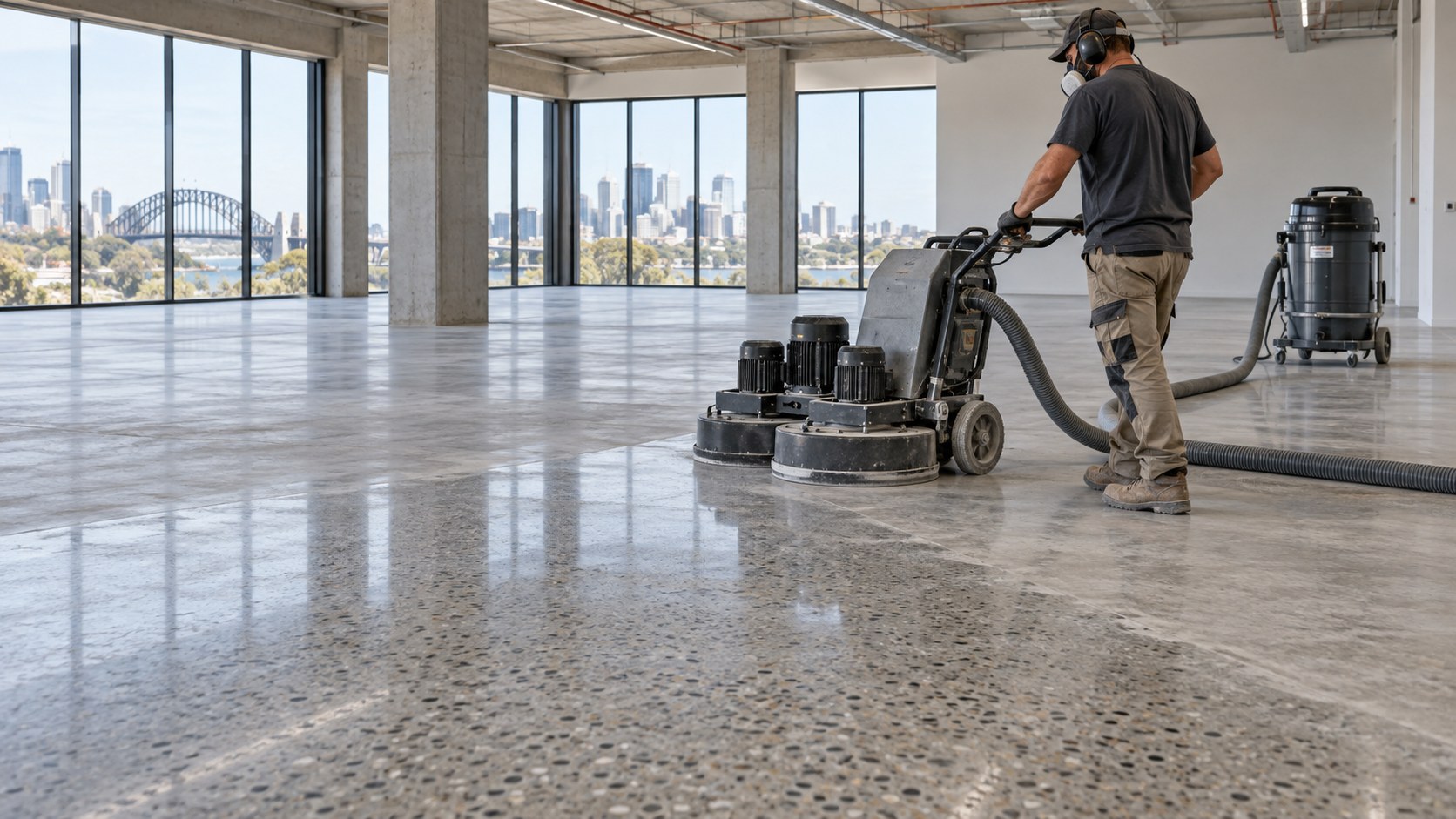
Inspect & agree the scope
Review slab condition, coatings, contamination, joints, access and intended use. Establish the finish with a trial area where practical and document visible defects.Prepare & grind
Remove incompatible coverings and residues. Grind progressively to the agreed exposure, with an appropriate dust-control or wet-processing method and attention to edges.Repair & refine
Address suitable pinholes and static defects with compatible repair materials. Refine the scratch pattern. Keep movement joints functional and assess moving cracks separately.Apply ALKA Densifier
Treat a clean, receptive surface at the stage specified for the product and process. Apply evenly, manage excess and allow the necessary drying before further refinement.Hone & polish
Continue with finer abrasives to the agreed appearance. Check edge transitions and scratch refinement; discuss compatible stain protection where the use requires it.Inspect & protect
Review the finished surface, agreed appearance and any specified testing. Confirm access timing, protect it from following trades, and obtain written care instructions.Technical overview
Polishing system schematic.
This is the decision path a suitable contractor works through with you. Tooling, passes and product timing are selected from the actual slab, not copied from a fixed checklist.
Substrate first
Concrete age, hardness, contamination, cracks, joints and access determine what can be exposed and how the work is sequenced.Finish agreed early
Exposure and sheen are separate decisions. A sample area is the clearest way to compare the actual aggregate and lighting in your project.Handover is part of the system
Protection from following trades, cleaning guidance and any specified stain protection complete the floor programme.The schematic is a communication aid. The contractor’s site assessment and the current ALKA product instructions govern the final method.
Product behind the process
ALKA Lithium Densifier.
A concrete surface densifier, hardener and dust-proofer used within a suitably specified grinding and polishing process. It supports surface densification; it is not a decorative film, crack repair or waterproofing membrane.
The linked ALKA TDS is dated 17 March 2023. Confirm the applicable product instructions with ALKA before installation.
- Dilution
- 1 part product to 2 parts water by volume, as stated in the linked TDS.
- New concrete
- The TDS specifies 30 days of curing before treatment.
- Exposed-aggregate preparation
- The TDS specifies a minimum 180-grit finish before densifier application.
- Application control
- Apply evenly to clean, absorbent concrete. Avoid puddles and manage excess residue.
- Surface protection
- Protect freshly treated concrete from damp, condensation and water for at least 24 hours.
- Project handover
- Confirm the complete floor programme with the contractor; product drying is not the whole polishing programme.
Planning a Sydney project
What affects the quote?
For concrete polishing in Sydney, a meaningful price starts with the slab and scope. Compare quotations for the same preparation, exposure, sheen and protection.
- Floor area and the amount of edge or detailed work.
- Removal of tiles, adhesive, paint or existing coatings.
- Concrete hardness, levels, cracking and repairs.
- Desired aggregate exposure and appearance.
- Site access, power, staging and occupied-building restrictions.
- Additional protection, testing and aftercare requirements.
Set the right expectations
What polishing cannot fix.
Densifier is not a substitute for sound concrete. A weak or badly damaged surface may need more extensive remediation or a different finish. Deep contamination and variations in the original slab can remain visible after processing.For greasy wet areas, aggressive chemicals, exterior ramps or surfaces requiring waterproofing, ask ALKA to review an alternative system. Polished appearance alone does not demonstrate suitability.
Before you accept a quote
Ask for a defined finish and scope.
A polished concrete quotation should make the proposed method and the visible result understandable. Use these checkpoints when comparing offers for the same floor.
Existing slab and sample
Record coatings, tile adhesive, contamination, cracks, joints, levels, patching and weak areas. Where practical, approve a representative test patch in the actual project lighting. Confirm whether the aggregate exposure is achievable before committing to the full floor.Finish and system
State the intended aggregate exposure, target appearance, edge treatment, repair method, densifier stage and any proposed stain protection. Ask the contractor to distinguish mechanical polishing from a grind-and-seal coating. The product data sheet should govern dilution and application conditions.Use and handover
Agree access dates, dust or slurry management, movement-joint treatment, slip requirements relevant to the space and protection from other trades. Require cleaning instructions and note that acids, oil, high-impact traffic or persistent wet conditions may call for a different ALKA system.A sample and written scope reduce ambiguity; they cannot make an existing slab identical to a reference photograph.
Before you decide
Concrete polishing questions, answered.
Can my existing concrete floor be polished?
Often, but the slab needs inspection first. Concrete hardness, flatness, cracks, previous coatings, contamination and patching all influence the result. A small trial area helps establish what can realistically be achieved before the main work begins.How much does concrete polishing cost in Sydney?
A useful quote needs more than a square-metre rate. Area, coating or tile-adhesive removal, repairs, edge work, access, power, aggregate exposure and the chosen sheen all affect the scope. Send ALKA your suburb, approximate area, photos and desired finish so a suitable contractor can assess the project and provide a site-specific quotation.Is polished concrete the same as grind and seal?
No. Mechanical polishing refines the concrete through successive abrasive stages. Grind and seal uses a coating or sealer over prepared concrete, and its appearance and maintenance depend on that film. Ask for the proposed method to be identified clearly in your quotation.Will my floor look exactly like these images?
No two slabs are identical. The stone mix, placement, finishing, repairs and grinding depth affect the final appearance. The AI-generated images on this page illustrate design possibilities and the polishing process; they are not photographs of completed ALKA projects or a promise of the same colour, stone distribution or gloss on your slab. Agree a representative sample area where practical.Will cracks and patches disappear?
Polishing does not hide the slab. Repairs can improve serviceability, but filled cracks, old penetrations and patches may remain visible. Moving cracks and joints require specific assessment; a densifier does not provide a structural repair.Does ALKA carry out the polishing work?
ALKA provides product and technical support and refers suitable Sydney enquiries to an ALKA-approved contractor, subject to project suitability and availability. The contractor assesses the site and confirms the preparation, finish, price, programme and installation scope with you.Is polished concrete slippery or suitable outside?
Appearance alone does not establish slip performance. Water, oil, footwear, slope, cleaning and the selected finish all matter. Wet areas, entrances, ramps and outdoor surfaces need a finish and slip assessment appropriate to their use; an internal high-gloss finish should not automatically be extended outdoors.Is a densifier a waterproof or stain-proof coating?
No. Densification supports the concrete surface but is not a waterproofing membrane or a guarantee against stains and chemical attack. Discuss spill exposure and whether compatible additional stain protection is needed. Clean spills promptly, particularly acidic liquids.How long does the work take, and when can I use the floor?
The contractor should confirm the programme after inspecting the slab. Preparation, repairs, multiple polishing stages, product conditions and any additional protection affect timing. New concrete also needs adequate curing. Do not use a single product drying time as the completion time for the whole floor.How do I maintain a polished concrete floor?
Remove grit regularly, use entrance mats and clean with a suitable pH-neutral cleaner and clean equipment. Avoid acidic cleaners and abrasive pads unless specifically approved for the finish. Obtain the contractor’s cleaning instructions and any stain-guard renewal or periodic maintenance schedule.Is polishing suitable for warehouses and commercial premises?
It can be a practical option for suitable dry interiors, retail spaces, showrooms and warehouses. Forklift traffic, impact, spills, cleaning and operational downtime must be assessed. Chemical processing, greasy wet kitchens or areas needing waterproofing may need a different flooring system.What should I send with my enquiry?
Include your Sydney suburb/postcode, residential or commercial use, approximate square metres, slab age, current floor covering, clear photos, desired aggregate exposure and sheen, and your preferred timing. Mention access restrictions, stairs, power availability and whether the building will remain occupied.Sydney · project enquiries
Start with your slab.
We will help with the next step.
ALKA supports Sydney concrete polishing enquiries with product advice and introductions to suitable ALKA-approved contractors. Share your location and project details so we can review the fit and contractor availability.
How your enquiry moves forward
- Tell us about the project. Send your suburb, area, floor condition, photos, preferred finish and timing.
- ALKA reviews the requirements. We discuss product suitability and refer a suitable enquiry to an approved contractor.
- The contractor assesses and quotes. Site inspection, finish approval, price, programme and installation arrangements are agreed with the contractor.
Sydney CBD, Western Sydney, the Hills District, North Shore and other Sydney locations: include your postcode so availability can be checked. No site booking is confirmed until agreed with the contractor.
Continue exploring