Vehicle traffic decks waterproofing system
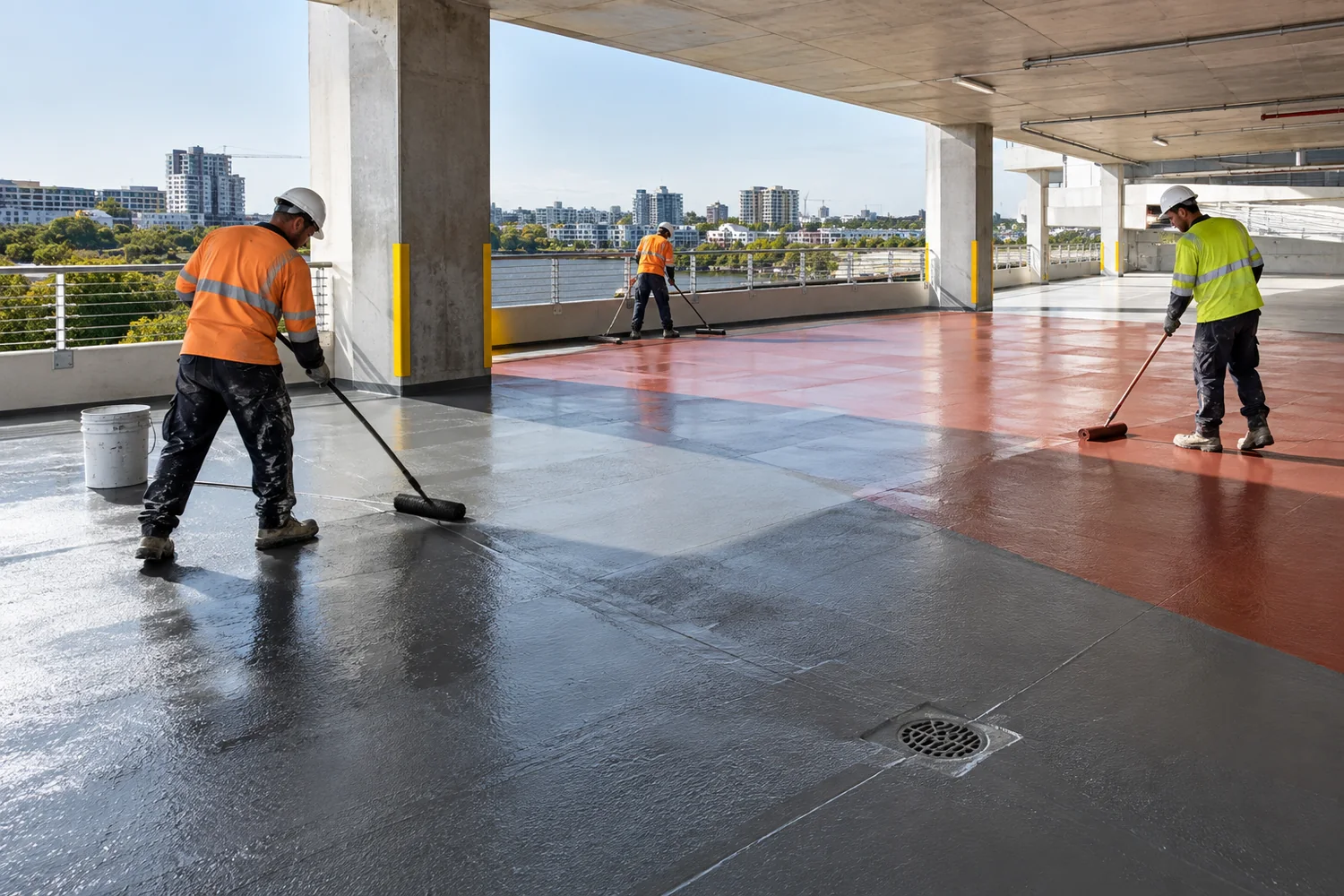
A waterproofing and traffic finish concept for external vehicle areas. ALKA 310 forms the membrane; a separate, compatible aliphatic topcoat is needed above it for vehicle traffic, wear and UV exposure.
Where this system fits
A waterproofing and traffic finish concept for external vehicle areas. ALKA 310 forms the membrane; a separate, compatible aliphatic topcoat is needed above it for vehicle traffic, wear and UV exposure.
Design boundary: The topcoat is intentionally identified by performance and compatibility, not a fixed product code: ALKA must confirm the exact aliphatic product and full traffic build for the project.
Layer build and schematic
Layer schematic
Read top to bottom. Not to scale; final thicknesses and details follow the project schedule.
| Element | Specification consideration |
|---|---|
| Traffic definition | Document passenger cars versus heavy vehicles, axle loads, turning, braking, ramps and frequency. |
| Membrane | ALKA 310 in two coats above ALKA 305; validate total build and detail reinforcement. |
| Traffic finish | Two coats of an ALKA-approved UV-stable aliphatic topcoat. Product, aggregate, thickness and intercoat adhesion must be confirmed for this complete system. |
| Surface | Specify wet/dry slip performance, tyre shear resistance, line marking and maintainability for the actual routes. |
The illustration shows the membrane stack, not the full architectural detail. The designer must coordinate substrate, falls, drainage, joints, thresholds, penetrations, surface finish and interface with other trades.
Specification and application
Define the duty before naming the topcoat
A lightly used parking bay differs from a turning ramp, service vehicle route or loading deck. The designer should define wheel loads, tyre shear, braking, slope, weather, oils, water, pedestrian crossings and cleaning. This determines traffic finish and texture. The ALKA 310 product page explicitly states that vehicle traffic is not permitted on it without a topcoat and recommends checking a compatible ALKA topcoat.
Detail the waterproofing independently of wear
Prepare sound concrete, measure moisture and repair defects. Prime with one coat ALKA 305, then apply two coats ALKA 310 to the project-approved build. Joint transitions, drain flanges, upstands, penetrations, cracks and deck edges require design details. A traffic finish cannot rescue a discontinuous membrane.
Specify and install the two-coat aliphatic finish
Select the exact topcoat with ALKA after reviewing compatibility, recoat window, UV, tyre abrasion and slip requirements; do not substitute an arbitrary clear coat. Where the membrane recoat window has passed, follow the approved cleaning, abrasion or tie-coat procedure. Install two measured coats and the specified aggregate or texture, paying attention to turning zones and ramps.
Inspection and operating plan
Hold points should include substrate acceptance, membrane thickness and continuity, topcoat adhesion, finish thickness/coverage, texture and cure before vehicle access. Document cleaning and periodic wear inspections. A worn sacrificial traffic coat may need planned renewal while the waterproofing membrane remains sound.
Inspection and handover checklist
- Record substrate, moisture and surface preparation acceptance before priming.
- Agree details for junctions, drains, penetrations, upstands and movement joints before broad-area application.
- Verify each layer, coverage, thickness, recoat window and any system-specific testing against the approved method.
- Photograph hold points and document repairs, batch numbers, cure and protection before following trades or traffic.
- Provide the owner with the final layer schedule, inspection records and maintenance or renewal instructions.
Waterproofing performance depends on the whole assembly, not a layer count alone. Confirm the exact approved system in writing for the project.
Product and design references
- ALKA 305 product information and available technical documents
- ALKA 310 product information and available technical documents
- NCC wet area waterproofing requirements — for applicable internal wet areas.
- NCC external waterproofing provisions — for applicable external above-ground areas.
Confirm the current NCC edition and jurisdiction, AS 3740 / AS 4654 where relevant, and the approved ALKA TDS/SDS. The schematic describes a system concept, not a complete certified construction detail.
Need the full project detail?
Send plans, substrate, area, drainage, exposure and finish to ALKA for an appropriate layer schedule and compatibility review.