
Spray polyurea membrane waterproofing system
A specialist spray-applied waterproofing membrane for projects where a fast-curing, continuous polyurea build is appropriate. ALKA 801 or ALKA 802 is chosen after reviewing substrate, exposure, spray conditions and the approved project specification.
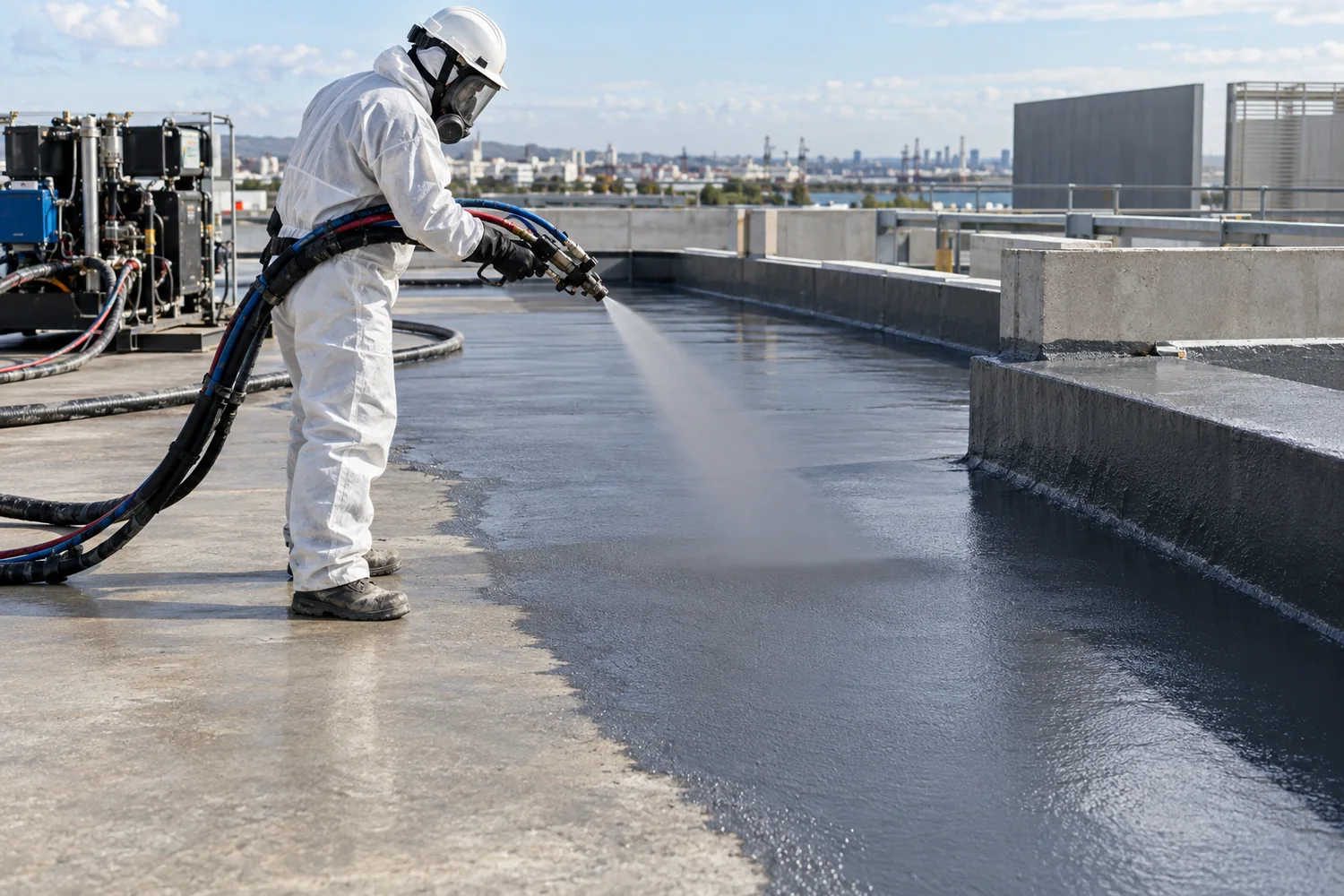
Where this system fits
A specialist spray-applied waterproofing membrane for projects where a fast-curing, continuous polyurea build is appropriate. ALKA 801 or ALKA 802 is chosen after reviewing substrate, exposure, spray conditions and the approved project specification.
Design boundary: Do not present “2 mm” as a universal specification. Confirm grade, thickness, primer compatibility, exposed finish and testing with ALKA before tender or installation.
Layer build and schematic
Layer schematic
Read top to bottom. Not to scale; final thicknesses and details follow the project schedule.
| Element | Specification consideration |
|---|---|
| Membrane | ALKA 801 or ALKA 802, not both by default. The selected product and thickness are approved for project duty. |
| Indicative thickness | Around 2 mm is a planning value supplied by ALKA; final DFT, substrate profile and verification method belong in the specification. |
| Application | Plural-component spray equipment and trained operator; product pages specify heated equipment and rapid cure. |
| UV and wear | ALKA product pages describe aromatic polyurea that may change colour in prolonged UV. Protective finish, traffic and chemical suitability need project review. |
The illustration shows the membrane stack, not the full architectural detail. The designer must coordinate substrate, falls, drainage, joints, thresholds, penetrations, surface finish and interface with other trades.
Specification and application
Select the grade and project duty
ALKA 801 and 802 are both described on current product pages as two-component, solvent-free, fast-curing spray polyurea. The published information does not clearly differentiate their design duty, so the choice must be recorded by ALKA in the project system schedule. Ask about expected water pressure, immersion or splash, chemical exposure, traffic, UV, temperature and substrate movement rather than assuming one grade suits all.
Prime and detail the substrate
Concrete needs to be sound, clean and prepared to the approved profile, with moisture and defects assessed. Apply one coat ALKA 305 to the accepted substrate per the project system. Because primer-to-polyurea compatibility and recoat timing are critical, confirm them in writing for the actual ALKA 801 or 802 grade. Prime and seal pores, form drains and upstands, and design joints and penetrations before broad-area spraying.
Spray, measure and inspect
The product pages describe rapid spray reaction and heated plural-component equipment. Pre-start checks include proportioning, material temperatures, substrate conditions, spray pattern and a trial area. Apply passes to reach the specified thickness, commonly around 2 mm for this concept, without leaving thin spots at edges and complex geometry. Use the specified DFT, adhesion and continuity/holiday testing methods for the substrate and exposure. Record readings, repairs, batch and equipment settings.
Exposure and finishes
ALKA 801/802 are aromatic polyureas and may change colour on long UV exposure. Where colour retention is required, select a compatible UV-stable protective coating. A waterproof membrane is not automatically a finished pedestrian or vehicle traffic surface; the wear and slip layer must be designed where needed. Immersion and chemical service require written confirmation of resistance and detail design.
Inspection and handover checklist
- Record substrate, moisture and surface preparation acceptance before priming.
- Agree details for junctions, drains, penetrations, upstands and movement joints before broad-area application.
- Verify each layer, coverage, thickness, recoat window and any system-specific testing against the approved method.
- Photograph hold points and document repairs, batch numbers, cure and protection before following trades or traffic.
- Provide the owner with the final layer schedule, inspection records and maintenance or renewal instructions.
Waterproofing performance depends on the whole assembly, not a layer count alone. Confirm the exact approved system in writing for the project.
Product and design references
- ALKA 305 product information and available technical documents
- ALKA 801 product information and available technical documents
- ALKA 802 product information and available technical documents
- NCC wet area waterproofing requirements — for applicable internal wet areas.
- NCC external waterproofing provisions — for applicable external above-ground areas.
Confirm the current NCC edition and jurisdiction, AS 3740 / AS 4654 where relevant, and the approved ALKA TDS/SDS. The schematic describes a system concept, not a complete certified construction detail.
Need the full project detail?
Send plans, substrate, area, drainage, exposure and finish to ALKA for an appropriate layer schedule and compatibility review.