
Waterproofing membranes & systems.
Australian-made waterproofing solutions for bathrooms, balconies, roofs, podiums and trafficable decks. Explore water-based, polyurethane and spray polyurea membranes with support from ALKA Coatings.
Based in Smithfield, Sydney, we help builders, waterproofing contractors and specifiers select products, plan the complete system and connect with suitable applicators.
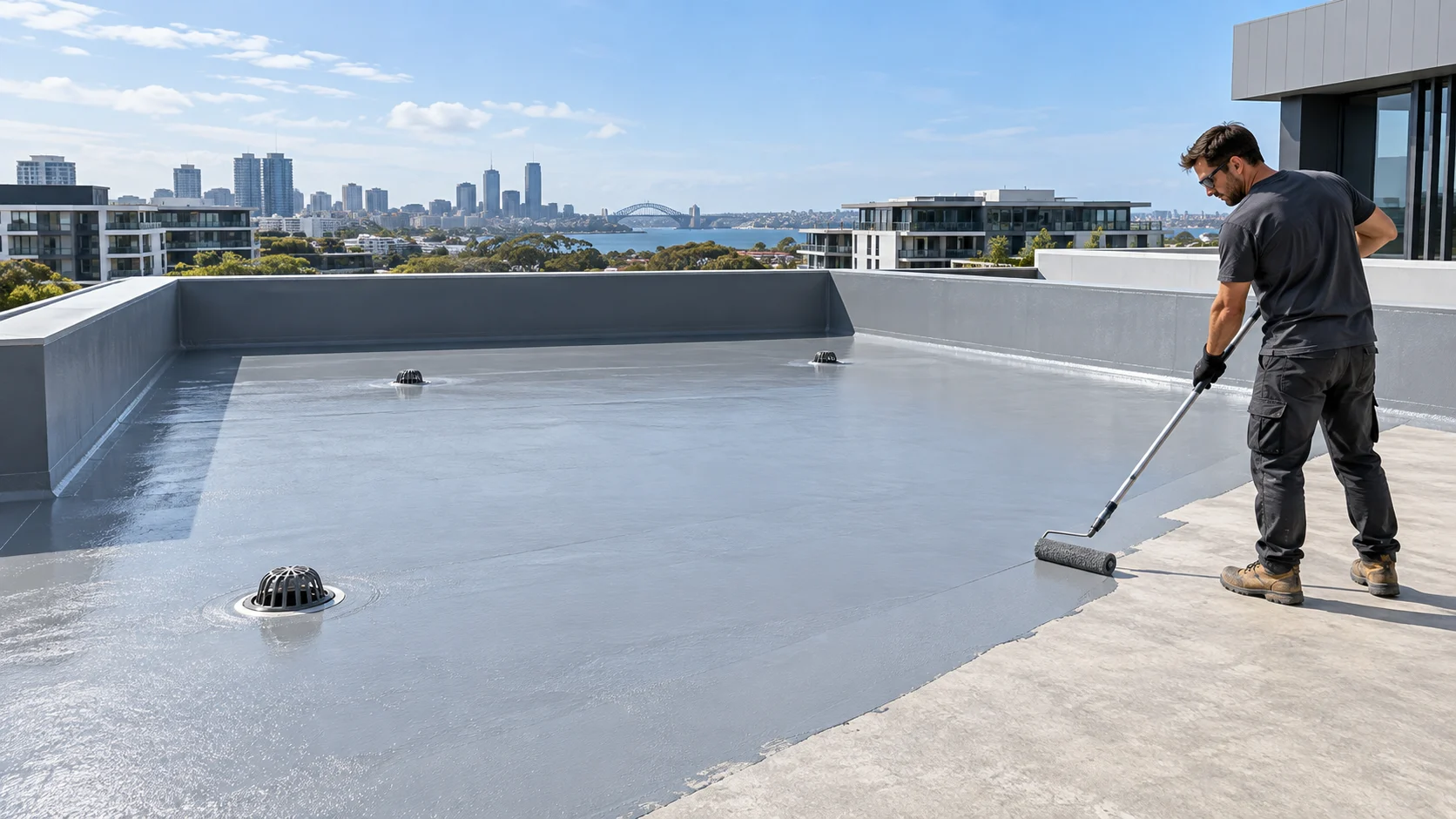
What is waterproofing, and why does the system matter?
Waterproofing creates a continuous barrier that limits water passing through a building surface and into the structure or occupied spaces below.
Concrete, screeds and masonry can absorb moisture, while cracks, joints and penetrations can provide direct leakage paths. A waterproofing membrane protects the nominated area by connecting the floor or deck to drains, wall junctions, upstands and other termination details.
A complete waterproofing system includes surface preparation, repairs, an appropriate primer, the membrane, junction treatment and the required finish or protection. Each part contributes to continuity and adhesion. Selecting a membrane by price or coat count alone leaves critical design questions unanswered.
Waterproofing beneath the finish
Tiles and grout form a service finish, but they do not replace the designed waterproofing layer. In a bathroom or tiled balcony, moisture can pass through joints or defects and reach the assembly below. The membrane must remain continuous beneath the finish and connect correctly to outlets and edges.
Exposed waterproofing
On an exposed roof or deck, the system must also accommodate weather, sunlight and the nominated access or traffic. A protective topcoat may be needed for colour retention, wear or slip performance. The membrane and wearing surface should be selected together for that duty.
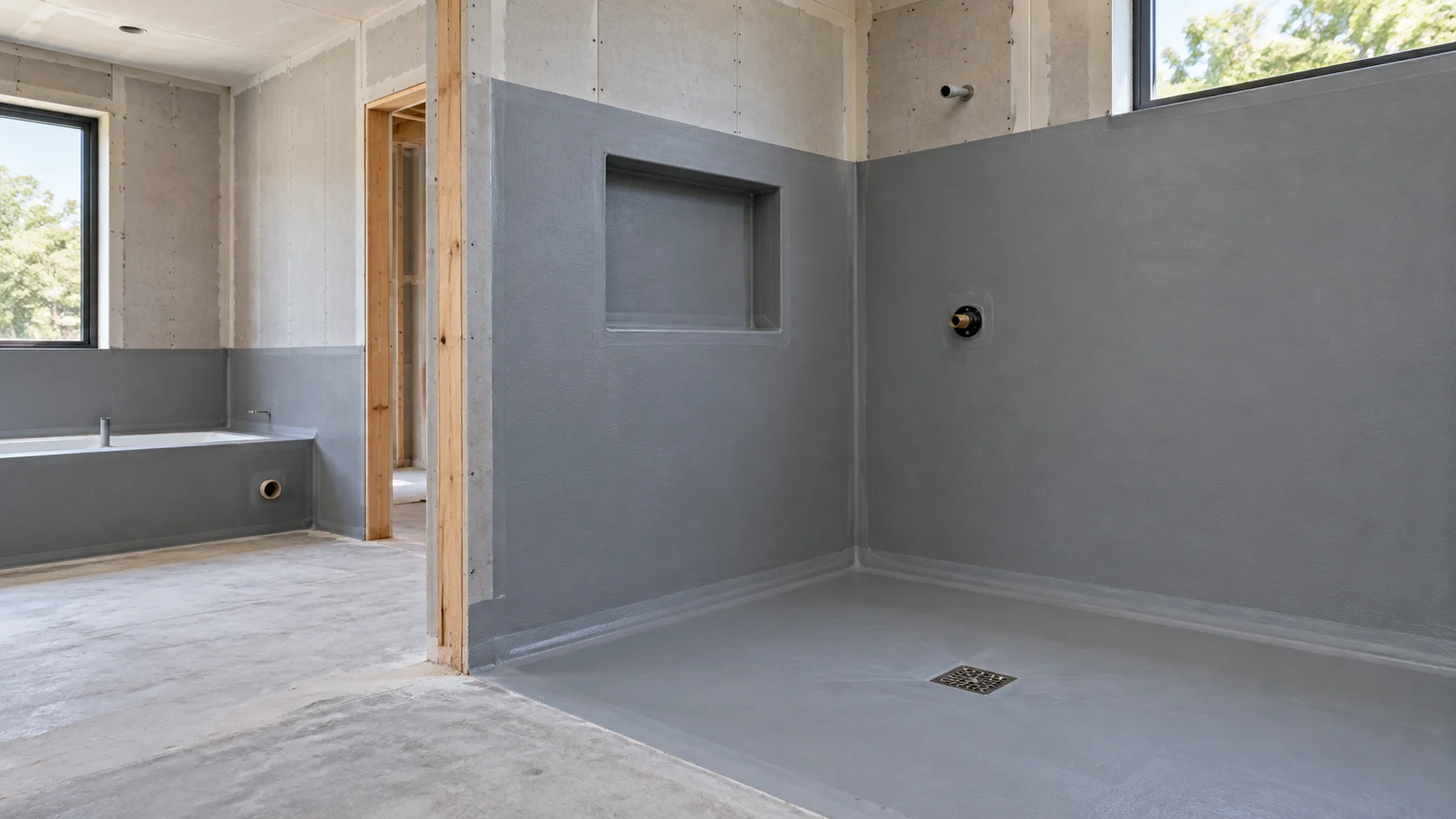
Waterproofing solutions for residential, commercial & industrial projects
The right waterproofing approach starts with how the structure will be used, what covers the membrane and where water can travel.
Bathrooms & wet areas
Plan waterproofing beneath the finish in showers, bathrooms and other designated wet areas. Coordinate wall/floor junctions, penetrations, waterstops and the tiling interface.
Explore the tiled-area system ↗Balconies & terraces
Decide whether the deck will be tiled, exposed or partly paved. External movement, drainage, thresholds and weather exposure all affect the membrane and finish.
Compare external systems ↗Pedestrian & vehicle decks
Match the assembly to its traffic. Pedestrian areas and parking decks have different wear, grip and topcoat requirements; vehicle zones require a traffic finish.
View the vehicle deck build ↗Roofs & podiums
Review falls, outlets, penetrations, UV exposure and maintenance access. Ask ALKA to assess the substrate and propose the membrane, reinforcement and protection.
Discuss a roof or podium ↗Planters & protected areas
A planted assembly needs drainage, physical membrane protection and an appropriate root barrier. Confirm buried-service suitability before specifying a membrane.
Request a protected-area specification ↗Pools, tanks & water infrastructure
Immersion, water chemistry, temperature and cleaning determine lining selection. Drinking-water contact and chemical containment need specific supporting evidence.
Explore tank and lining applications ↗Water-based, polyurethane or polyurea?
Different waterproofing materials suit different installation methods and service conditions. Chemistry is the starting point; the complete tested and approved assembly determines where a product can be used.
Water-based waterproofing membranes
Water-based liquid membranes offer a one-pack option for appropriate building applications. They form a continuous film as water leaves the applied coating. Ventilation, temperature, humidity and film build affect drying, particularly at reinforced corners and over less absorbent surfaces.
ALKA-TEN is a polyurethane-modified acrylic membrane in this category. Consider it for approved wet-area, under-tile and selected exterior building details. Confirm the primer, reinforcement and exposure limits specifically for ALKA-TEN.
Learn about ALKA-TEN ↓Polyurethane waterproofing membranes
Liquid polyurethane membranes can form a flexible layer around complex building details. The chosen grade and system determine whether the membrane is protected beneath tiles, used on an exposed deck or incorporated beneath a traffic finish.
ALKA 312 is nominated in the tiled-area build, while ALKA 310 is nominated in the external pedestrian and vehicle deck builds on this page. Moisture condition, priming and intercoat timing remain important installation controls.
Compare the polyurethane systems ↓Spray polyurea waterproofing
Polyurea membranes are applied with specialist plural-component spray equipment. Their rapid reaction makes equipment setup, preparation, detail treatment and application continuity especially important. Fast reaction does not remove the need for thickness checks and inspection.
ALKA 801 or ALKA 802 can be considered for the nominated spray-polyurea build. Confirm the correct product for the exposure; where appearance under UV matters, review a compatible protective finish.
View the spray polyurea system ↗Cementitious waterproofing & specialist linings
Cementitious waterproofing products combine cement-based binders with other components and are selected for appropriate mineral substrates. Flexibility and pressure resistance differ between formulations; they cannot be inferred from the word cementitious.
ALKA Cement and specialist lining options require a project review. Pools, tanks, buried structures and chemical containment need a separate assessment of water pressure, movement, contents and service exposure.
Explore the wider waterproofing range ↗Four routes to a complete system.
Open a system for its schematic, application considerations and inspection guidance.
Tiled wet areas & balconies
Protected membrane beneath compatible tiling.
A balcony still needs an external waterproofing design, even when the finish is tiled.
View build & technical detail ↗Pedestrian decks & pavers
External areas with foot traffic or partial paving.
Paved sections need designed protection, drainage and support loads; assess slip resistance for exposed walking areas.
View build & technical detail ↗Vehicle traffic decks
Membrane plus a separately selected traffic finish.
Confirm the exact aliphatic topcoat, texture and duty with ALKA. Bare ALKA 310 is not the vehicle wearing surface.
View build & technical detail ↗Spray polyurea
Specialist spray installation for the nominated duty.
A build around 2 mm is a typical starting point, not a universal specification. Confirm product choice, final thickness and any UV finish.
View build & technical detail ↗Layer illustrations are schematic and not to scale. Coat counts describe the starting build; final film thickness, primer suitability, detailing and release to service follow the approved project specification.
How the specification changes across a building.
A shower, a balcony and a car park may all need waterproofing, but the water exposure, movement and finish are very different.
Bathroom & shower waterproofing
Wet-area waterproofing starts with a stable substrate and a clear layout for drains, penetrations, wall/floor transitions and the shower area. Niche corners, pipe outlets and waterstops deserve the same attention as broad floor areas.
Keep the membrane compatible with the intended tile adhesive and allow the specified drying or cure before tiling. Reinforced details can dry more slowly than the main surface. Inspect the membrane before it is concealed and use the agreed water-testing procedure only after adequate cure.
Start with: the ALKA 305 / ALKA 312 tiled-area system, or discuss a separately approved ALKA-TEN assembly.
Balcony & terrace waterproofing
Balconies combine weather exposure with structural and thermal movement. The design needs coordinated falls, drainage, thresholds, wall interfaces and edge terminations. Water entering from an adjacent façade or doorway can bypass an otherwise sound membrane.
A tiled balcony needs an approved membrane-to-adhesive interface and movement joints through the finish. A paved deck also needs protection from supports and loads, with drainage maintained beneath the pavers. Exposed walking areas need a suitable surface finish and slip assessment.
Start with: the tiled-area system or the ALKA 305 / ALKA 310 pedestrian deck system, according to the finish.
Roof & podium waterproofing
Roof waterproofing must connect into outlets, parapets, plant supports and service penetrations. Assess existing membranes for adhesion, retained moisture and compatibility before considering an overlay. Recoating a wet or poorly bonded assembly can trap the original problem.
Define whether access is occasional maintenance or regular pedestrian use. Select UV protection and any wearing layer for the exposure. Coordinate drainage and overflow design so the membrane is not asked to compensate for blocked outlets or unsuitable falls.
Start with: an ALKA technical review of the proposed polyurethane, ALKA-TEN or spray polyurea assembly.
Trafficable deck & car park waterproofing
Vehicle areas expose the finish to tyre shear, braking, turning and contamination. The waterproofing layer provides continuity, while the approved traffic finish handles the nominated wear and surface requirements.
Ramps, turning bays and pedestrian crossings may require different texture or reinforcement decisions. Specify the complete build, cure before vehicle access and a maintenance plan for the wearing surface.
Start with: ALKA 305, two coats of ALKA 310 and two coats of the approved aliphatic topcoat.
Planter box & below-ground waterproofing
Planters introduce retained moisture, soil, roots and later access difficulties. Waterproofing needs physical protection before fill is placed, suitable drainage and a separately selected root-resistant layer where required. The membrane itself must be approved for the intended service.
For below-ground walls or slabs, identify the direction of water pressure and access to the wet side of the structure. A membrane designed for above-ground decks is not automatically suitable against groundwater pressure.
Start with: a project-specific assessment rather than substituting a deck system.
Swimming pools, tanks & water-retaining structures
Continuous immersion needs more than resistance to occasional wetting. Identify the stored water or chemicals, operating temperature, cleaning process and the way cracks or joints move. Drinking-water use needs evidence specific to the selected lining and application.
A swimming pool shell, pool surround and plant-room bund are distinct environments. The surrounding walking surface needs its own UV, wear and slip assessment, while the immersed shell needs an approved waterproofing or lining build.
Pool applications ↗ Tank applications ↗Meet ALKA-TEN.
A single-component, water-based, polyurethane-modified acrylic waterproofing membrane.
ALKA-TEN forms a continuous elastic layer over suitable prepared substrates. Its one-pack format removes the need to proportion a separate hardener, while liquid application helps follow corners and building details.
Where to consider it
- Wet areas and under-tile work: bathrooms and showers within an ALKA-approved complete assembly.
- Balconies and terraces: subject to the external exposure, finish, movement and drainage design.
- Selected roof and building details: where ALKA confirms exposure suitability, reinforcement and protection.
- Compatible membrane maintenance: following an assessment of the existing coating and adhesion.
ALKA waterproofing products & primers
Use product pages for available technical and safety documents, then confirm the complete specification for the job.
ALKA 305
The priming stage in the four nominated system builds. Substrate condition and moisture must be accepted before coating.
Product information ↗ALKA 312
The membrane specified in the tiled wet-area and balcony build above, followed by compatible tiling adhesive.
Product information ↗ALKA 310
The membrane in the pedestrian deck and vehicle deck builds. The vehicle assembly includes a separate aliphatic traffic finish.
Product information ↗ALKA-TEN
One-component, polyurethane-modified acrylic membrane for approved building waterproofing details.
Product information ↗ALKA 801 / 802
Two-component spray membranes requiring specialist equipment and a duty-specific selection. Aromatic colour change under UV may require a protective finish.
Product information ↗More membrane options
Explore ALKA 311, cementitious membranes and other primers. Ask ALKA to nominate compatibility and the correct role within the proposed assembly.
Product information ↗Waterproofing preparation, detailing & quality checks
A membrane needs a sound substrate, continuous junctions and a practical drainage design. Resolve these items before field application.
| Design question | What to establish | Why it matters |
|---|---|---|
| Where is the water? | Rain, intermittent wetting, immersion, ponding or pressure from behind the substrate. | These exposures are different selection problems. An above-ground membrane is not automatically a negative-pressure solution. |
| What is the substrate? | Concrete, screed, approved sheet substrate or an existing membrane; assess strength, moisture, contamination and movement. | Adhesion is limited by the weakest underlying layer. An unsuitable old coating can compromise a new system. |
| How will water drain? | Falls, outlets, overflow provisions, waterstops, thresholds and termination levels. | The membrane cannot compensate for drainage or termination details that allow water to bypass it. |
| Where can movement occur? | Construction and movement joints, cracks, wall/floor junctions and dissimilar materials. | Nominate compatible sealants, bond breakers and reinforcement. Preserve designed movement joints through the assembly. |
| What covers the membrane? | Tile adhesive, screed, pavers, protection boards or a traffic finish. | Check compatibility, curing and protection before the membrane becomes inaccessible. |
| How will it be accepted? | Film build, detail inspection, any approved flood or continuity test, and protection before following trades. | Record agreed hold points and verify repairs before concealment or service. |
Bring ALKA into the project early.
Define the brief
Send plans or photographs, location, approximate area, substrate, leak history, exposure and intended finish. Include access constraints and the construction programme.
Agree the system
Review membrane choice, primer, details, finish and inspection requirements with ALKA. We can help identify an appropriate Approved Applicator for the location and work.
Document the work
Keep preparation records, batch information, coat quantities, site conditions and inspection photographs. Confirm cure and protection before tiling, backfilling or opening to traffic.
Why waterproofing fails — and what to investigate.
The visible leak may be some distance from the entry point. Establish how water enters and travels before choosing a repair.
Loss of adhesion
Dust, laitance, incompatible coatings, substrate moisture or missed recoat windows can weaken the bond. Identify whether separation is at the substrate, primer or between membrane coats. Remove unsound material and correct the cause before reinstatement.
Bubbles & pinholes
Air from porous concrete, entrained air, inappropriate film build or moisture conditions can leave discontinuities. Check preparation, primer coverage and application conditions. Inspect and repair using an approved method before concealment.
Cracks & failed junctions
Movement can concentrate at corners, joints and dissimilar materials. Review whether the detail accommodates the expected movement and whether reinforcement or bond breaking was correctly installed. A field coat is not a substitute for a joint detail.
Premature covering
A dry-looking surface may still be insufficiently developed below. Early tiling, rain, testing or traffic can affect the membrane. Use product-specific release criteria for the actual conditions rather than appearance alone.
Damage after application
Following trades, sharp supports, paver installation or backfill can puncture a sound membrane. Plan protection and inspect before it is concealed. Document repairs and repeat the nominated acceptance checks.
Water bypassing the membrane
Unsealed penetrations, low terminations, drainage defects and adjacent façade leaks can allow water around the system. Repair the entry path and construction detail instead of repeatedly coating the visible damp patch.
Waterproofing questions answered
Is ALKA-TEN the same as ALKA 310 or ALKA 312?
No. ALKA-TEN is a water-based polyurethane-modified acrylic. ALKA 310 and ALKA 312 are moisture-curing polyurethane membranes. Their primers, coat schedules, drying behaviour and service limits must be selected independently. Do not substitute one in a documented system without approval.
Can an under-tile membrane be left exposed?
Only when the selected membrane and complete build are approved for that exposure. UV, rainfall, standing water, access and wear all need review. A tiled finish and an exposed deck are different service conditions.
Can ALKA 310 be used on a vehicle deck?
The nominated vehicle build uses ALKA 305, two coats of ALKA 310 and two coats of an ALKA-approved aliphatic topcoat. The exact finish must suit tyre shear, traffic frequency, slip performance and exterior exposure.
Does two coats mean the waterproofing is complete?
Coat count alone does not demonstrate adequate membrane build or continuity. Measure consumption and film thickness as specified, inspect junctions and penetrations, and meet the approved cure and testing requirements.
What is needed for pools, tanks and drinking water?
Provide the contents, temperature, immersion duration, cleaning regime and substrate. These applications need a separately approved lining specification. Any drinking-water suitability must be supported for the exact product and intended use.
Can ALKA help me find an installer?
Yes. Contact ALKA with the project location and scope so we can help identify a suitable Approved Applicator. Discuss the proposed system and project documentation before accepting an installation quotation.
Is waterproofing the same as concrete sealing?
No. A concrete sealer may reduce absorption or protect the surface, but this does not establish that it can perform as a continuous waterproofing membrane across joints, cracks and building interfaces. Specify the product and complete assembly for the required duty.
How do I choose a waterproofing membrane supplier?
Look for clear product information, compatible system guidance, realistic application limits and access to technical support. Provide the substrate, exposure, finish and project constraints so the recommendation addresses the actual job.
Can I buy waterproofing products from ALKA in Sydney?
Contact ALKA Coatings in Smithfield, Sydney, for waterproofing product supply and technical guidance. Share the project location and quantities so the team can confirm product availability and supply arrangements.
How much does waterproofing cost?
Area alone is not enough for a reliable allowance. Preparation, repairs, access, junctions, the complete membrane build, finish and inspection requirements affect the scope. Ask for a system recommendation and an installation quotation based on those details.
Tell us what you need to protect.
Send your project details for product selection, system guidance and applicator referral.
Find an Approved Applicator.
Connect product selection with suitable installation experience and clear project records.
See how manufacturer referral works ↗Selection guidance must be read with current ALKA technical documents and the written project specification. Confirm applicable construction requirements with the project designer. Contact ALKA where substrate, service exposure or compatibility is uncertain.